
Pits, undo and restart: how to play Plumb without fear
Square pits swallow any marble in Plumb, but a mistake costs you one tap. How pits work, what undo and restart do, and why there are no lives.
On this page
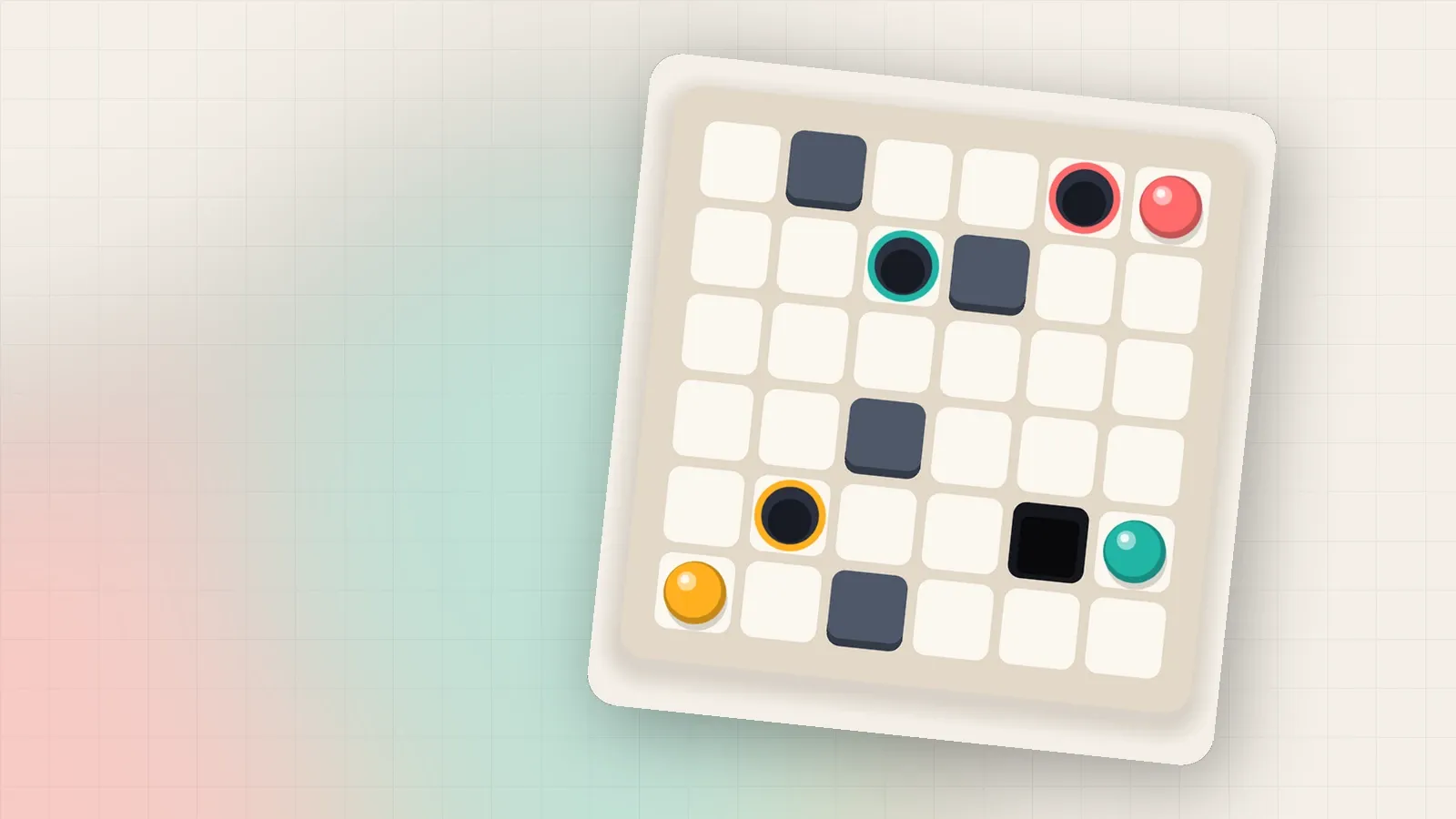
Around level 28, Plumb adds its only hazard: the square pit. This post explains how pits work and why you should never be afraid of them.
How pits work
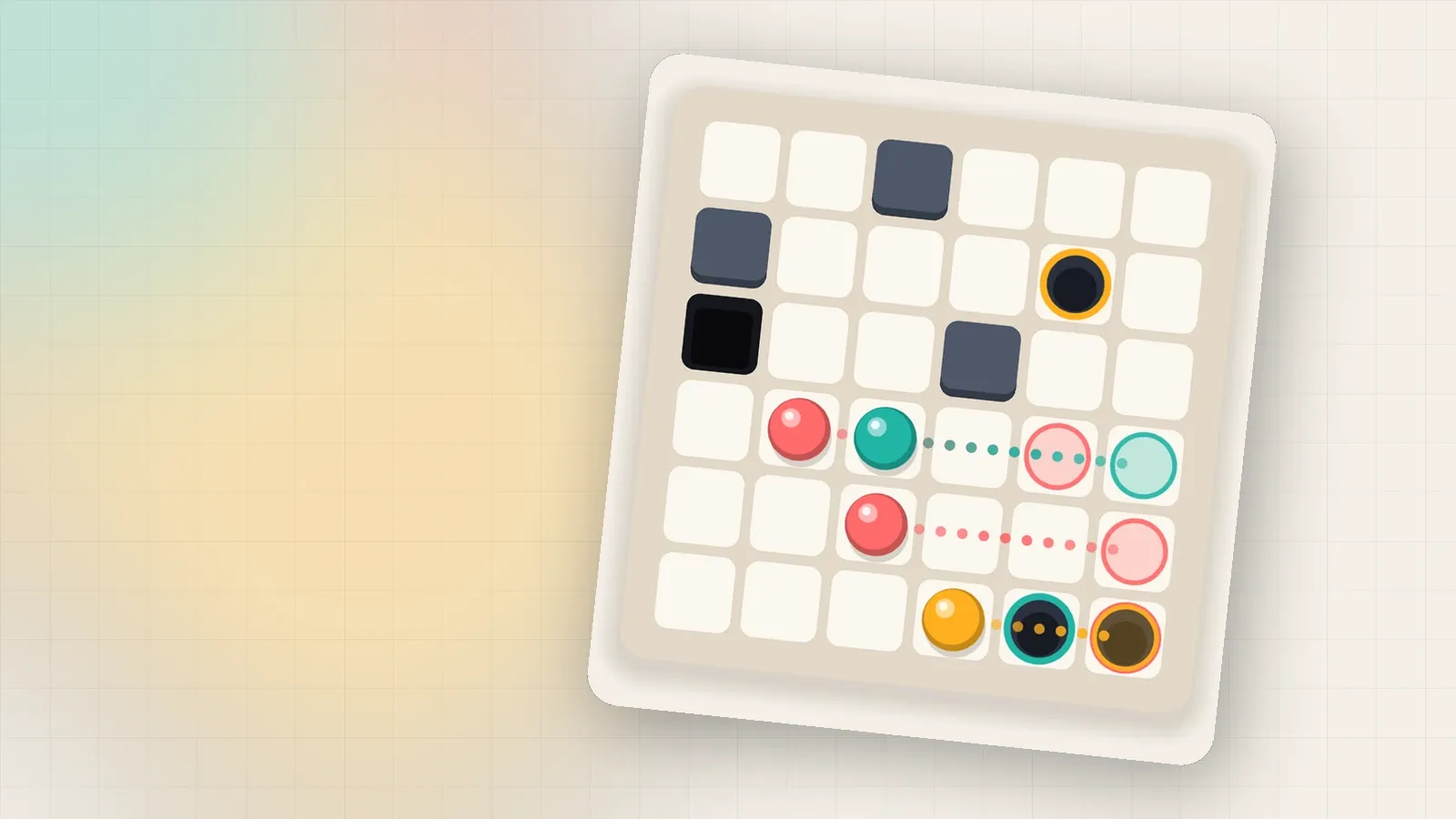
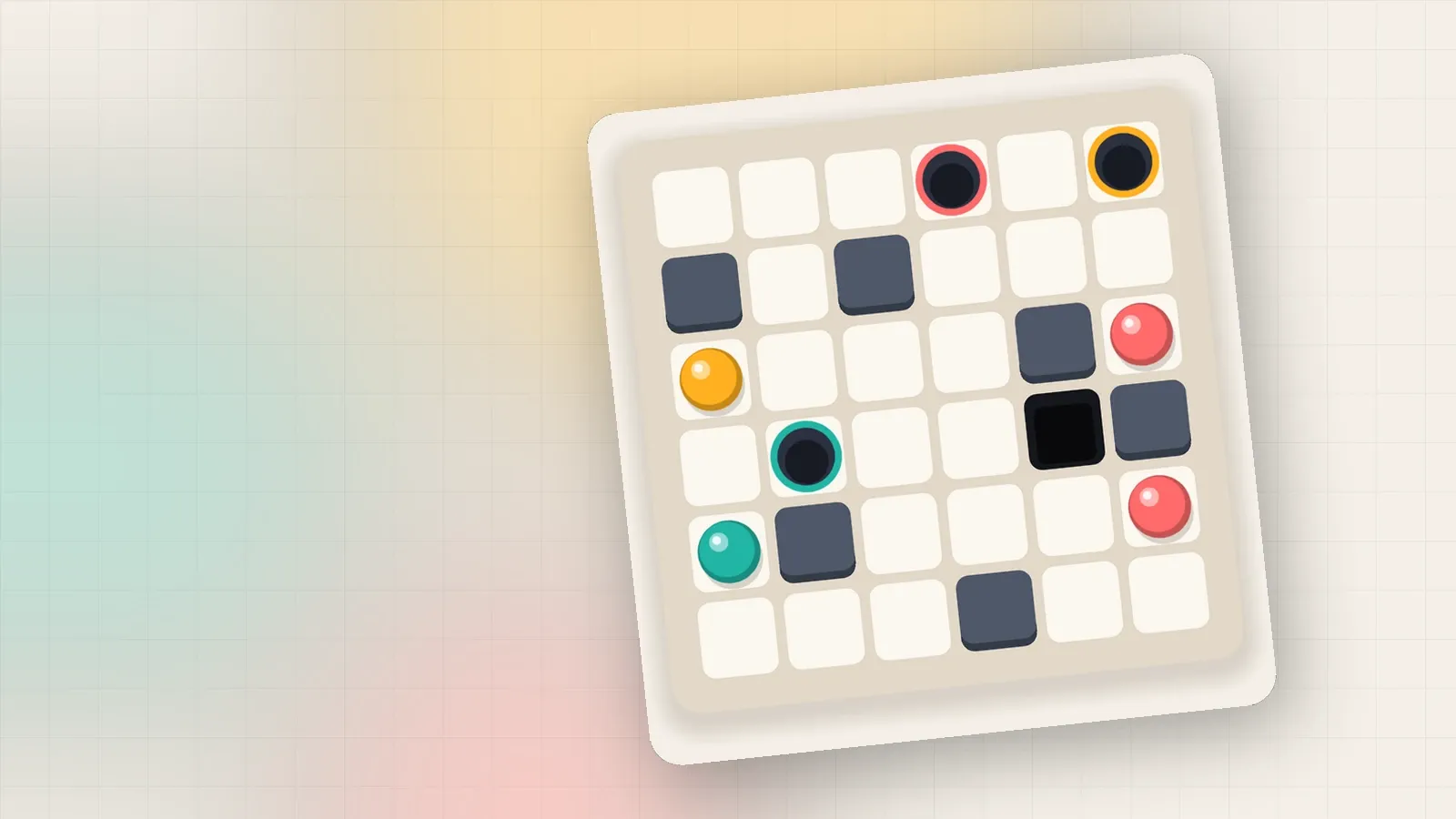
A pit is a dark square in the board. Any marble that rolls over one falls in, whatever its colour. Unlike a hole, a pit does not care about colour, and a marble in a pit is lost, so the attempt is over.
Pits change how you read a board. A line that used to be a safe run to a wall is now a trap if a pit sits on it. The first pit level is deliberately easy for where it comes, so you can learn the new rule without also fighting a hard board.
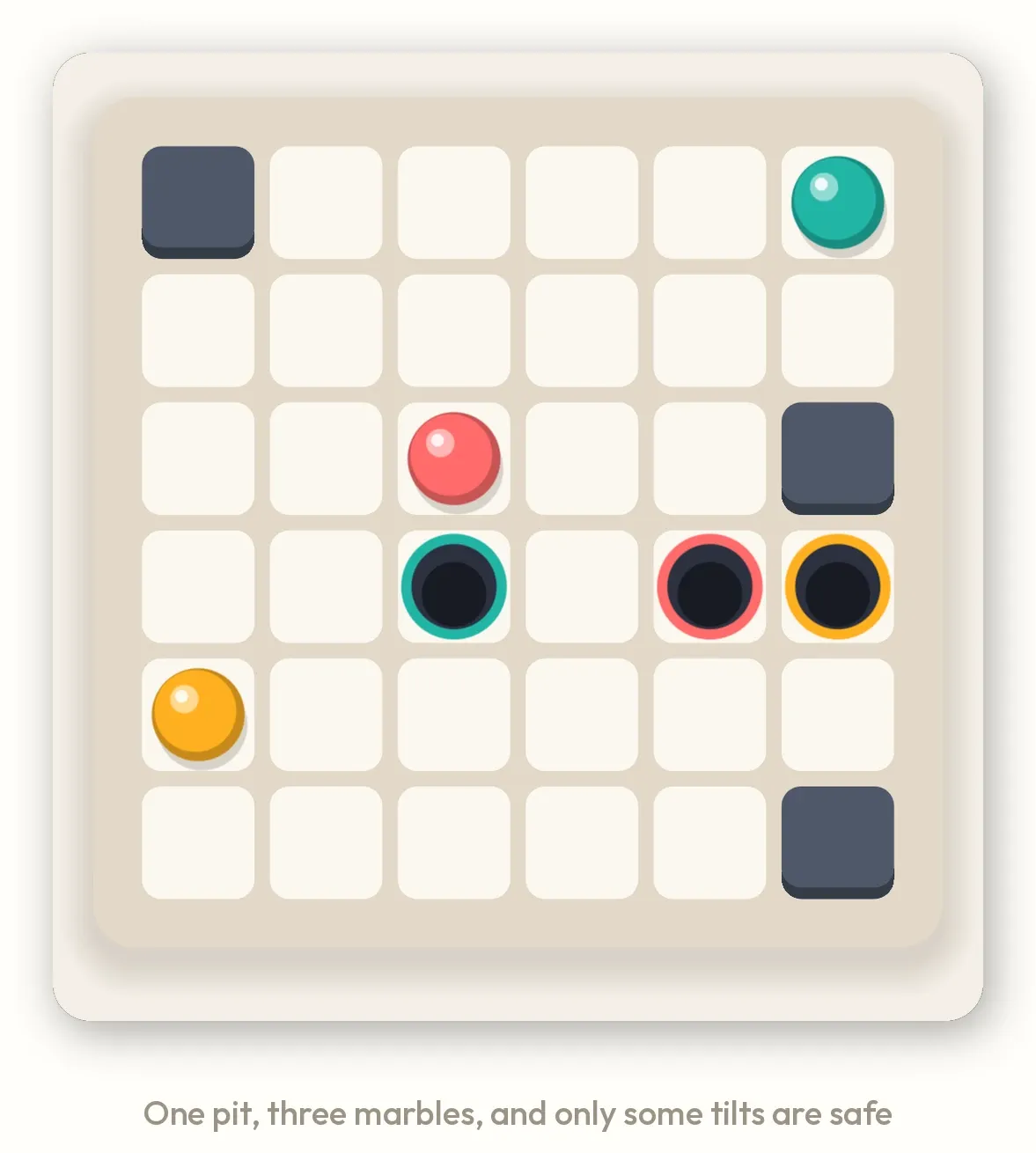
When a marble falls
If a marble falls, the game tells you straight away and offers the fastest way back: undo that tilt. You can also restart or go back to the levels. Nothing is lost except the move.
Undo and restart
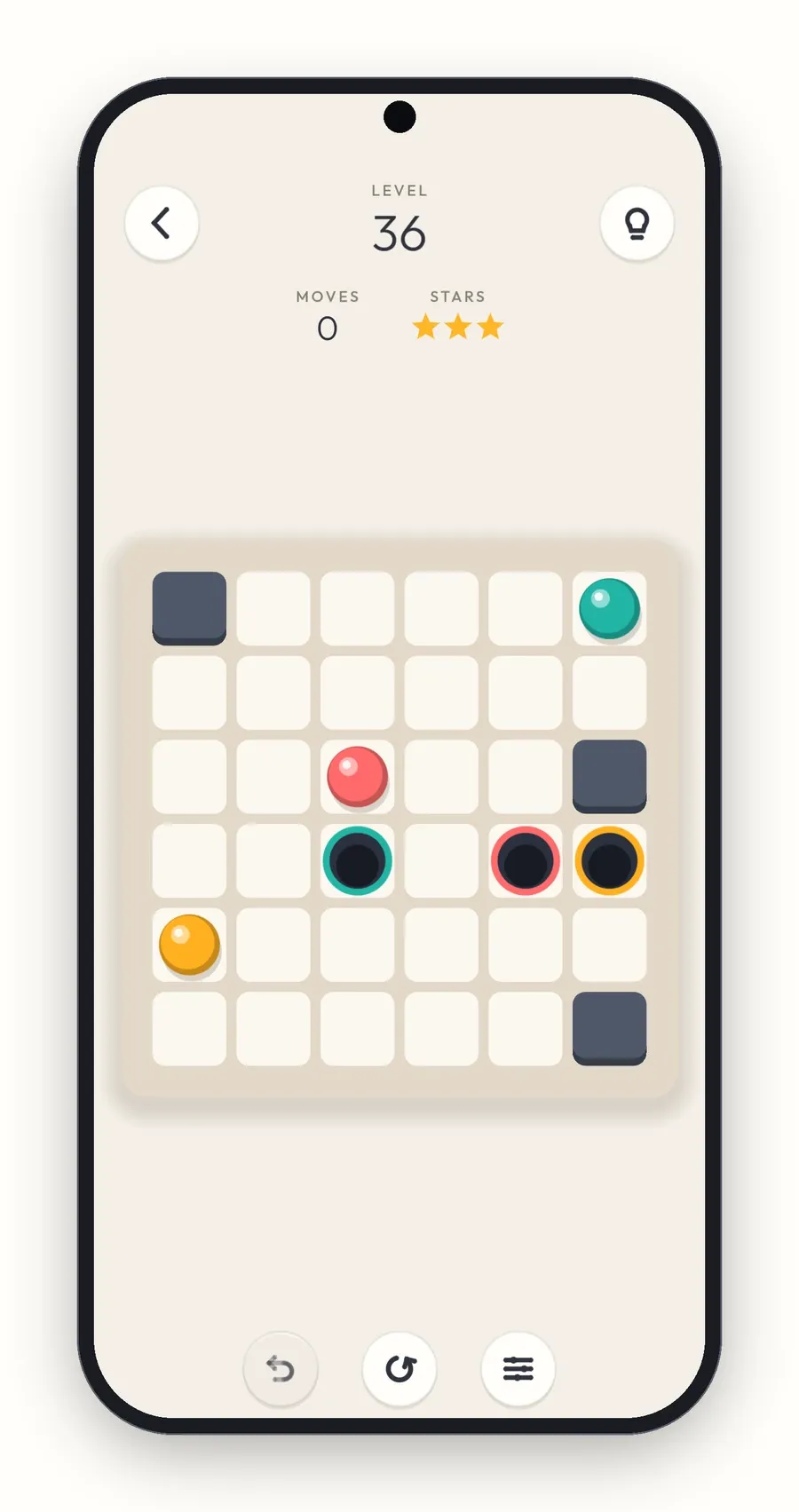
- Undo takes back your last tilt, and your move count goes back with it. You can undo as many times as you like.
- Restart puts every marble back where the level started, and resets the count.
Because undo also takes back the move count, experimenting never costs you stars. Try a tilt, see what happens, undo. That loop is the fastest way to understand a hard board.
Why there are no lives
Plumb has no lives, no hearts and no timer. A pit is a lesson about the board, not a punishment. We wanted a puzzle you can play at your own pace, where the only thing that matters is the moment the route becomes clear. There is more on that in calm by design.
Three pit habits
- Check every line before a tilt. For each marble, follow its roll to where it stops. If a pit is on that line, do not tilt that way yet.
- Use marbles as shields. A marble parked in front of a pit stops the next one before it gets there.
- Let the hint warn you. The hint rings any marble that would fall on the tilt it suggests, and it never suggests a losing tilt.
Written by

Shravan Goswami
Game designer and developer
Claude Opus 5.5
AI co-developer
Comments
Sign in with GitHub to leave a comment or a question.