
What is an apsis? The astronomy behind the name
An apsis is the point in an orbit nearest to or farthest from the body it goes around: periapsis, apoapsis, perihelion and apogee, explained.
On this page
Apsis is a puzzle game about arrows on orbits, but the name comes straight from astronomy. This post explains what an apsis is, the family of words that grew out of it, and why we borrowed it for a game where every orbit is a circle.
The short answer
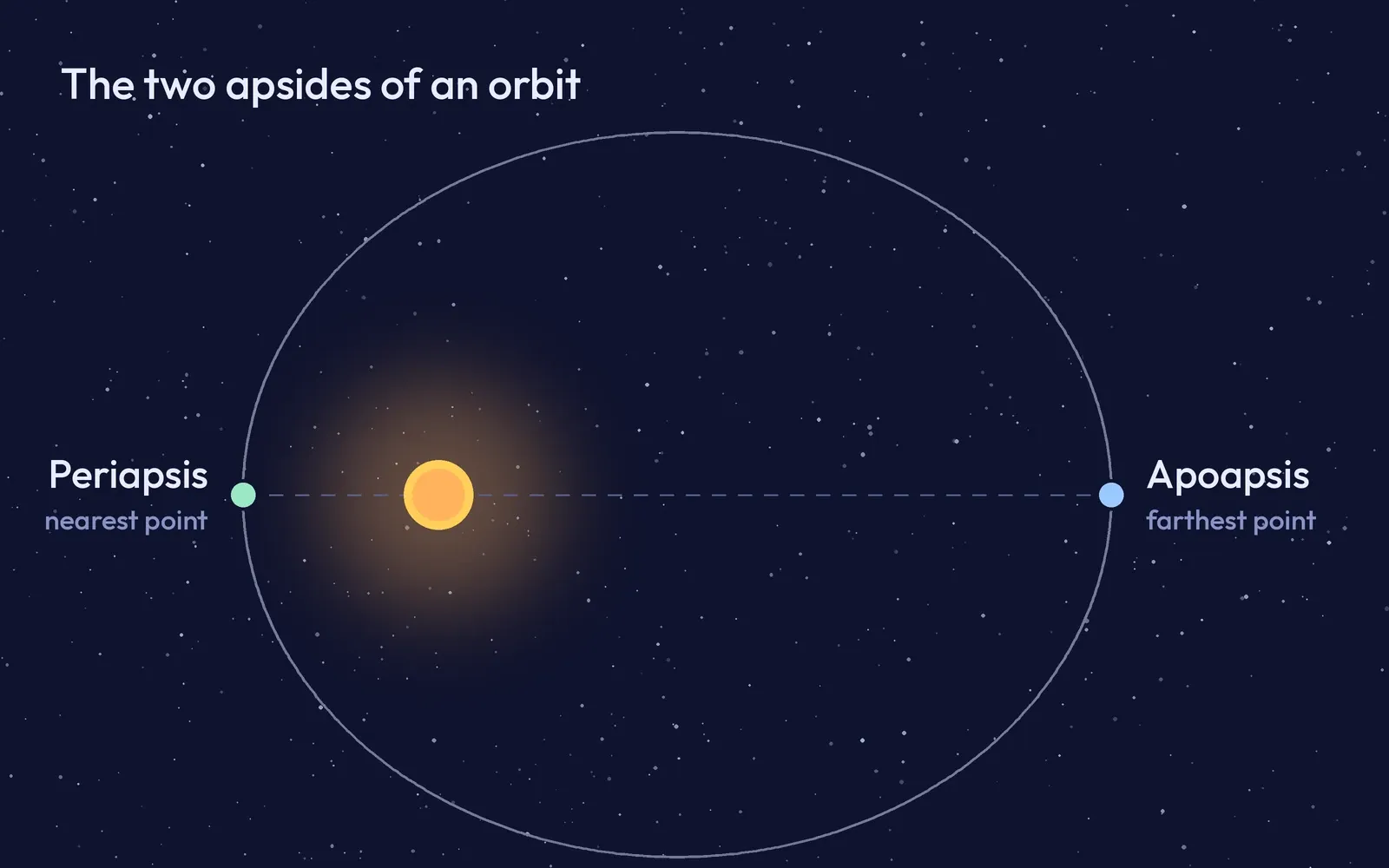
An apsis is a point in an orbit where the orbiting body is either nearest to or farthest from the body it goes around. Every elliptical orbit has two of them, and together they are the apsides (say “AP-sih-deez”).
- The nearest point is the periapsis.
- The farthest point is the apoapsis.
The word comes to English through Latin from the Greek hapsis, an arch or the rim of a wheel. The prefixes are Greek too: peri means near or around, and apo means away from.
Why orbits have a near end and a far end
Johannes Kepler showed in the early 1600s that planets move on ellipses, not circles, with the Sun at one focus of the ellipse rather than at its centre. Because the Sun sits off to one side, every orbit has one end that swings close and one that swings wide.
The straight line joining the two apsides runs through the Sun and along the longest axis of the ellipse. Astronomers call it the line of apsides. If the ellipse’s long radius is a and its eccentricity is e (0 for a circle, closer to 1 for a long, thin orbit), the two distances are:
- periapsis distance = a (1 - e)
- apoapsis distance = a (1 + e)
Kepler’s second law adds a nice detail: a planet moves fastest at periapsis and slowest at apoapsis, sweeping out equal areas in equal times.
A different name for every body
Astronomers often swap the general ending for one that names the body being orbited:
| Orbiting around | Nearest point | Farthest point |
|---|---|---|
| Any body | periapsis | apoapsis |
| The Sun | perihelion | aphelion |
| The Earth | perigee | apogee |
| A star | periastron | apastron |
| The Moon | perilune | apolune |
Two of these are in everyday English. Apogee has come to mean the highest point of anything, a career or an empire. And the Moon’s perigee is behind the “supermoon”: a full moon near its perigee looks a little bigger and brighter than one near apogee, since the Moon comes roughly 363,000 km from Earth at its nearest and goes roughly 405,000 km away at its farthest.
Our own apsides
The Earth’s orbit is only slightly stretched, with an eccentricity of about 0.017, so its apsides are close to each other in distance. Earth reaches perihelion in early January, about 147 million km from the Sun, and aphelion in early July, about 152 million km away.
That surprises people in the northern hemisphere, because it means Earth is nearest the Sun in the middle of their winter. The seasons come from the tilt of Earth’s axis, not from the apsides.
Apsides that move
The line of apsides is not fixed. Tugs from other planets make it turn slowly, a motion called apsidal precession. Mercury’s is the famous one: most of its slow turn is explained by the pull of the other planets, but a small remainder, about 43 arcseconds a century, was a puzzle for decades until Albert Einstein’s general relativity accounted for it exactly in 1915.
Where the game comes in
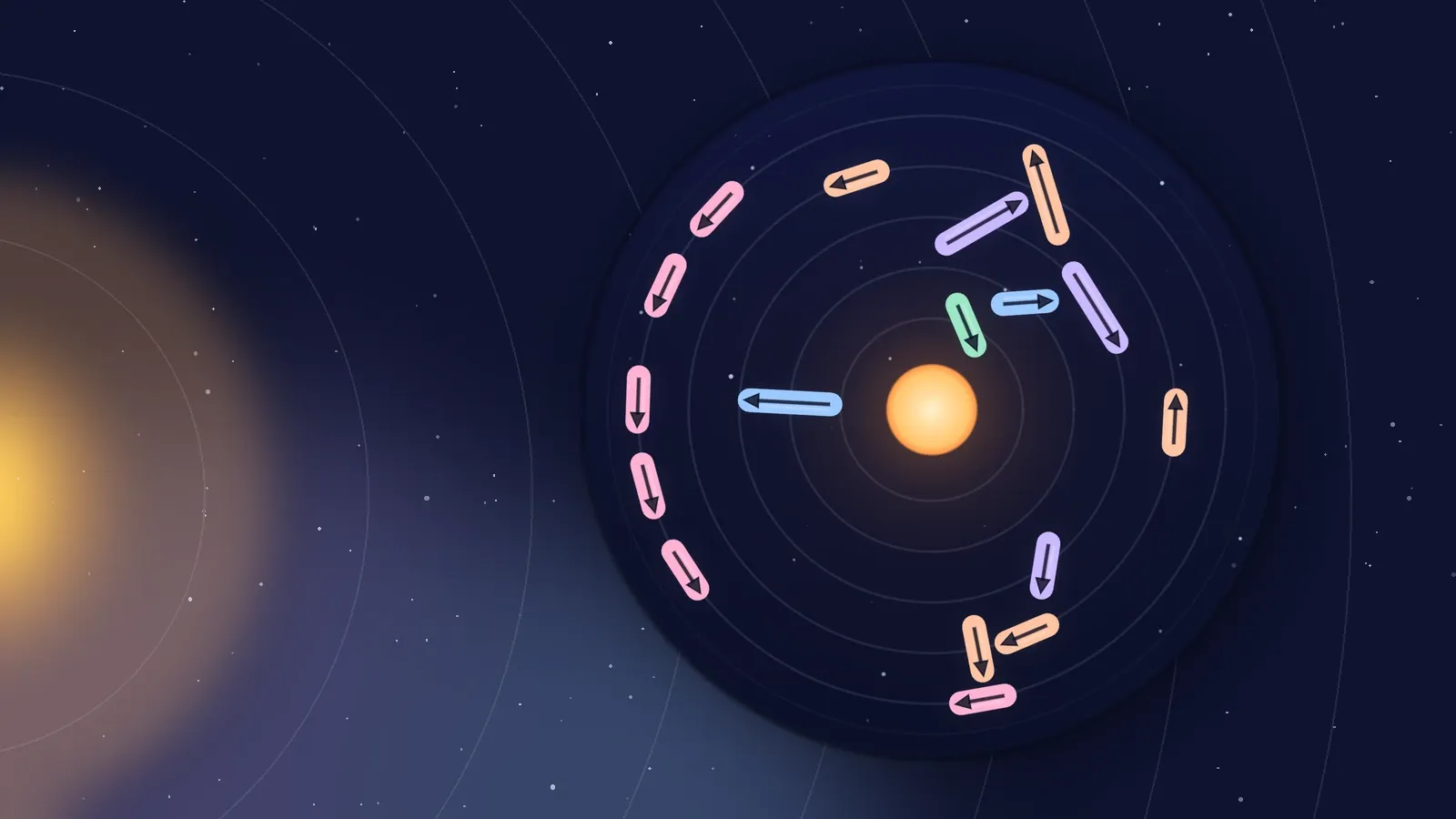
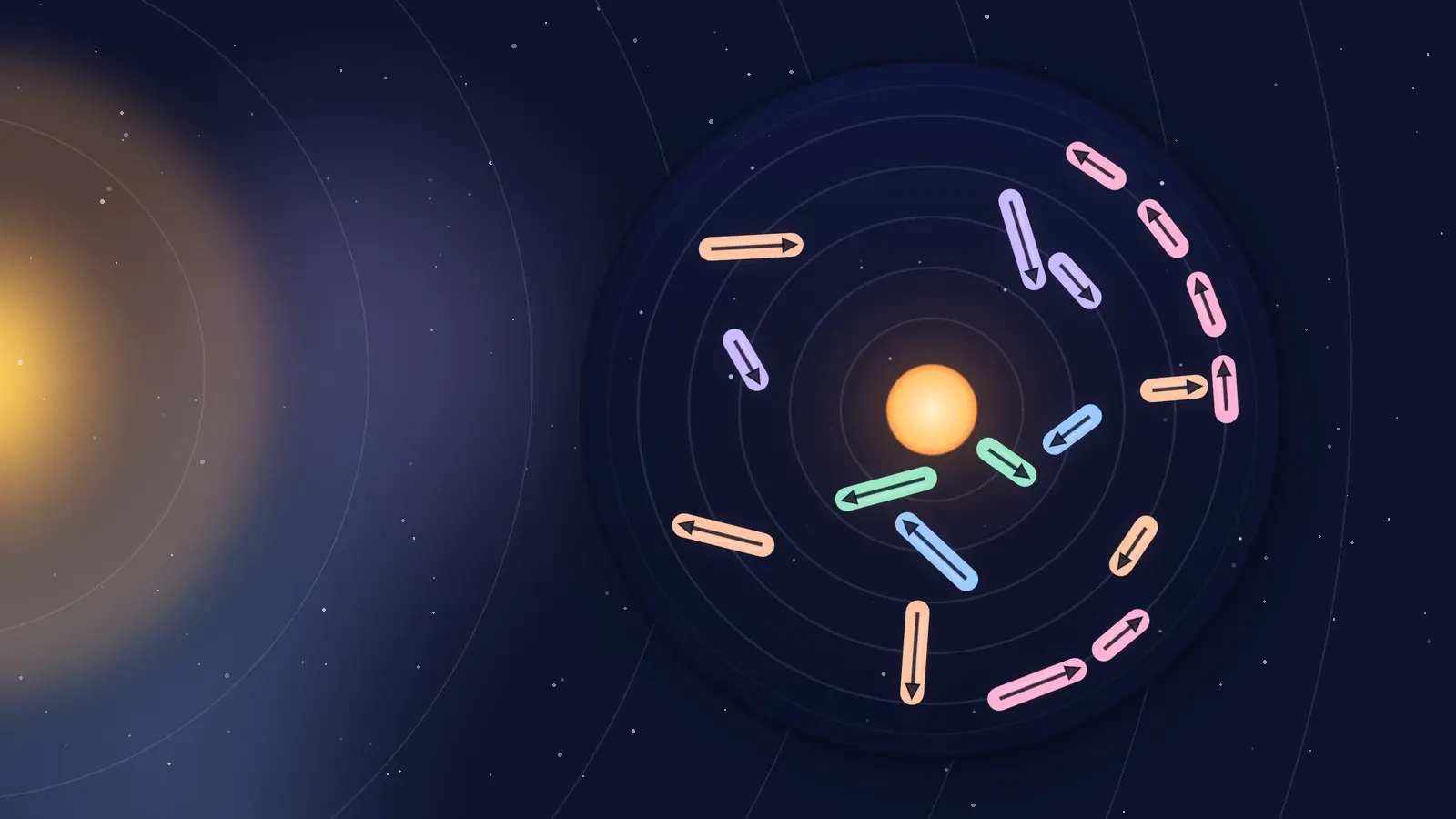
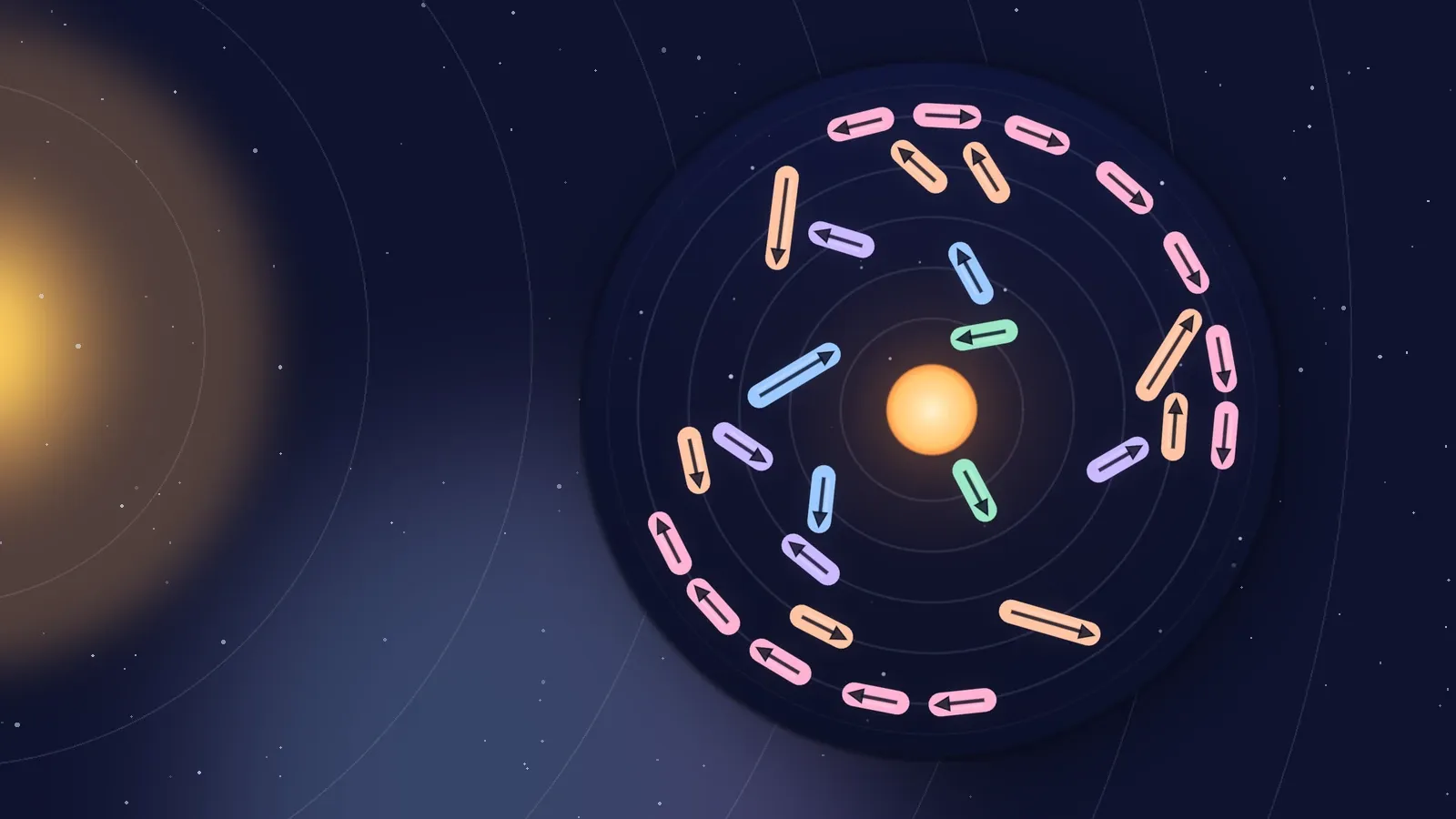
Apsis the game is a small planetary system: a warm sun, a few faint orbits and arrows resting on them. The first levels have two orbits, and later ones have up to five.
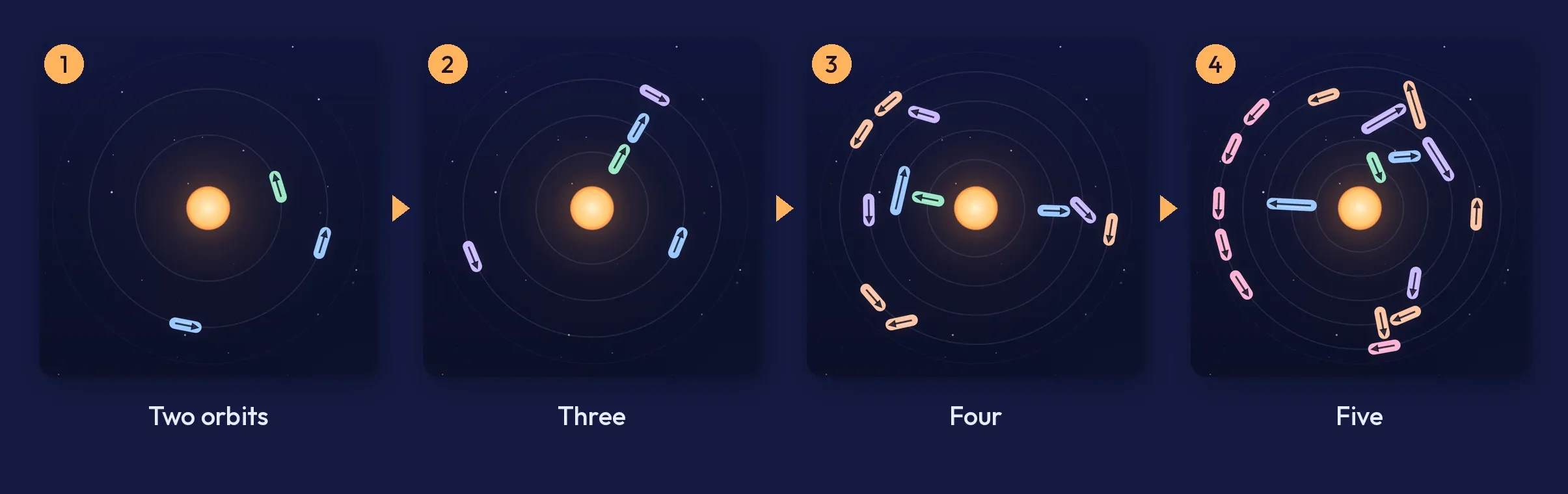
Here is the twist a stickler will spot: every orbit in the game is a perfect circle. A circle is an ellipse with an eccentricity of zero, where every point is the same distance from the centre, so there is no single nearest or farthest point, and a circular orbit has no apsides of its own.
That suits the game. The orbits in Apsis are not tracks the arrows travel along. They are where the arrows rest, waiting for their moment to leave. When you tap one, it does not go round at all. It flies off in a straight line and, if nothing is in its way, leaves the system for good. For the maths of those straight lines, read straight lines across circles.
Why we chose the name
The game’s working title was Orbit Out. The name it shipped with is shorter and stranger: a real word from astronomy, five letters long, that sits well in the game’s light lowercase type. The title screen sets it as a wordmark with its last two letters in the sun’s warm orange.
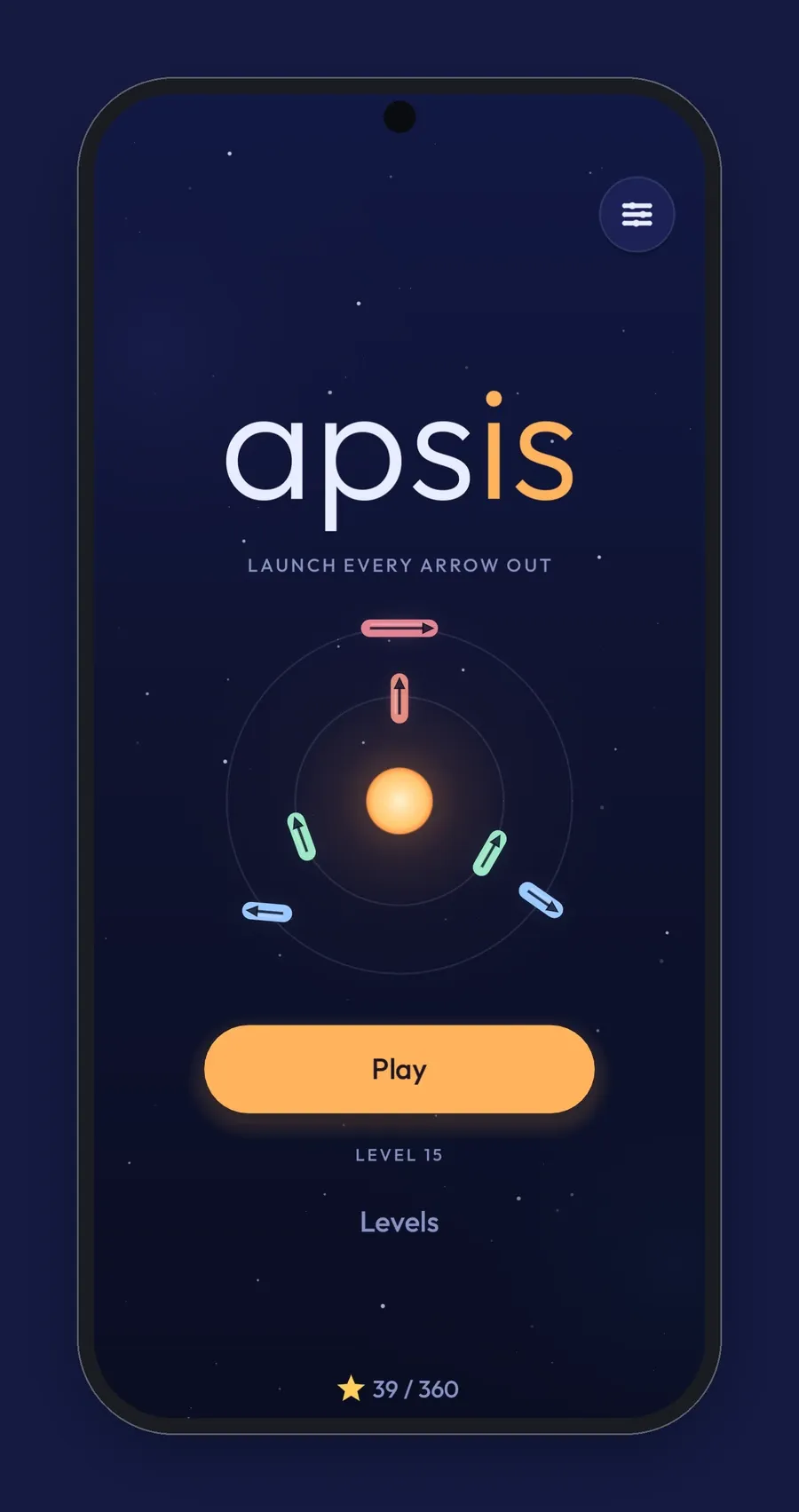
It is also a word most people have never seen, which makes it easy to search for and hard to forget. If you have read this far, you now know more about apsides than most people who play the game. For how the game itself plays, start with how to play Apsis.
Written by

Shravan Goswami
Game designer and developer
Claude Opus 5.5
AI co-developer
Comments
Sign in with GitHub to leave a comment or a question.