 Pyxis
Why the threads in Pyxis feel alive
Knots on springs, strands that bow and settle, crossings that snap apart: the small physics that makes a Pyxis web feel like thread, not lines on a screen.
 , 3 min read
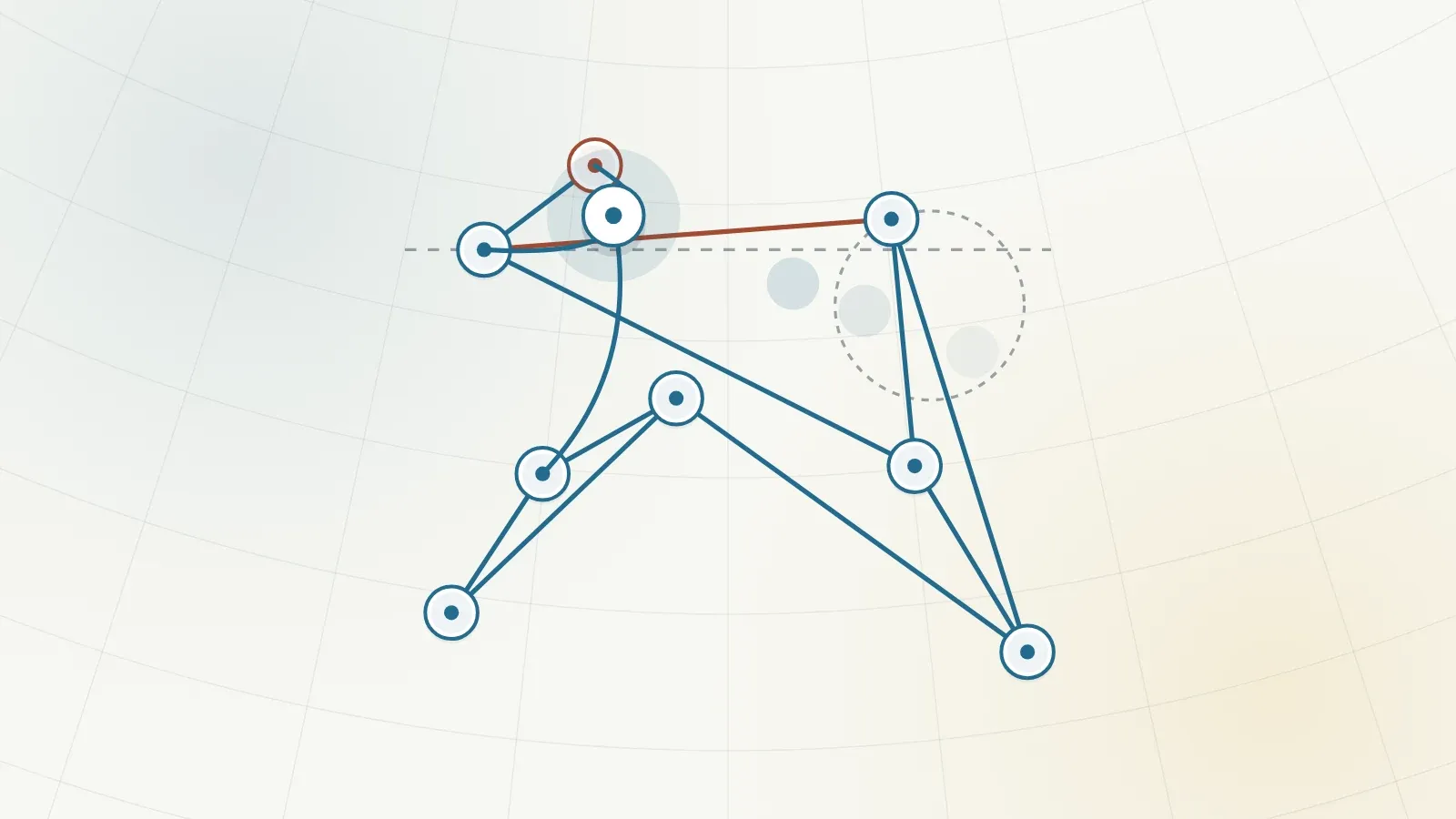
A Pyxis web is knots and straight lines. That is all the rules ever see. But a straight line that jumps from one place to the next feels like a diagram, and a web should feel like thread. So the picture on your screen follows the rules a little loosely, and catches up.
Knots on springs
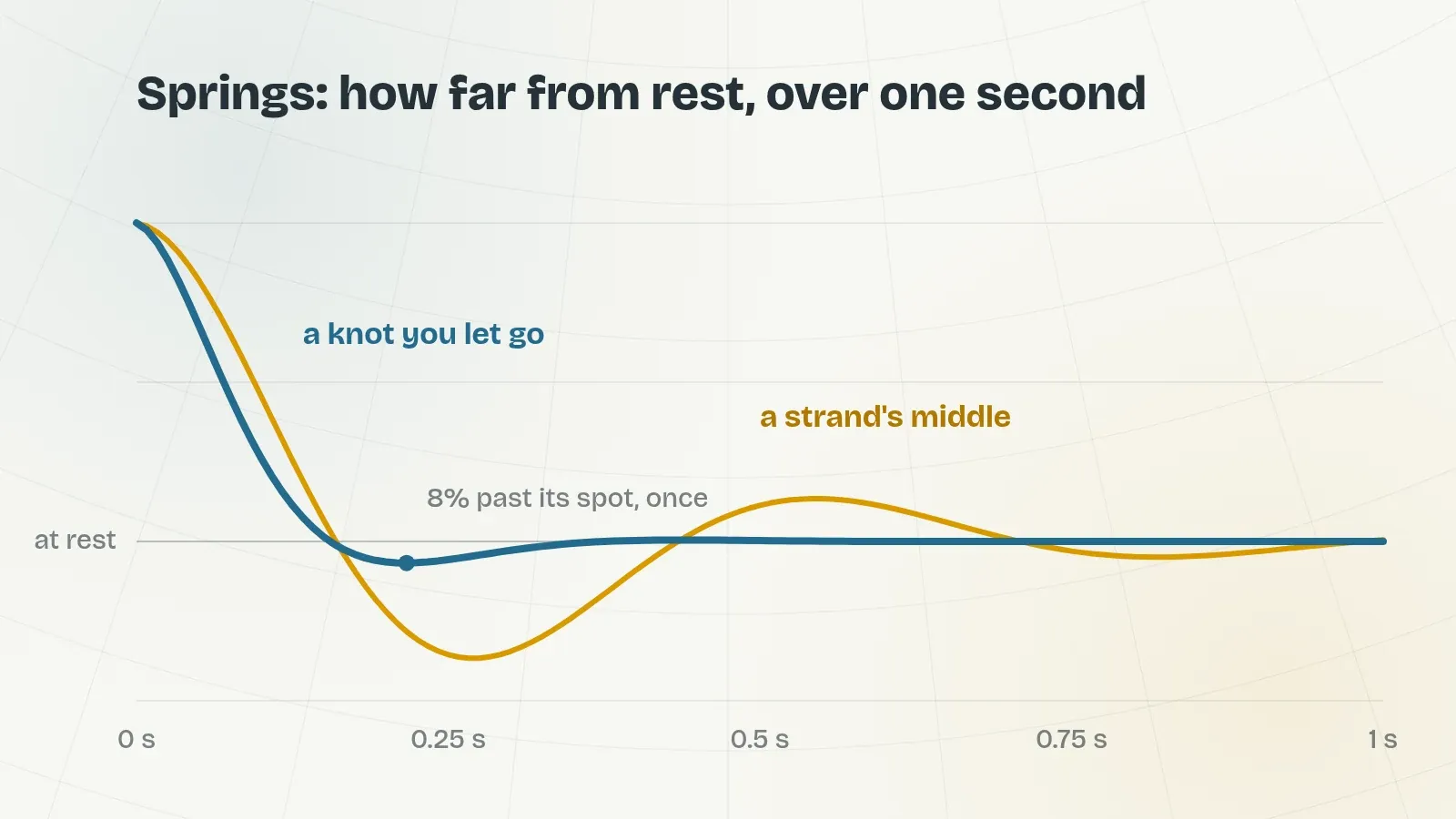
When you let a knot go, it does not teleport to its spot. A spring pulls it there, a little too far, and back. It overshoots by about eight percent and settles in about a third of a second, which is quick enough to feel instant and slow enough to feel soft.
The knot in your hand is on a much stiffer spring, so it stays right under your finger. When you pick it up it grows a touch and its shadow drops away, as if you had lifted it off the paper. When you let go it shrinks back with a small bounce.
Strands that bow
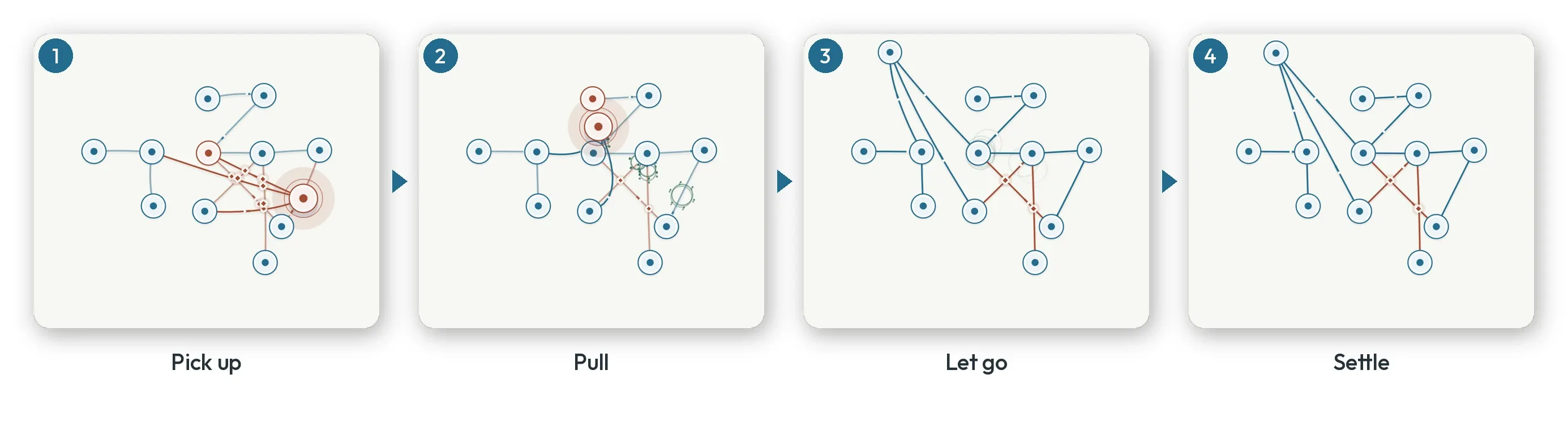
Each strand is drawn as a gentle curve, and the middle of that curve hangs on its own, looser spring. When one end moves, the middle lags behind, so the thread bows away from the pull. Then it wobbles back, a little less each time, until it is straight again.
The bow never grows past a little over a quarter of the strand’s length, so a fast flick never turns a thread into a loop. And at rest every strand is exactly straight, which is what the rules see. What you see is never a different puzzle from the one you are solving.
Tension you can see
A tangled strand hums, a hair either side of straight, as if it were pulled tight. Where two strands cross there is a small rust diamond with a slow heartbeat. Neither is loud, but your eye finds them.
When a crossing clears, it snaps. A small ring and six flecks fly out from the spot where it was, and the hum in that strand stops. You can watch a whole web relax, one crossing at a time.
The win starts where you finished
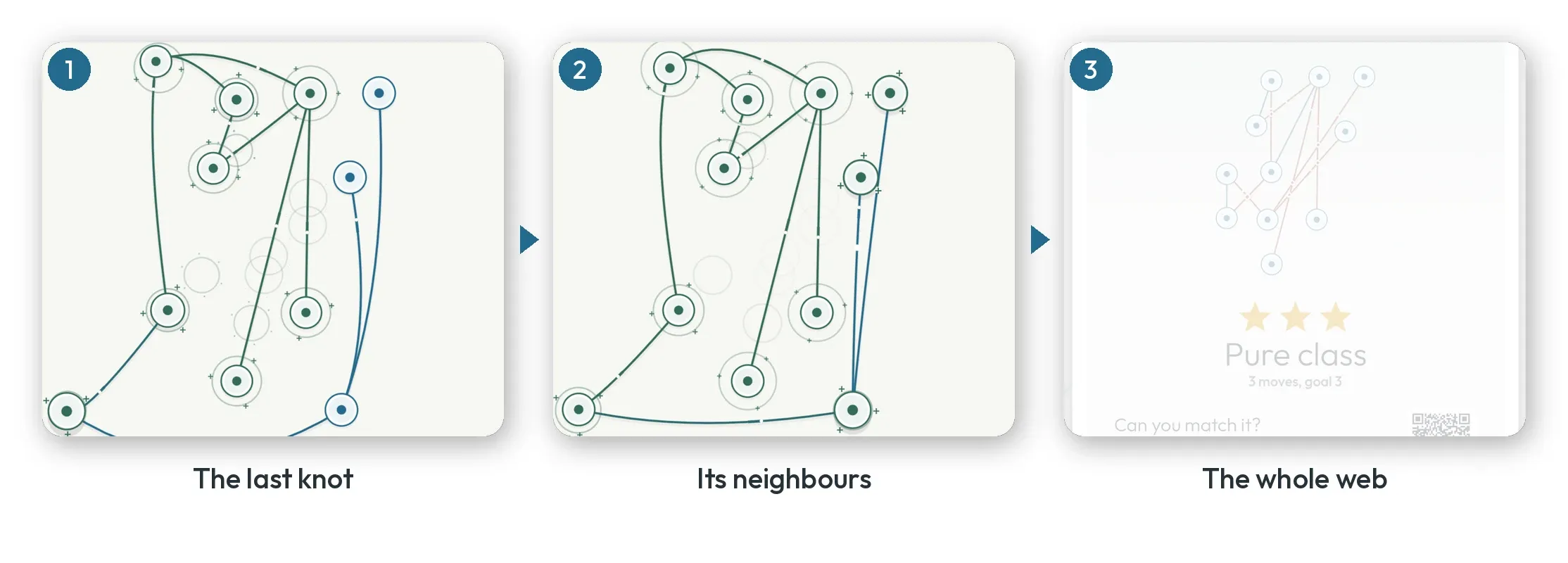
When the last crossing goes, the web does not turn green all at once. It lights up from the knot you moved last, then its neighbours, then theirs, one ring of the web at a time. A bright bead runs along each strand from the end that lit first to the end that lit last.
A constellation finds its sky
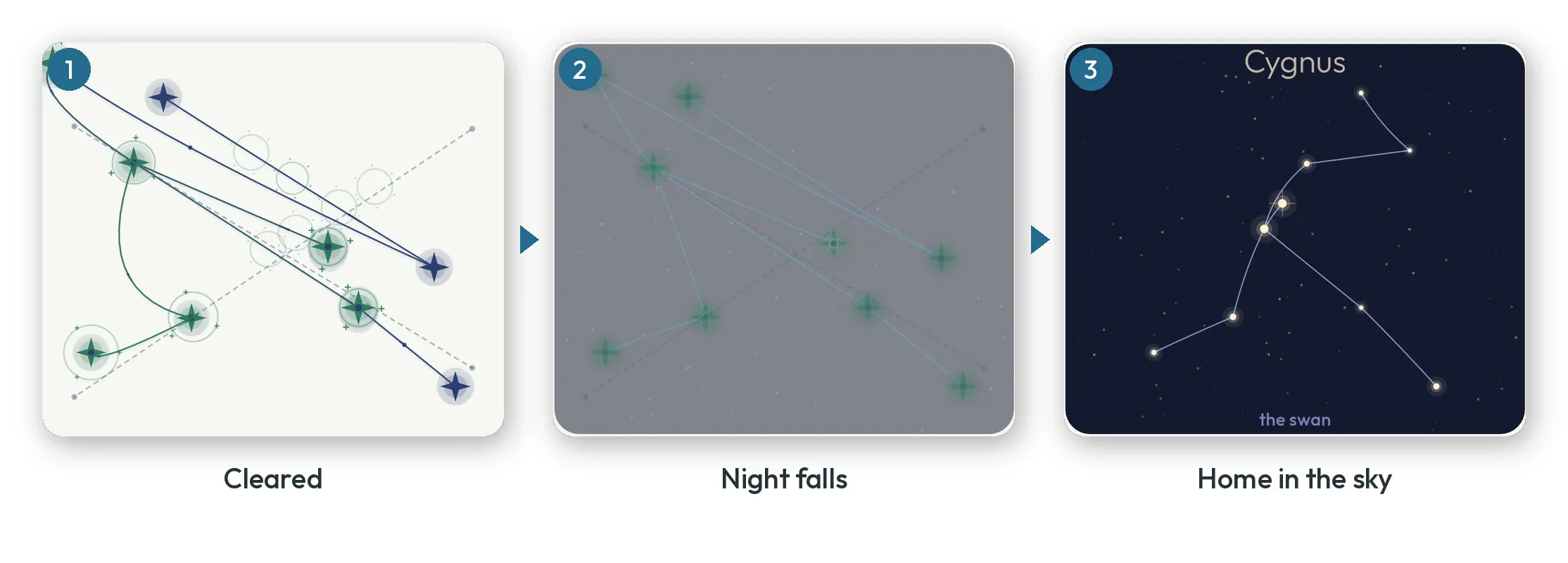
Some webs are real constellations. When you clear one, night falls on the board. The knots fade into stars, each as large as it is bright, and glide from wherever you left them to where they really sit in the sky. The strands thin into the lines of a star chart, and the constellation’s name rises above it.
Why bother
None of this changes a single rule. A web is just as hard with or without it. But a calm game is made of small things, and a thread that gives a little when you pull it is one of them.