
Calm by design: why Carillon has no timers, lives or energy
Carillon has no timers, no lives and no energy, and no ad ever interrupts a chain. Why we built a chain-reaction puzzle that waits for you, and where you will notice it.
On this page
Chain-reaction games are usually loud. Tap fast, beat the clock, watch the combo counter. Carillon takes the same spark, one tap and a cascade, and asks you to slow down instead. This post is about the choices behind that, and where you will notice them.
Nothing is rushing you
There is no timer anywhere in Carillon. No countdown, no bonus for speed, no par time. A level waits on the screen for as long as you want to look at it.
The only limit is taps, and it is a puzzle limit, not a pressure one. Even the next tap waits: a new chain can only start once the last one has finished spreading, so you never have to tap quickly to keep up.
Looking is free
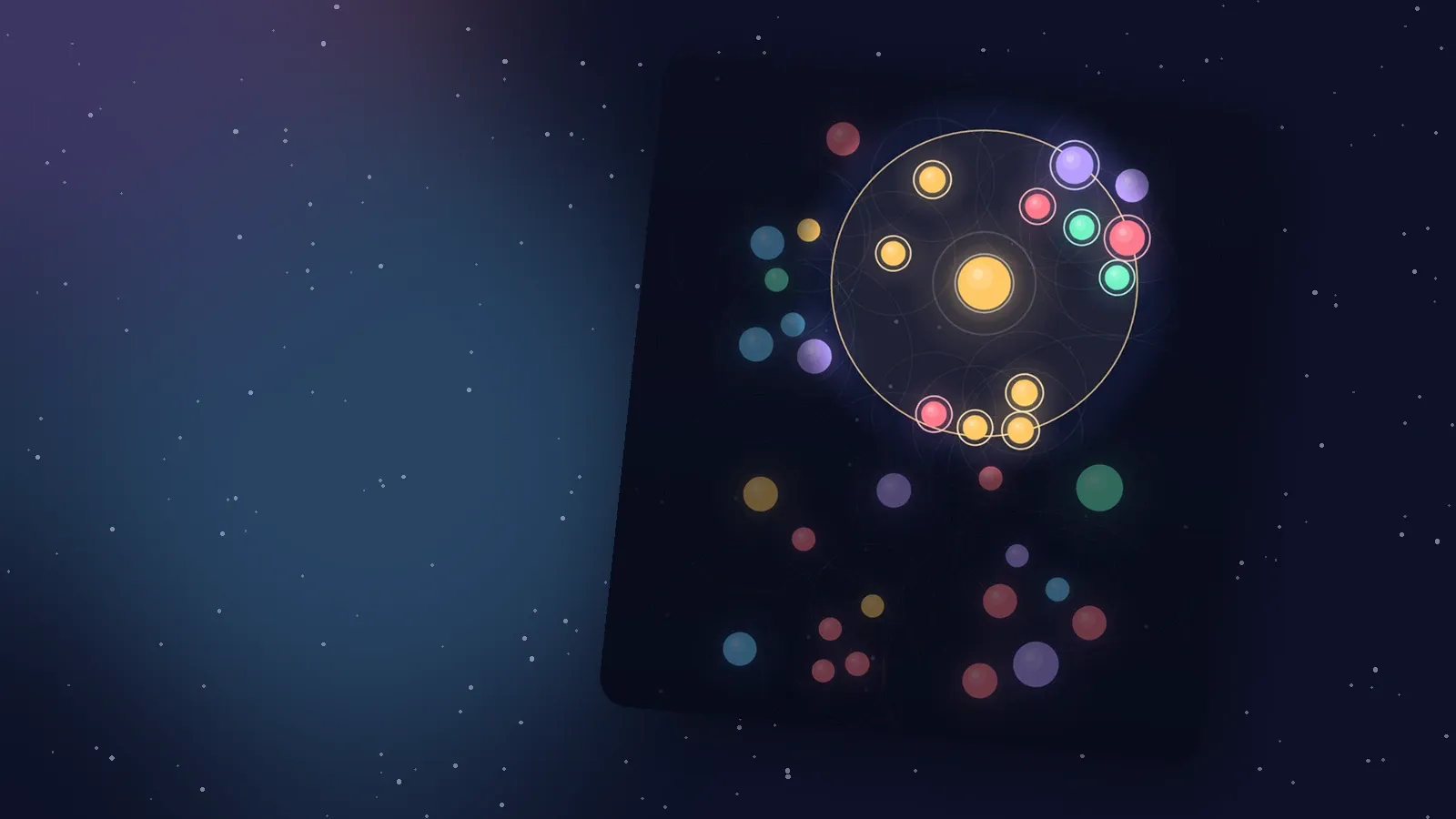
The single most important choice in Carillon is that holding a dot costs nothing. You can hold every dot on the field, one after another, and see exactly what each ring would reach. Lift on the dot to tap it; slide away and nothing happens.
That turns the game from guessing into reading. It also means a new player and a veteran play the same game; one of them just holds more dots first.
A mistake costs a star, not the level
Every level allows one spare tap. If you tap the wrong dot, you can still clear the field, for two stars instead of three. And because a wrong tap never removes the start of a chain, the spare is always enough to recover.
If you do run out, Retry is one tap and the field is back instantly. There are no lives to lose, no hearts to refill, and no energy to wait for. Restart is always at the bottom of the screen, and the hint is always in the corner.
A quiet screen
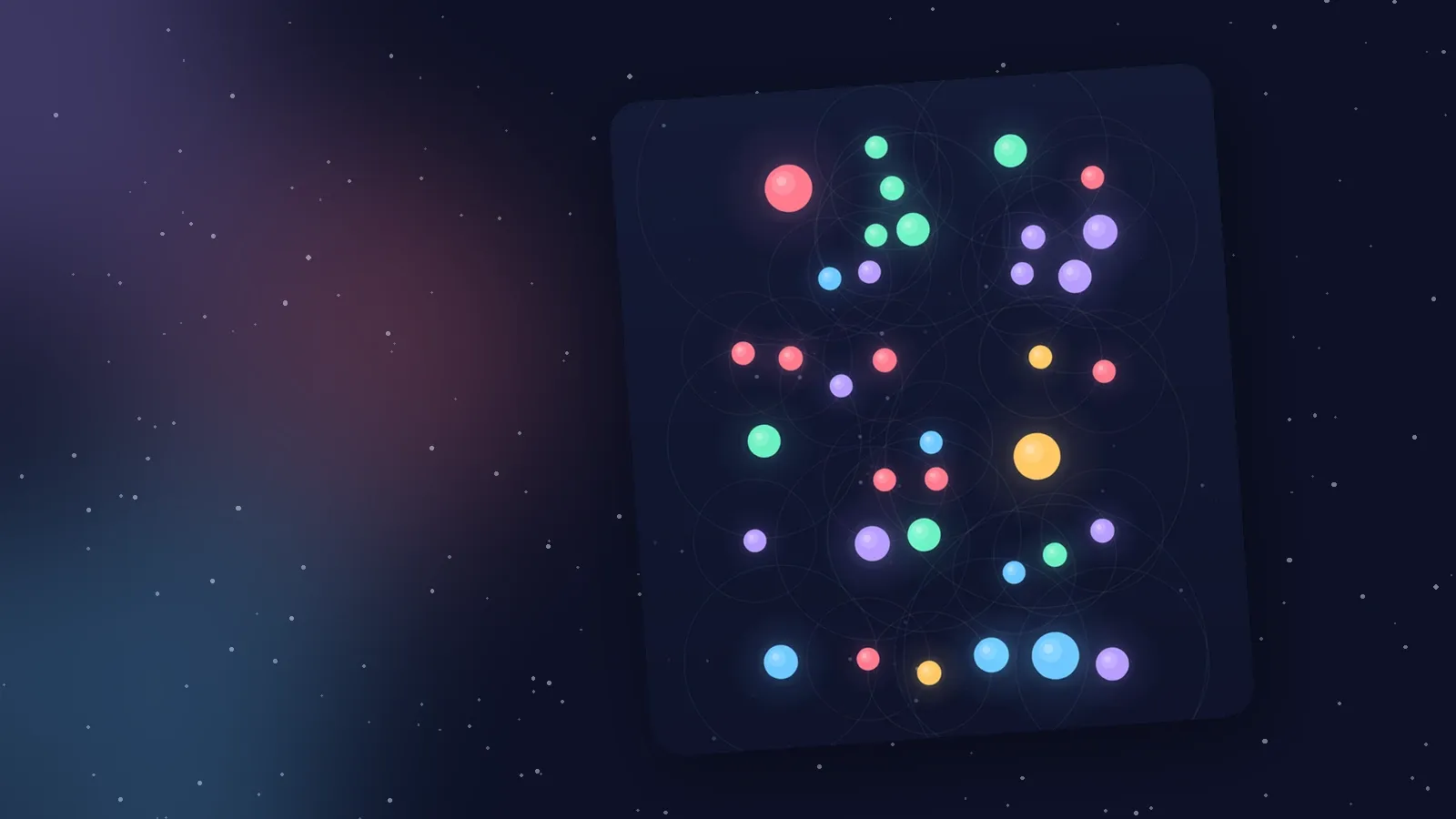
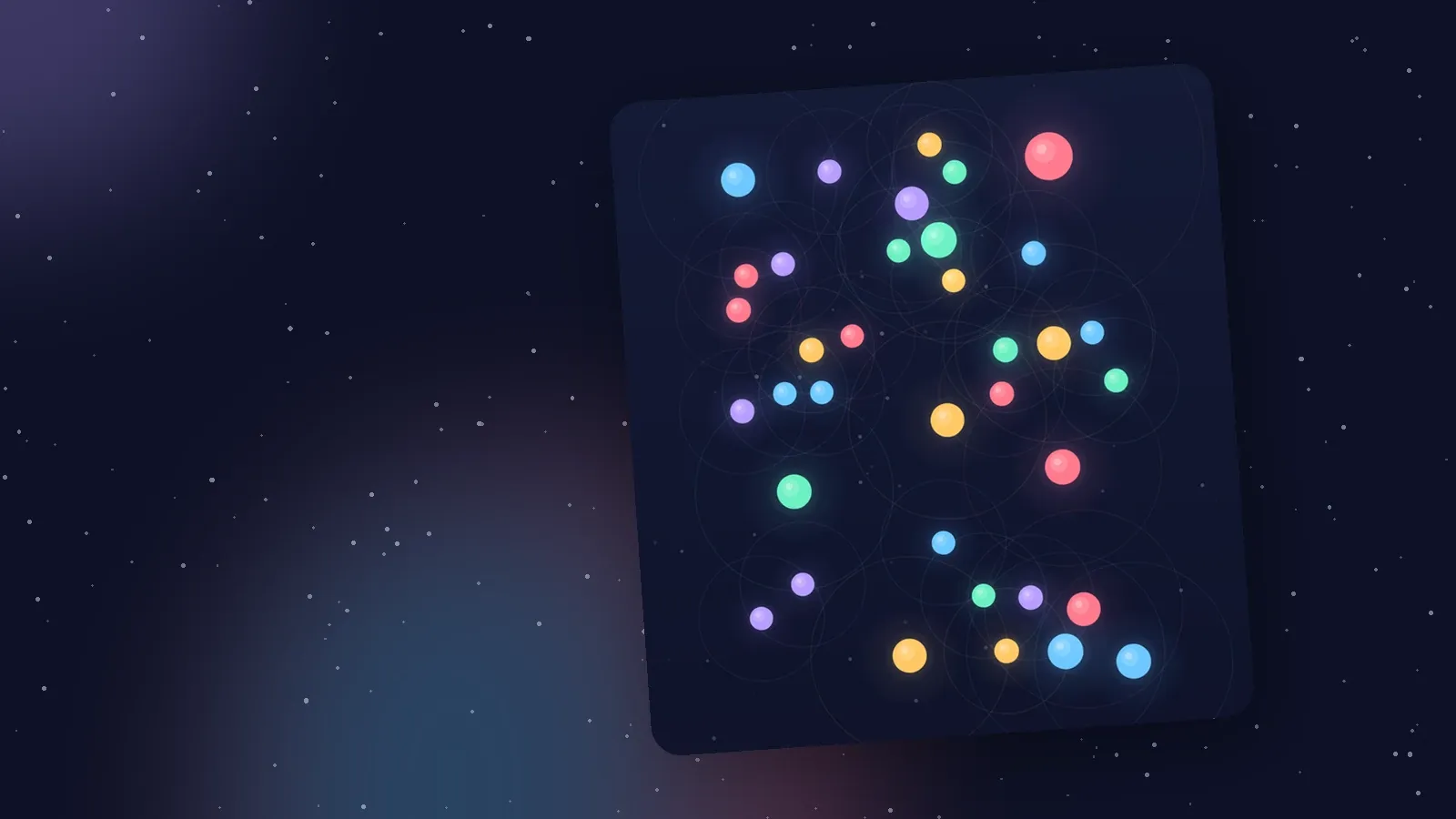
Carillon’s look is a night sky, and it is meant to feel like one.
- The stars drift upward very slowly, a few pixels a second, and twinkle out of step.
- Each dot breathes, its size moving a few percent, with a rhythm set by where it sits, so the field shimmers unevenly like real stars rather than pulsing in unison.
- A big dot’s pop gives the screen the smallest shake. One big pop is a tremor; a cascade of them builds to a gentle rumble, then fades.
Sound you control
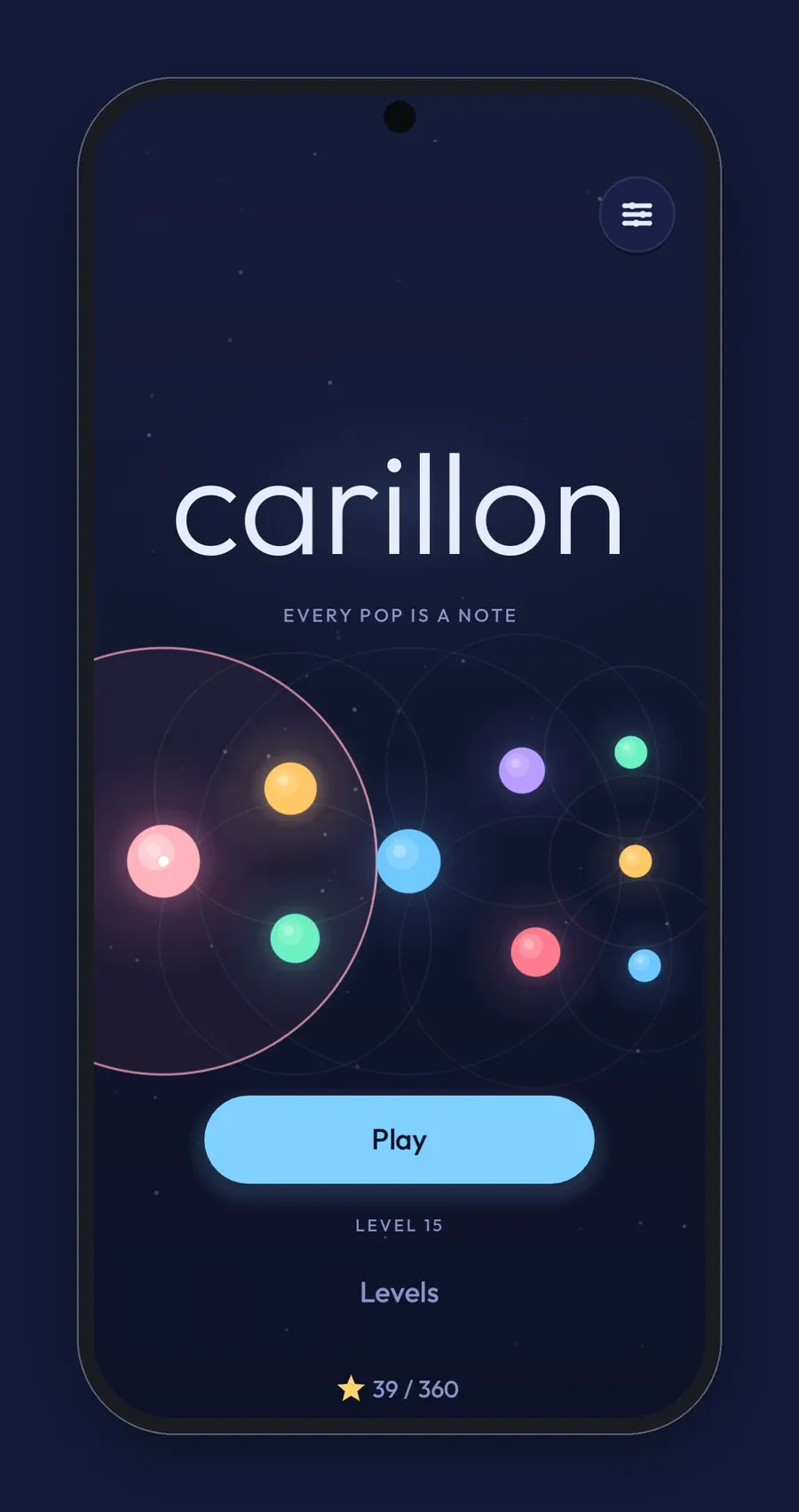
Every pop is a note from a pentatonic scale, so a chain always sounds consonant, never harsh. Why every pop is a note explains how. There is no background music on top, because the notes are the music.
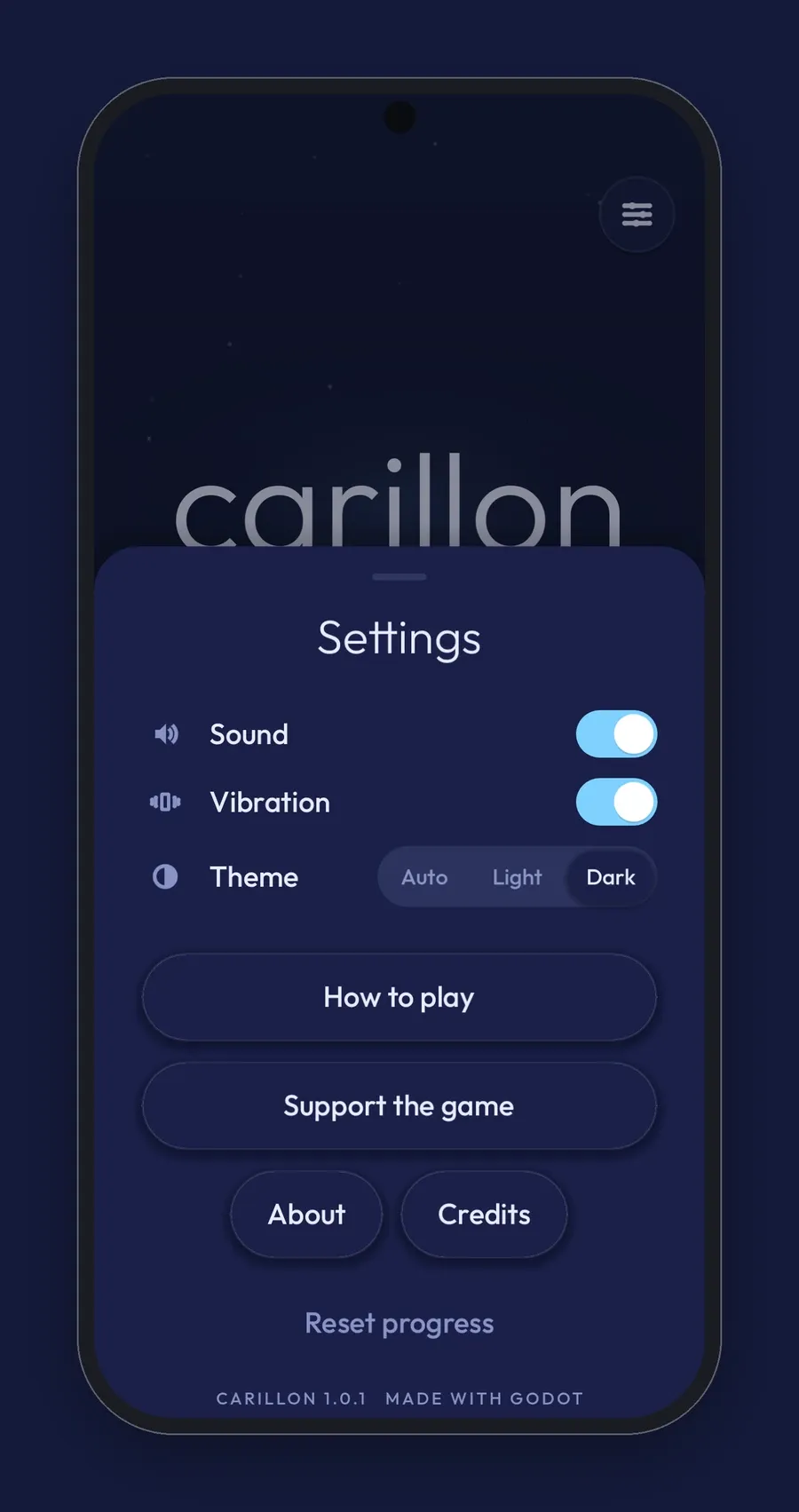
The Settings sheet opens from the gear on every screen, even in the middle of a level, and has just two switches:
- Sound turns every note and sound on or off.
- Vibration turns on a light tick under your finger for each pop, a touch firmer for big dots and for a clear.
Below them is the Theme. Dark is the night sky Carillon was designed in, Light is the same sky at dawn, and Auto follows your phone. How to play replays the first level’s short guide. Then come About, Credits and Reset progress, which asks you to tap a second time within a few seconds before it erases a single star. In the Android app, Support the game opens the Supporter pack, and Privacy choices, shown only where the law asks for a choice about ads, lets you change it.
Progress without pressure
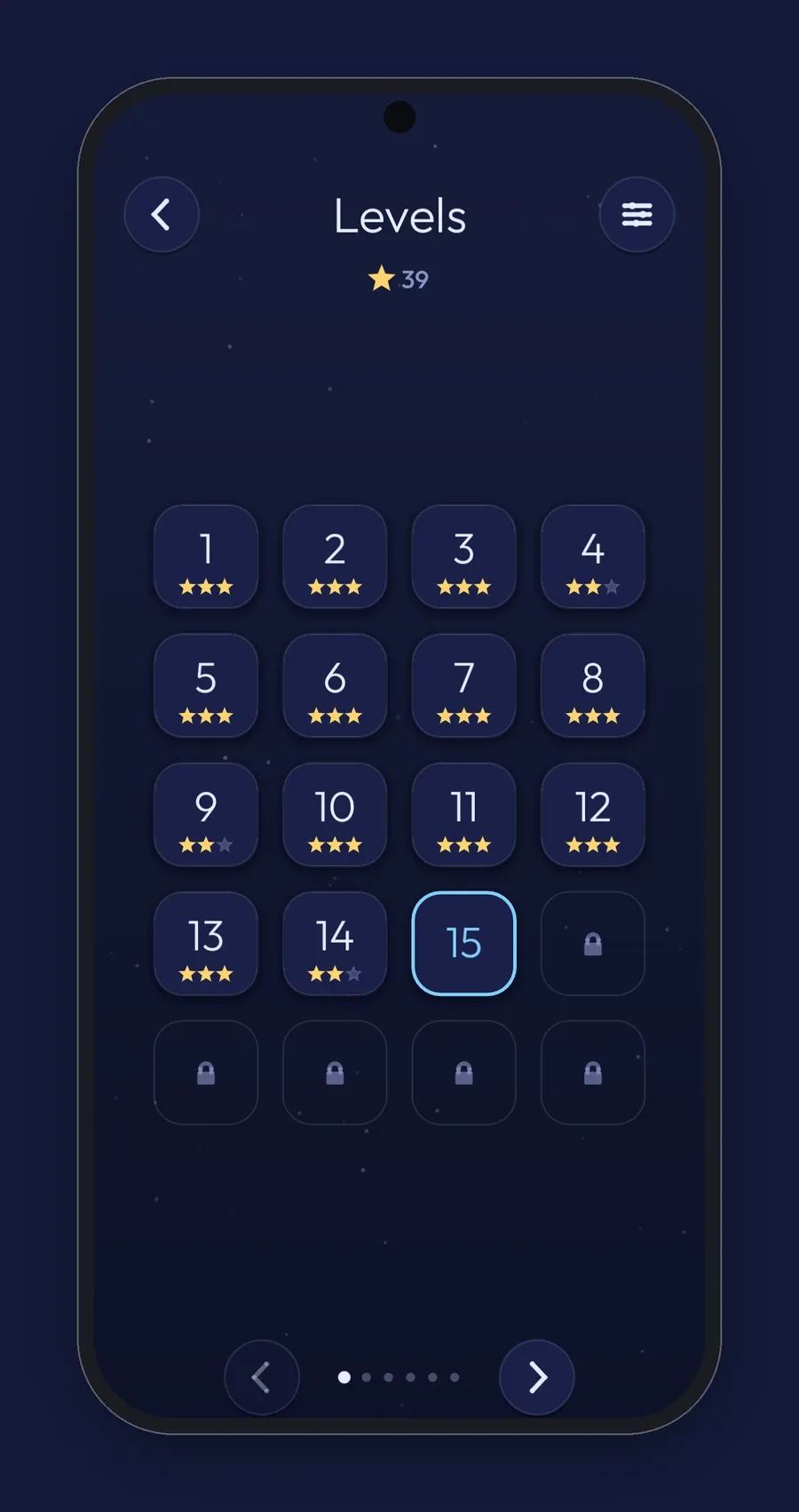
The level grid shows twenty levels a page, with the stars you have earned on each. The next level to play is ringed in blue, and a level opens as soon as the one before it is cleared, with any number of stars. You never have to go back for three stars to move on, and Play on the title screen always takes you to the first level you have not cleared yet.
Ads that stay out of the way
Carillon is free, and the Android app pays its way with a few ads. They are placed where they never touch a puzzle:
- a banner at the bottom of the level list, and one below the field while you play, never over it;
- now and then an ad between levels, only after you tap Next level on a cleared field, and never before you have solved the first dozen;
- a short video you can choose to watch for an extra hint, once the day’s free hints are used.
No ad ever covers the field, interrupts a chain, or appears after a level runs out of taps. If you would rather have none at all, the Supporter pack is a one-time purchase in the app that turns them off for good and makes every hint free. The web version never shows ads.
There is still nothing to sign up for. Carillon plays completely offline, on a plane or underground, and your progress stays on your phone; without a connection, the ads simply do not appear. The ads come from Google, which collects some data to show them, and the privacy policy explains what and how to change your choices.
Why it matters
A puzzle game is a small promise: here is a problem, and the time to think about it. Timers, lives and an ad in the middle of a level break that promise by making the game about something other than the puzzle. We would rather make a game you pick up for two minutes and put down feeling a little calmer.
If something in Carillon ever feels like it is rushing you, tell us on the support page. That is a bug.
Written by

Shravan Goswami
Game designer and developer
Claude Opus 5.5
AI co-developer
Comments
Sign in with GitHub to leave a comment or a question.