
How Carillon's hint works, and when to use it
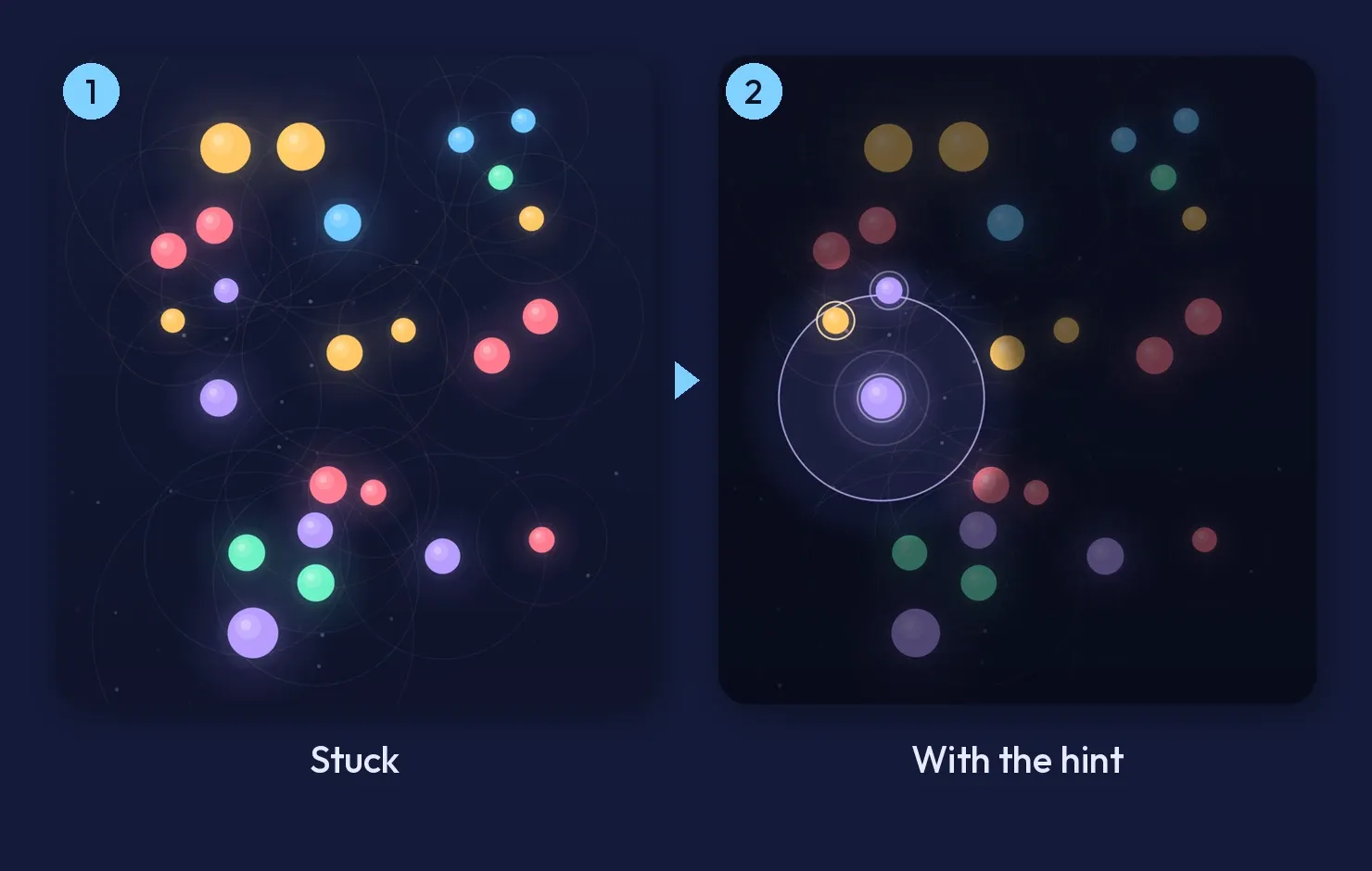
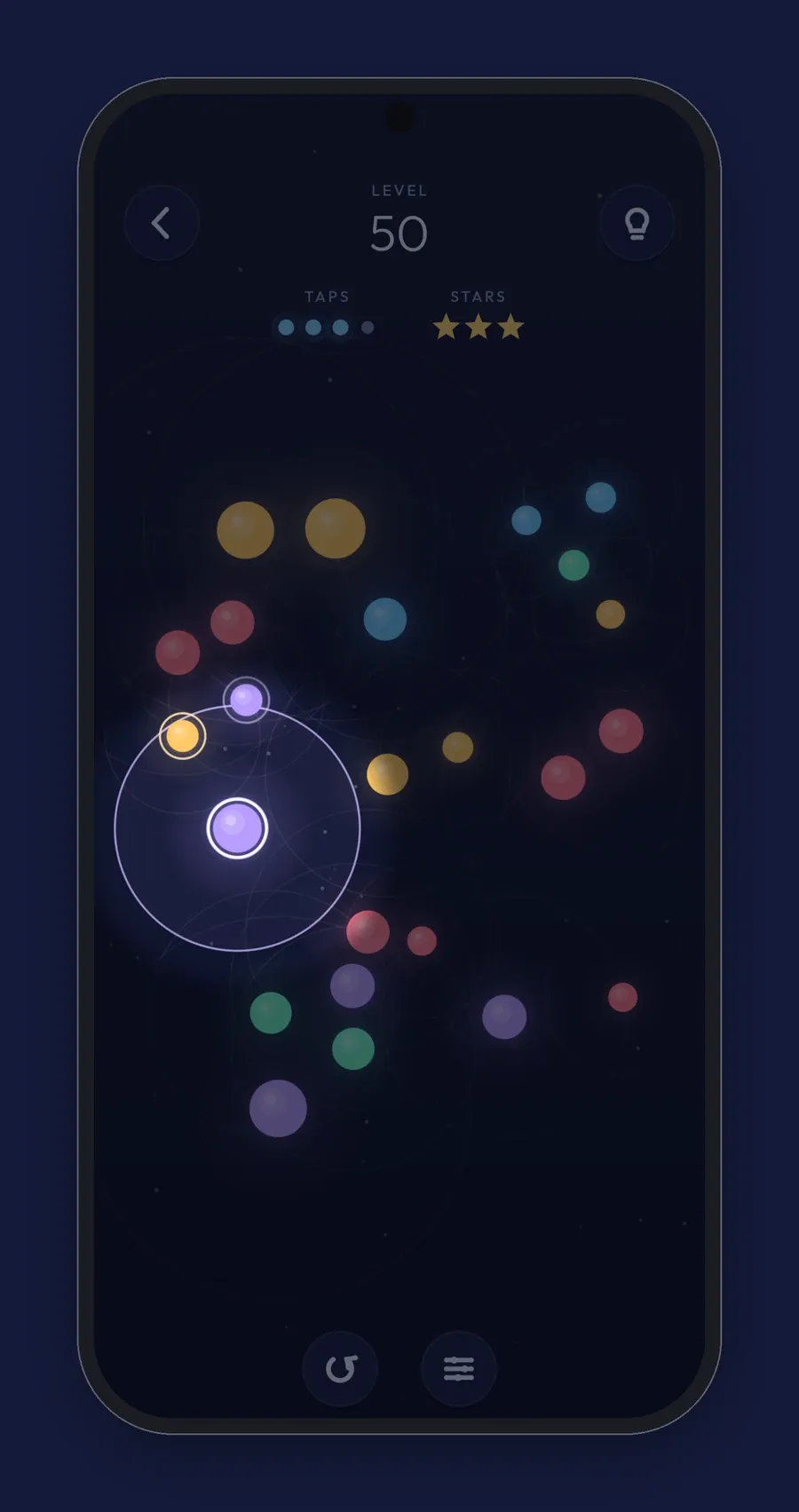
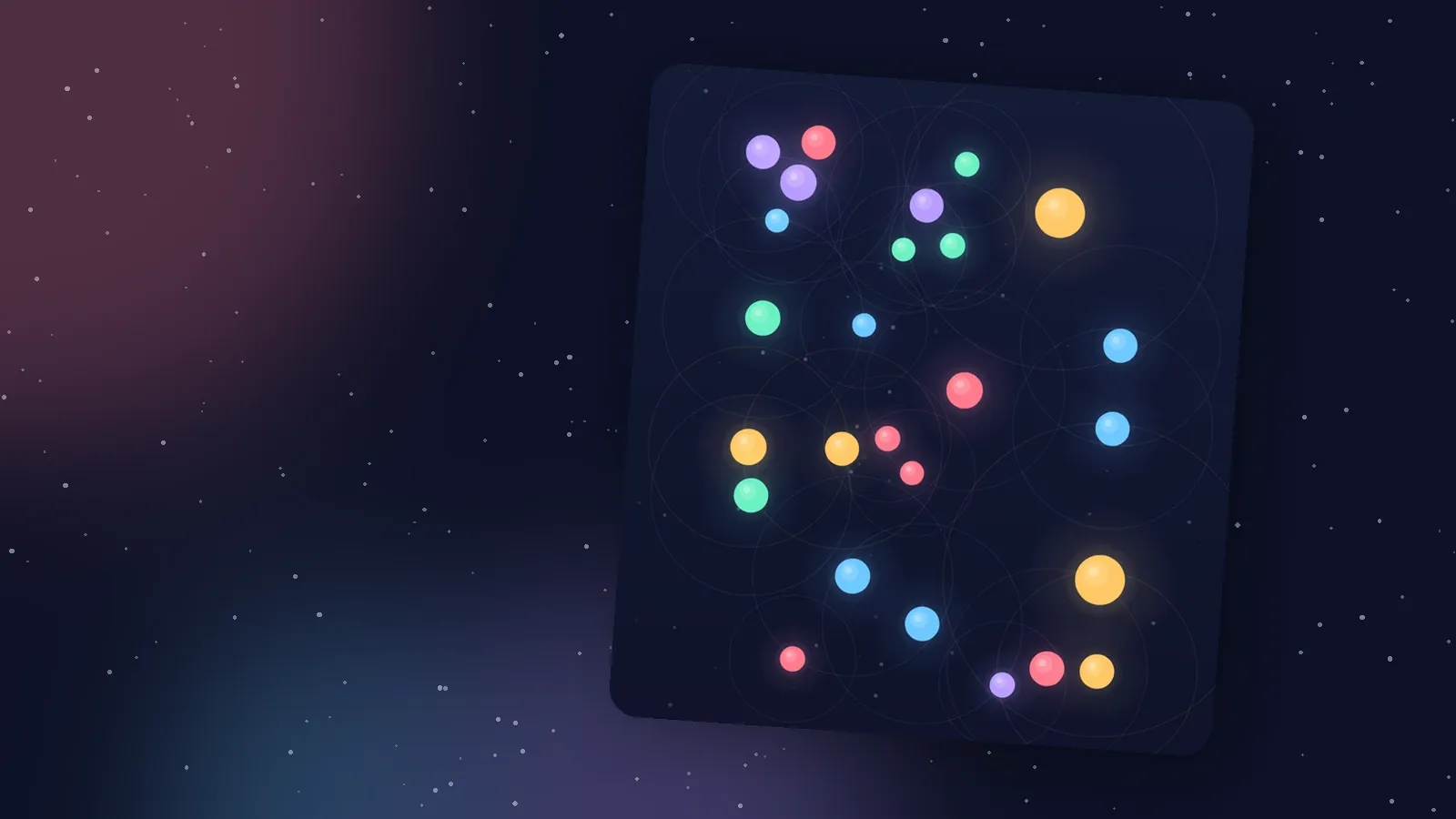
Carillon's hint lights the best next tap from wherever the field is now: it dims the rest, sweeps out the dot's reach and outlines what its ring will pop.

On this page
Every Carillon level has an answer, and the game knows it. The hint is how it shares that answer one tap at a time, without playing the level for you. This post covers what the hint shows, how it picks the dot, and how to use it so you still learn the field.
How to ask for a hint
Tap the light bulb at the top right of the play screen. In a browser you can also press H.
If a chain is still spreading when you ask, the hint waits for it to finish and then answers, so it always plans from a field that has settled. Asking costs no tap and no stars.
How many hints you get
Every hint on the first 15 levels is free, as many as you like, while you learn how chains spread. After that, the Android app gives you 3 free hints a day, and the count starts again at midnight. The light bulb shows how many are left, and a small play mark when the next one needs a video.
Once the free ones are used, the hint asks whether you would like to watch a short video for it. Say Not now and nothing happens; if no video is available, say because you are offline, you get the hint anyway. With the Supporter pack, every hint is free, and in the web version, which never shows ads, a hint never needs a video.
What you see
Four things happen at once:
- The screen dims, except for a round window around one dot and its reach.
- That dot’s reach sweeps out, exactly as if you were holding it.
- The dots its ring will touch are outlined, so you can see where the chain goes first.
- The dot pulses, so you can find it again after you look away.
The first time you touch the screen, the dim lifts and you have the whole field back. The pulse stays on the dot until you start a chain, so you can hold other dots, check the hint’s reasoning, and then tap it when you are ready.
How it chooses the dot
Behind the hint is the same solver that set the level’s taps in the first place. From the field as it is right now, it asks one question of every live dot: if I tap this, can the dots that are left still be cleared in the taps that are left? Those are the winning taps.
Often there is more than one. A winning tap is any dot in a group that no other ring can reach, the start of a chain. The hint picks, among the winning taps, the one whose chain pops the most dots. That is the tap that clears the most of the field, and on a level with several chains it tends to be the biggest one.
The solver is fast because what a tap pops depends only on who reaches whom, never on timing. It works out every dot’s full chain once, as a set, and after that each “what if” is one quick operation on those sets. It finds the fewest taps for every shipped level in about a tenth of a second, and even the slowest hint, on a five-tap field of 36 dots with no spare tap left, takes under a hundredth.
It works after a mistake too
The hint never replays a stored answer. It plans from the field you have, so it still helps after you have spent a tap somewhere unhelpful.
This works because of how Carillon is built. A tap that is not the start of a chain pops some dots, but it never removes a chain’s start. So after one wasted tap, every start is still on the field, and you still have exactly enough taps to tap each one. The hint points at the next of them.
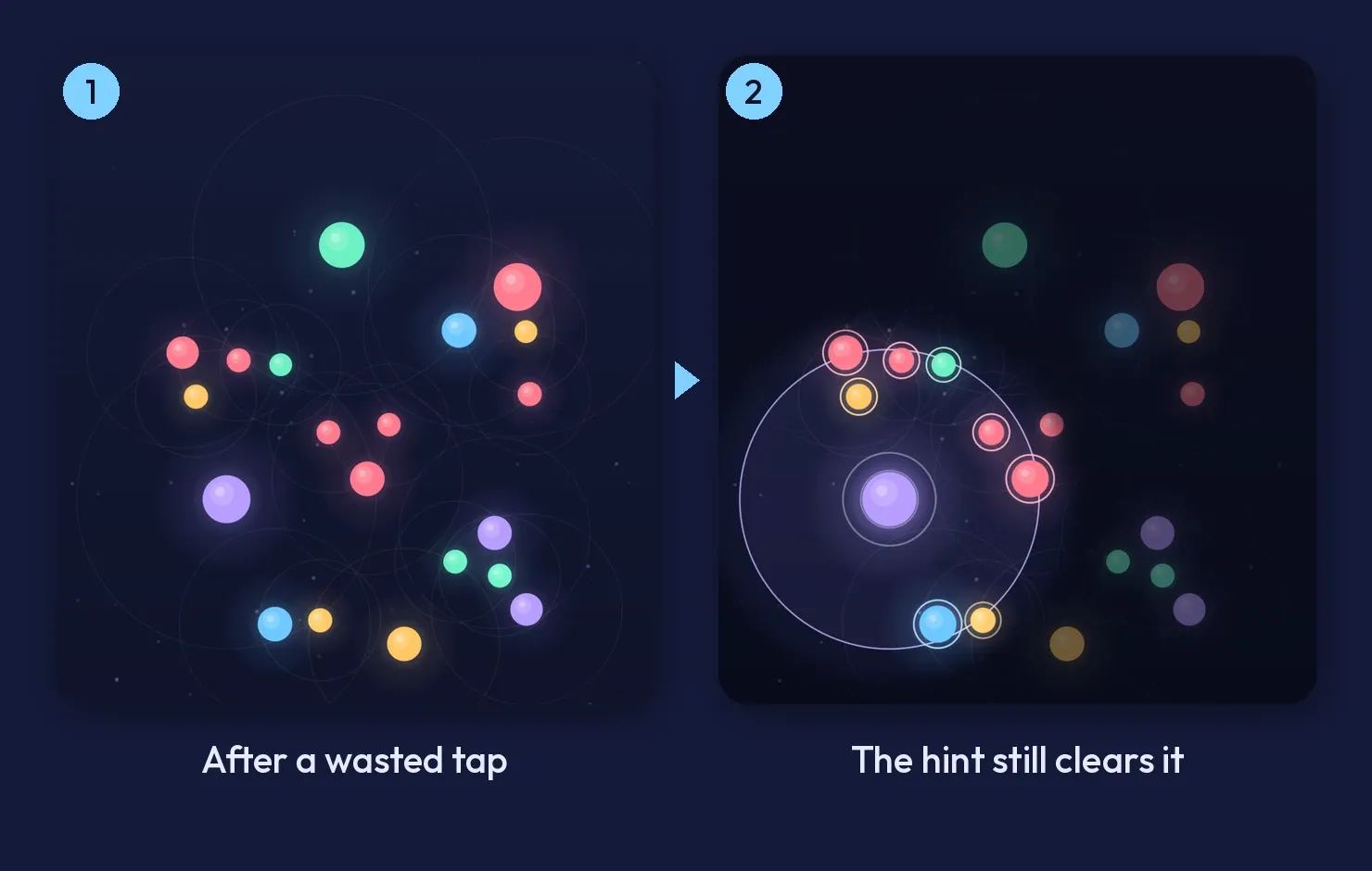
The game’s tests check exactly this on every build. For every level, they follow the hint alone from the start, and it must clear the field in the fewest taps. Then they do it again after a deliberately wasted first tap, and it must still clear within the spare.
When there is no clear left
If you have spent more taps outside the chain starts than the spare covers, no clear is possible from here. The hint says so, with a short note: “No clear from here. Restart and read it again”. Restart brings every dot back, and the hint will help from the top.
Using it without spoiling the level
The hint is a teacher if you let it be. A few ways to get the most from it:
- Ask why. When the hint lights a dot, hold that dot’s neighbours. None of their outlines will include it. That is the pattern to look for next time.
- Ask once, then stop. On a level that needs several taps, take the first hint, tap it, and try to find the next start yourself.
- Use it after a wasted tap. If a tap went wrong, the hint shows you what you should have tapped instead, while there is still time to earn two stars.
For the habits that make the hint less necessary, see seven beginner tips. And if you want to know why “no other ring can reach it” is exactly the right test, chain reactions as graphs has the maths.
Written by

Shravan Goswami
Game designer and developer
Claude Opus 5.5
AI co-developer

Comments
Sign in with GitHub to leave a comment or a question.