Prototype, vertical slice or demo: what should you make?
Learn what a game prototype, vertical slice and demo should prove, with a small worked example and practical checks for choosing your next milestone.
 , 4 min read
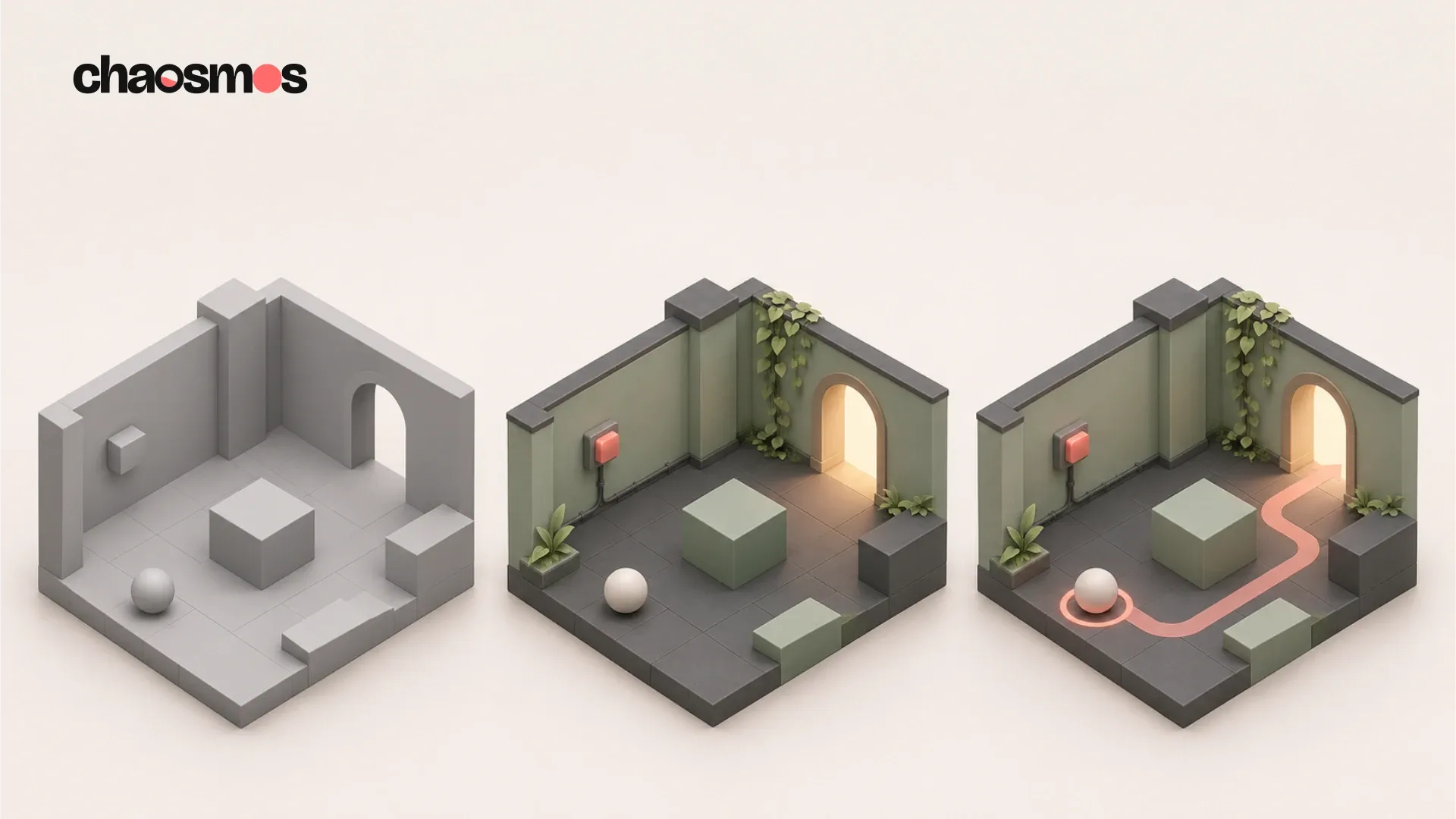
A game prototype, a vertical slice and a demo can all be short and playable. The useful difference is the question each one answers.
A prototype explores an uncertainty in the design or technology. A vertical slice demonstrates a representative piece of the intended quality and the work needed to produce it. A demo introduces the experience to a player who may be deciding whether to play more. These are working definitions for planning your project, since teams can use the terms differently.
Before choosing a label, finish this sentence: “After someone plays this, we need to know whether…” The answer should determine the next piece of work.
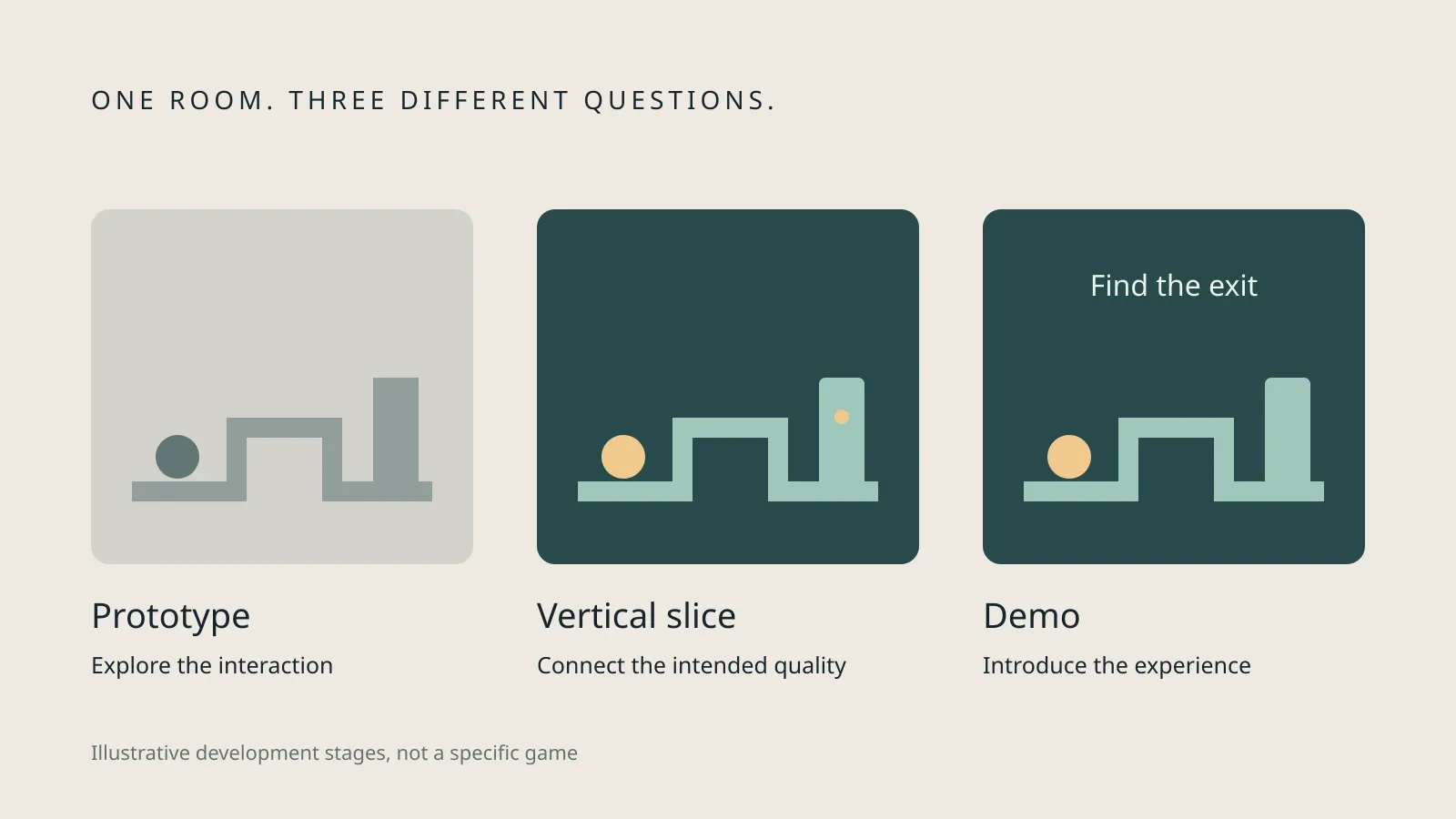
A prototype should help you make a decision
Imagine a hypothetical game about redirecting a moving light through a small room. Your uncertainty is whether moving a reflector while the light travels feels understandable and interesting. You can explore that with plain shapes, one control and an obvious reset.
Decide what would change your mind before adding polish. For example: can a new player explain why the light changed direction after trying the interaction? Do they make a deliberate second attempt, or only move objects randomly? Those observations can help you decide whether to keep the mechanic, change its feedback or try a different interaction.
The prototype does not need a shop, a long introduction or enough rooms to fill an evening. It needs the smallest playable situation that exposes the uncertainty. If the question is technical, such as whether the intended device can handle the scene, test that technical constraint directly. A paper sketch cannot settle a device performance question.
A vertical slice connects the parts
Once the interaction has promise, a different uncertainty appears: can you produce the complete experience at the quality you intend? For the light game, a slice might include one representative room with its actual visual direction, sound, controls, feedback and restart flow. It should let you examine how those parts work together.
A useful published example comes from PlaySide Studios. In Unity’s 2025 interview about KILL KNIGHT, lead artist Hugh Trieu describes a visual vertical slice made separately from gameplay development. It brought together a biome, the protagonist, several enemies, key effects and rough interface elements to validate the visual direction and technical execution before production. PlaySide’s visual development interview
That example shows why the goal matters more than the label. PlaySide’s slice addressed a particular production question. Your own might need to test the full playable experience, an art workflow or another combination of systems. Write down which claim it is meant to support.
A demo has to work for a new player
A demonstration you guide in person and a downloadable demo have different support needs. In the downloadable version, you are not there to explain a confusing control or restart a broken session. The player needs a clear way in, enough context to understand the interaction and a sensible stopping point.
For the hypothetical light game, a demo could begin with a simple room, introduce one complication and end after the player has experienced the central decision. Its job is to communicate the game honestly. Choose a section that represents what players will actually do, including the pace and difficulty you intend.
You can reuse work from a slice, but check the whole first-time experience again. A polished room still needs readable controls and recovery from mistakes. A development shortcut that requires someone to press a hidden key needs attention before the public download.
Choose the next milestone
I do not know whether the central interaction works
Make a prototype around that uncertainty. State the behaviour you want to observe, give someone a short task and record what they actually do before deciding what to change.
The interaction works, but the finished quality feels uncertain
Choose one representative section for a vertical slice. Include the disciplines and dependencies you need to evaluate. Record the work needed to make it, including revisions and integration.
I want people to decide whether this game interests them
Prepare a demo with a clear start, representative play and a deliberate ending. Ask someone unfamiliar with the project to install and play it without your explanation.
Keep the evidence specific
| Milestone | Useful evidence | A decision it can inform |
|---|---|---|
| Prototype | Observed attempts at the uncertain interaction | Keep, revise or replace that interaction |
| Vertical slice | A representative section and a record of how it was made | Adjust quality, scope or production workflow |
| Demo | First-time players completing the intended introduction | Improve presentation, onboarding or the chosen excerpt |
One successful room does not tell you the exact cost of an entire game. Later content may require different art, systems or design work. Keep a separate list of what the sample did not exercise, such as localisation, long-term progression or a different environment type.
End each milestone with a decision and the next uncertainty to investigate. That makes a small playable project useful even when the answer is to change direction.