Proven solvable: how our three games build their own levels
Plumb, Carillon and Apsis all follow one rule: a program makes every level and another proves it. Here is how each game does it, and why it matters.
 Shravan Goswami and Claude, 4 min read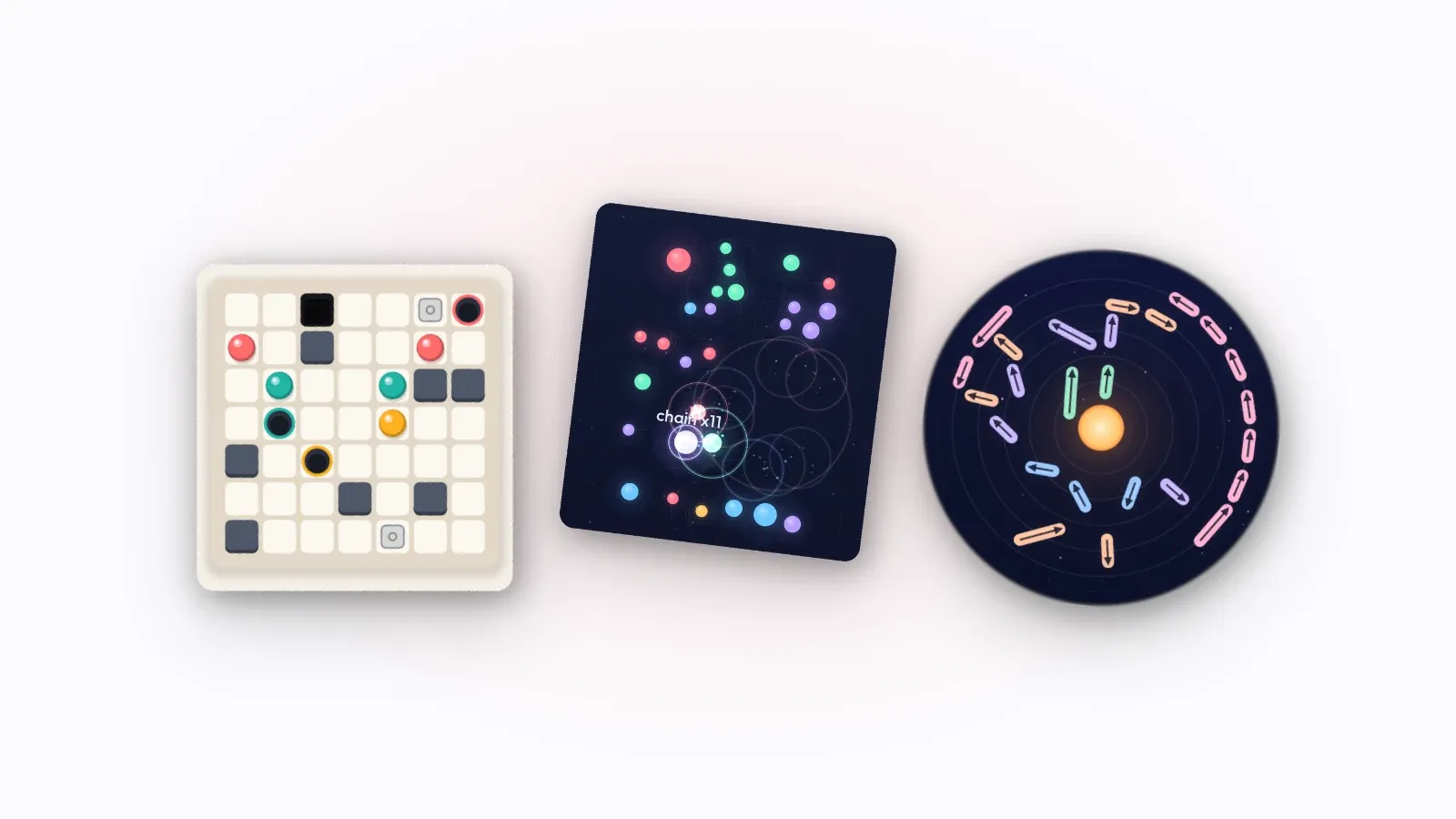
Every level in Plumb, Carillon and Apsis is made by a program, and checked by another before it ships. No level is drawn by hand. The three games are different puzzles, so each builds its levels in its own way, but all three keep the same four promises.
The four promises
- Every level can be solved. A solver proves it, and finds the fewest moves it takes.
- No two levels feel the same. A turned, mirrored or near copy of another level is thrown away.
- Difficulty never drops. Every level is at least as hard as the one before it, measured rather than guessed.
- It stays true. The tests check every shipped level again on every build, so a change to a rule can never quietly break one.
Plumb: search every tilt
Plumb’s generator scatters walls, holes and marbles inside a recipe for each stage of the game, and most of the boards it makes are no good. Every candidate goes to the solver, which tries every sequence of tilts breadth first, so the first solution it finds is a shortest one. That length becomes the level’s goal. Then each special tile is taken off in turn, and left off if the goal stays the same, because a tile the best solution never needs would only puzzle a player looking for its point.
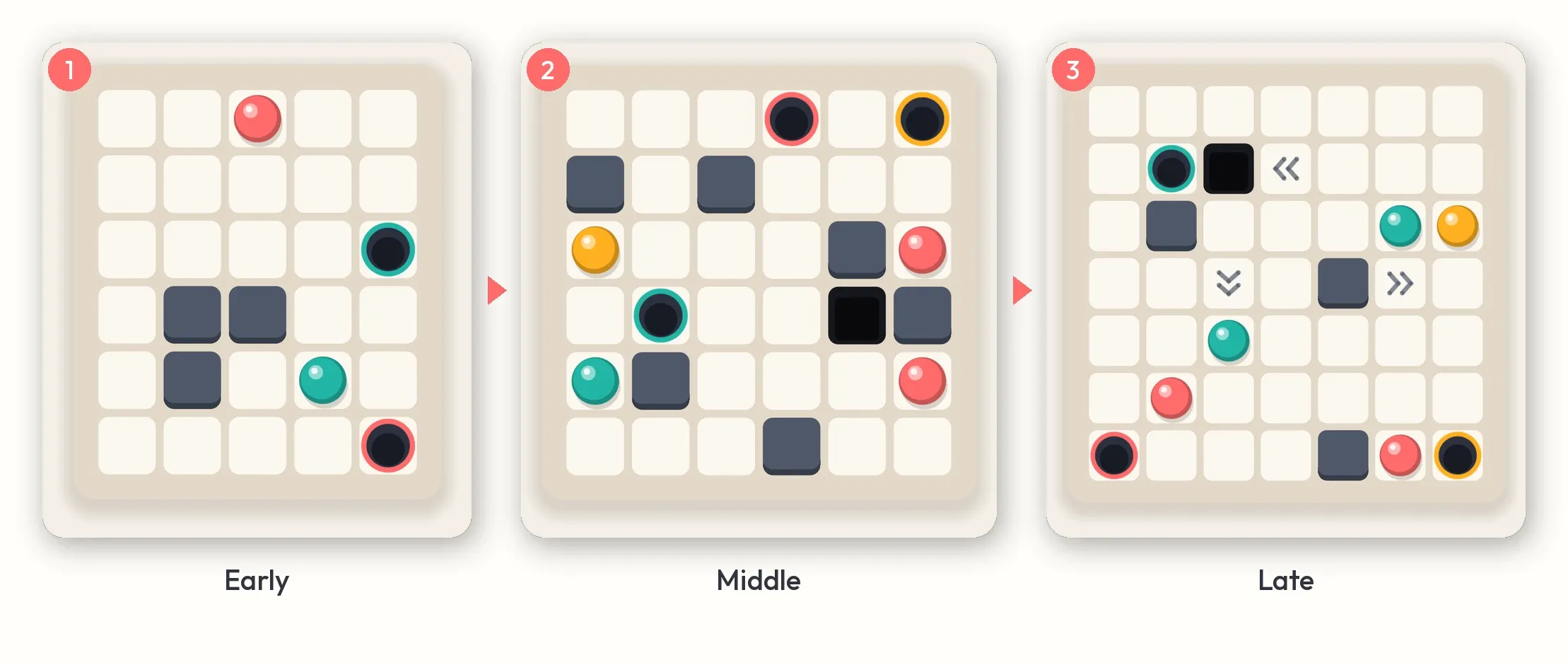
Plumb measures difficulty in bits. Picture someone tilting at random, among the tilts that move something. If the chance that they solve the board in the fewest tilts is , the level is worth bits, so each bit halves a guesser’s chance.
How Plumb levels are made goes deeper.
Carillon: grow the answer in
A field of random dots tends to tangle into one big chain where any tap wins, so Carillon grows its fields instead. It places one root for each tap the level will need, grows dots around each root, and never lets a dot reach a root. Every dot then belongs to some root’s chain, and the roots are exactly the taps that win, so the answer is known as the field is made. A separate solver still searches every tap for the fewest, and a level ships only if the two agree.
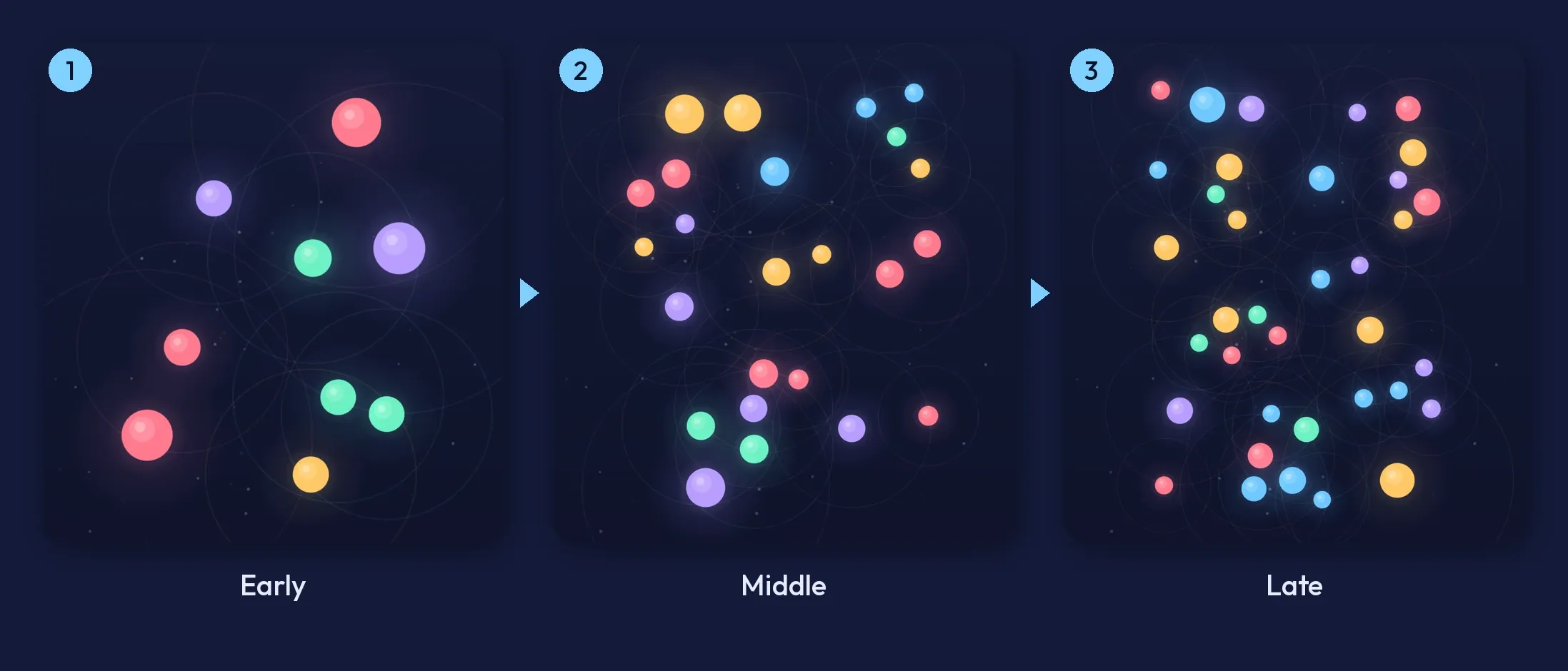
Carillon measures difficulty in bits too, as the luck needed by a player who taps at random but leans towards the dots whose previews light up the most.
How Carillon’s levels are made has the details.
Apsis: build it backwards
Apsis does not search for a solution. It builds one in. The generator adds arrows one at a time, and accepts a new arrow only if its own path is already clear of every arrow placed before it. Take the arrows away newest first and each one finds its path clear, so every level can be cleared by design. Most new arrows are aimed to block an arrow that is free, which is what makes a level worth reading.
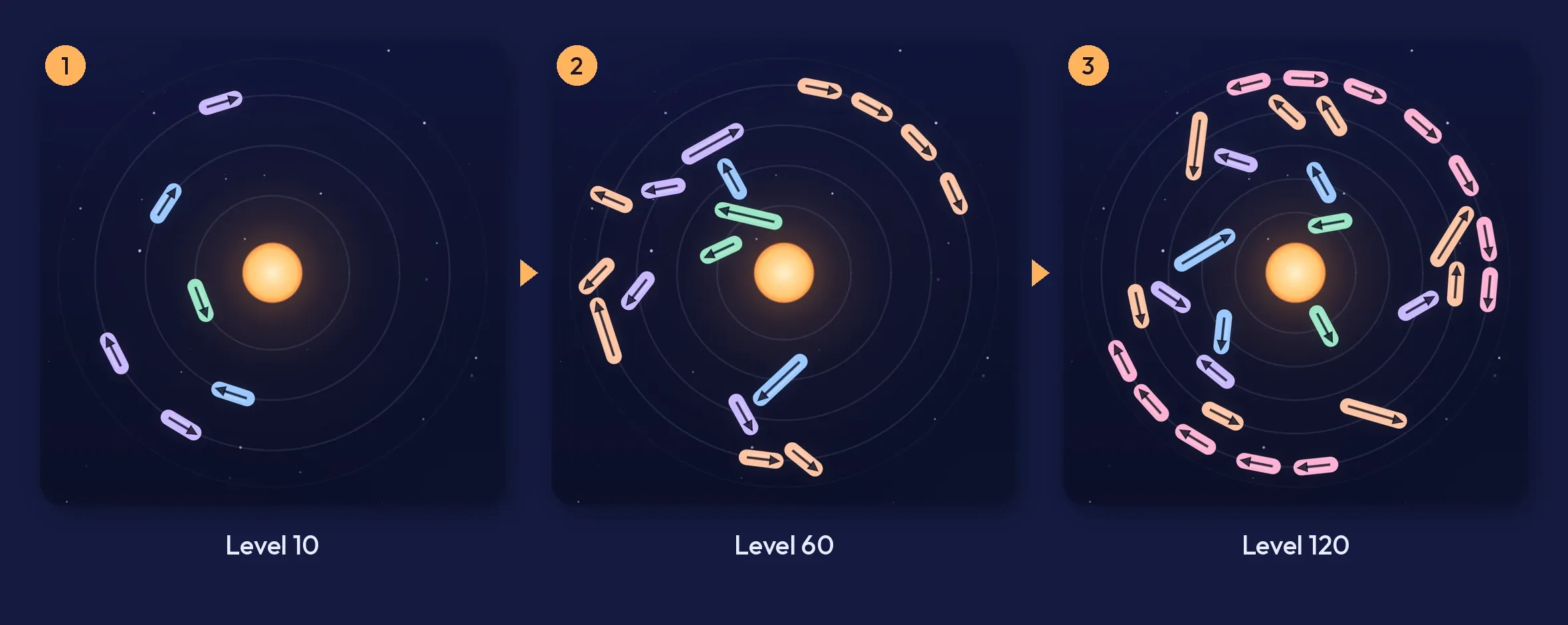
Apsis measures difficulty in reads: how many arrows a careful player checks to clear the board, if every round they look at each arrow still there and launch the free ones.
How Apsis levels are made explains the rest.
No level twice
A board turned or mirrored is the same puzzle, so all three games compare every candidate with every level already chosen, in all eight turns and mirrors, and ignore colour.
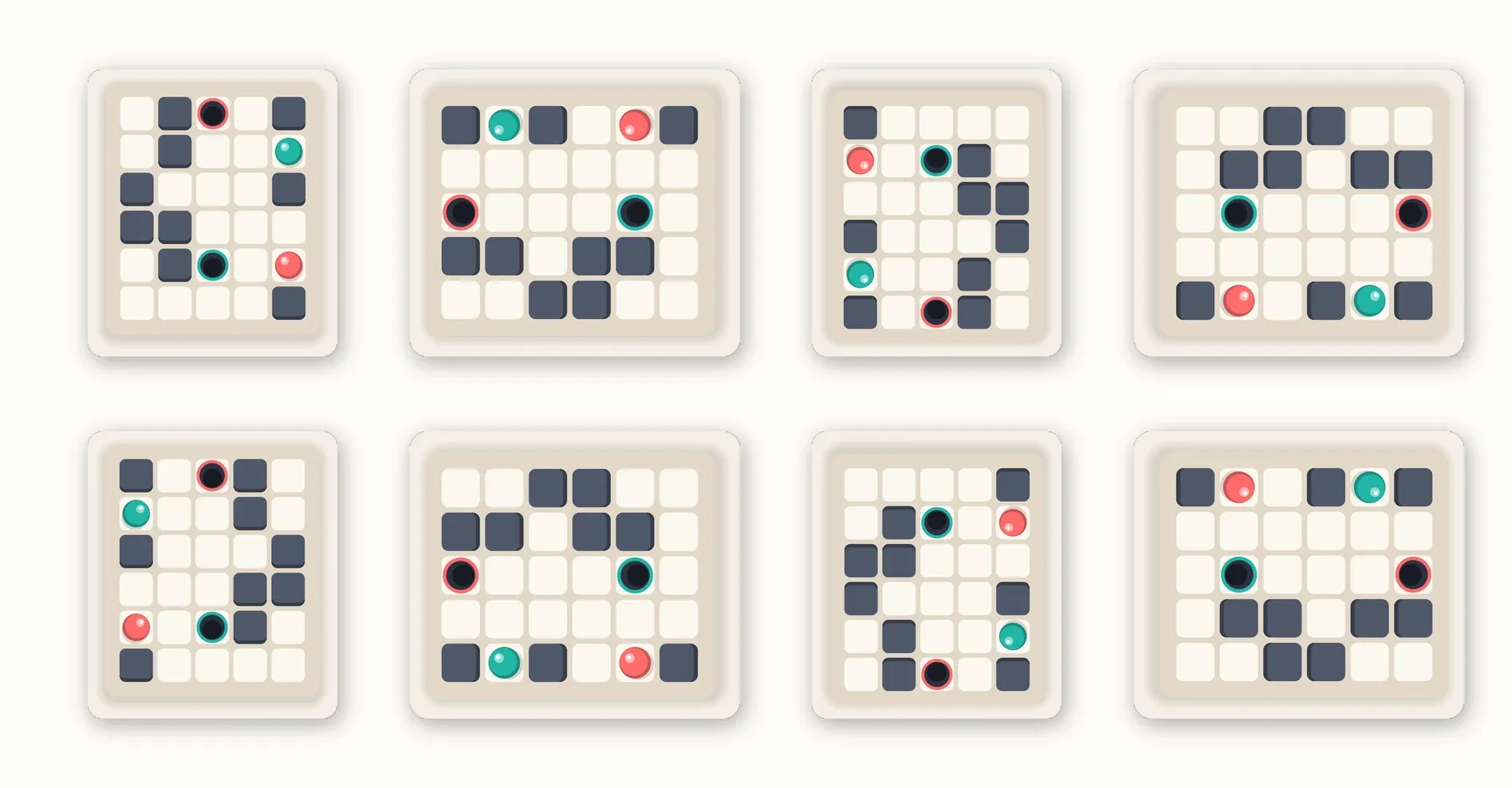
Near copies are caught too. Plumb asks two boards of the same size to differ in at least 30% of their cells. Carillon calls two fields the same if more than half of one’s dots line up with the other’s, or if who pops whom is identical. Apsis calls two skies the same if at least half of their arrows pair up by length and direction.
Why it matters when you play
You never meet a level that cannot be done. In Plumb and Carillon the goal on every level is the real fewest moves, so three stars means you found the best way there is. In Apsis, three stars means you cleared the sky without a single blocked arrow. And no level is easier than the one before it, so each game keeps asking a little more of you, one level at a time.