 Apsis
Habits that save hearts in Apsis
Ways of reading an Apsis sky that keep your hearts: trace every line first, trust the band over the line, doubt arrows pointing out, and read the marks.
 , updated , 4 min read
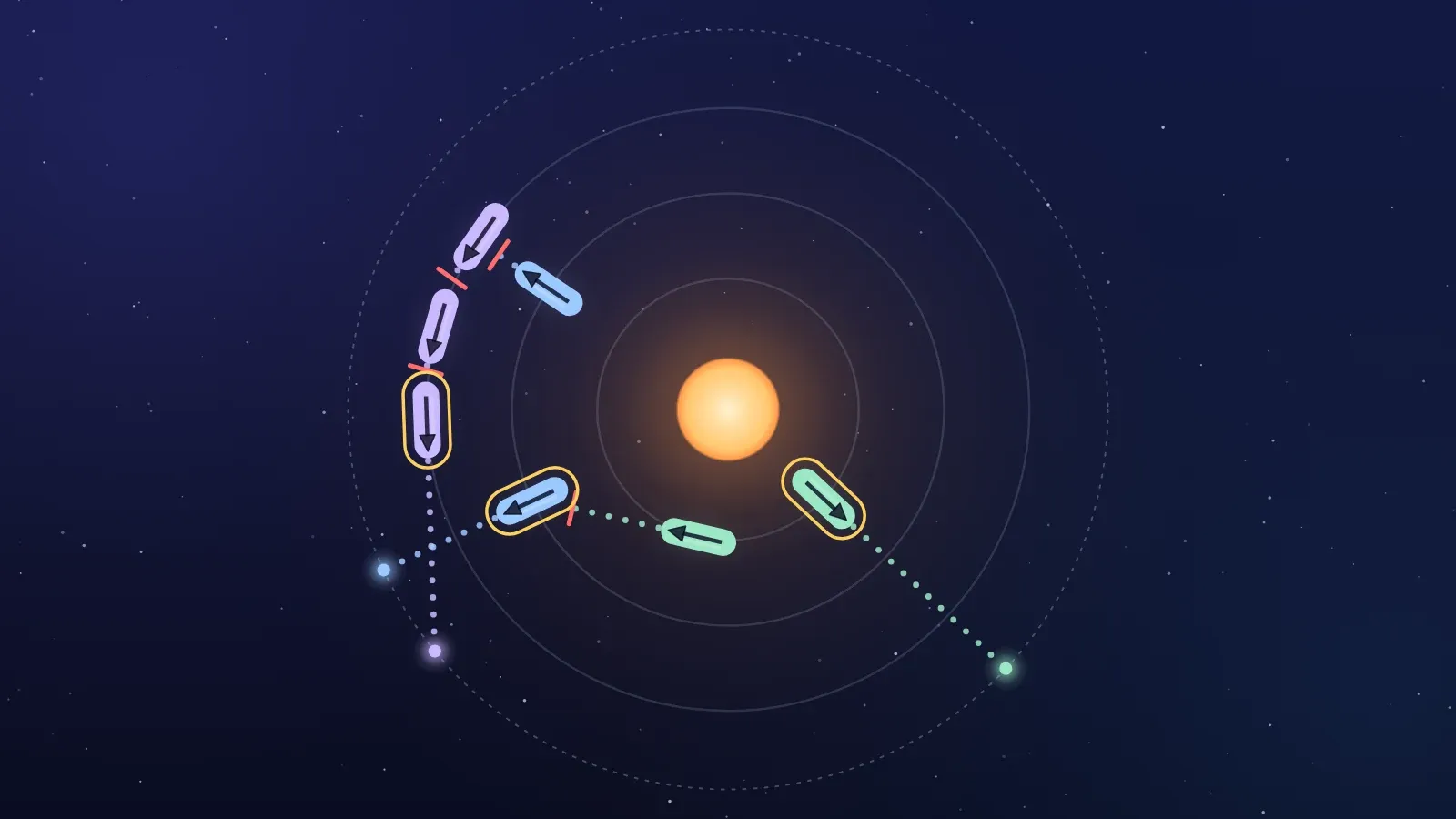
Almost every heart I lose in Apsis goes in the half second between seeing an arrow and tapping it. Nothing in the game rewards speed, so the whole skill is in how you look. These are the ways of looking that keep my hearts, roughly in the order the game starts asking for them. If you are new, the rules are in Every arrow wants out.
Trace every line before the first tap
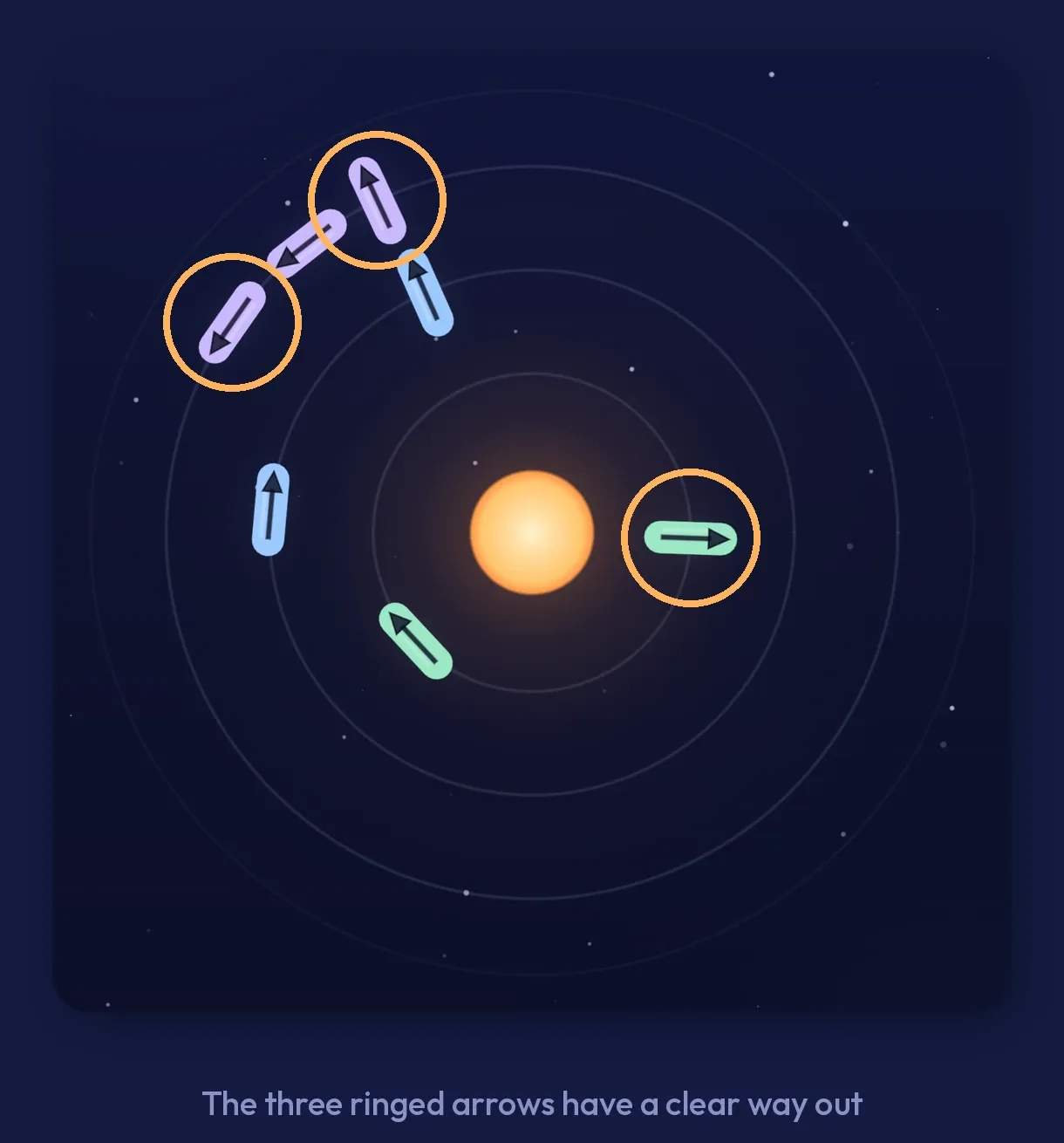
Before you touch anything, follow each arrow along the way it points, all the way out to the rim. If nothing sits in front of it, it is free, and it is a safe first move.
However crowded the sky, it starts with between one and four free arrows. Finding them is the first job, and the rest of the level opens out from them.
Never weigh one free arrow against another
With two free arrows in front of you, it never matters which goes first. An arrow leaving the sky only ever clears space, so an arrow that is free now stays free until you launch it. Launch either, and save your attention for the arrows that are still stuck.
Trust the band, not the line
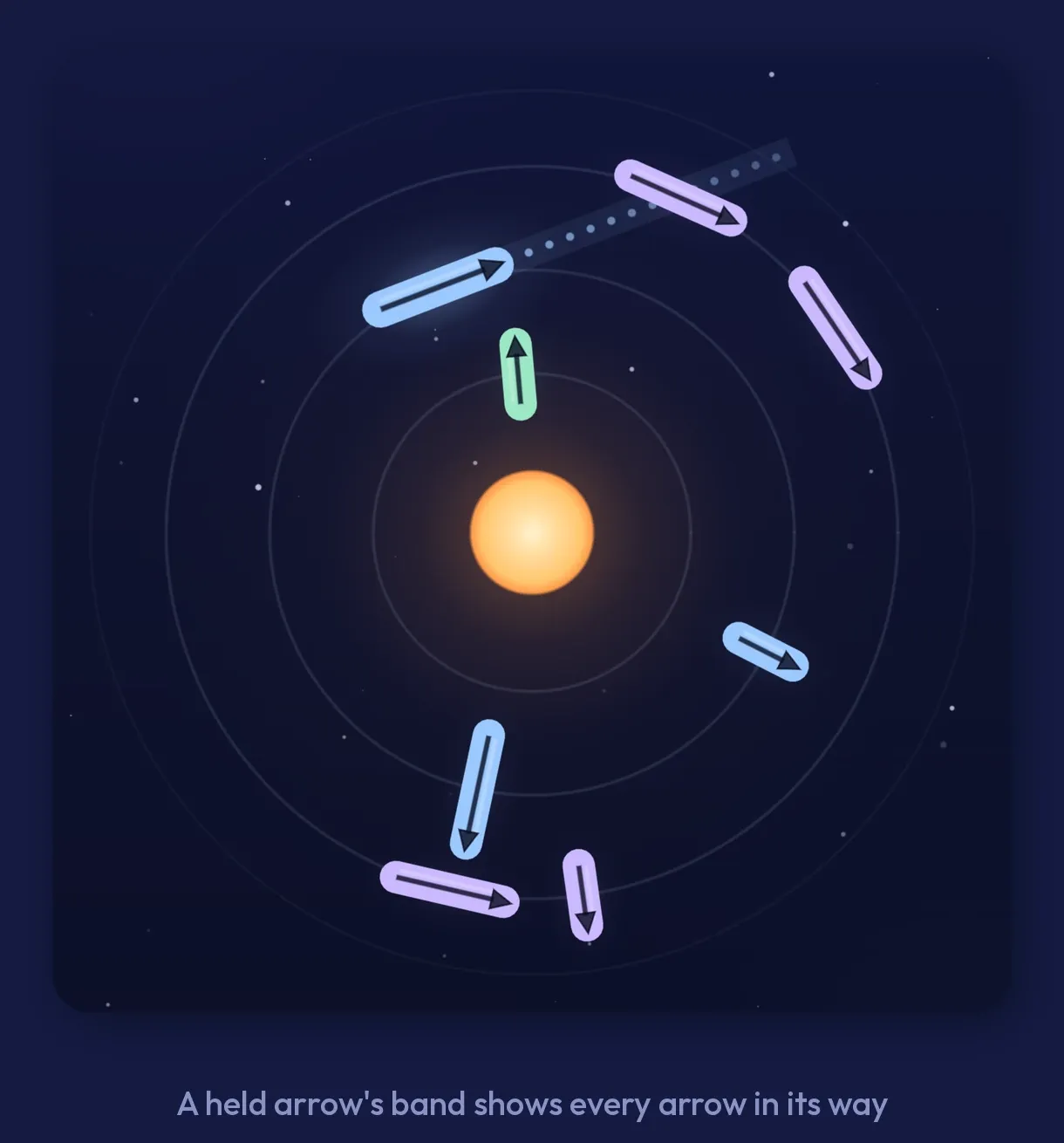
An arrow has width, so its path is a band as wide as the arrow, and anything touching that band is in the way. The classic “but it was clear” miss is an arrow whose centre line passes a neighbour while its edge clips the corner.
So when a gap looks close, hold instead of tapping. The held arrow shows its band out to the rim, and if something overlaps it, slide your finger off into open space and nothing happens.
Doubt the arrow that points straight out
An arrow pointing straight away from the sun looks like the obvious exit. Levels 4 and 5 exist to break that habit: their arrows pointing out are capped by arrows lying across the next ring, and on level 5 one sideways arrow holds three others back.
Long arrows, from the second chapter, make the same trap bigger: “Long arrows block more”, as the game puts it. When you look for what to free next, check the long and the sideways arrows early, because launching one can free several at once.
Launch, pause, scan
Every arrow that leaves opens the way for whatever it was blocking, so your list of free arrows changes after each launch. I keep a rhythm: launch, pause, and scan the sky again before the next tap. The scan takes a second, and it is where clean runs are won.
Follow the straight line across the curves
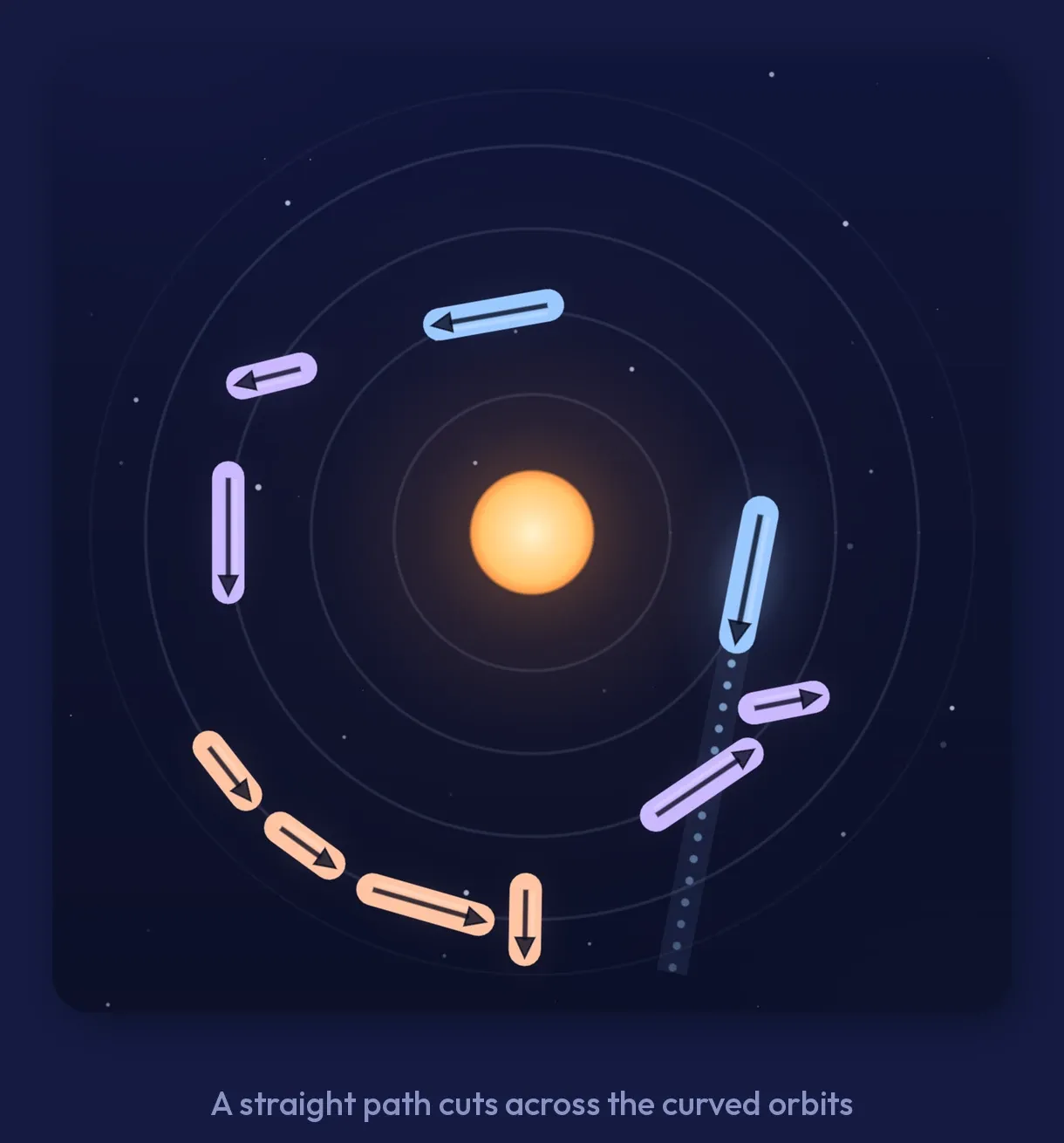
A launched arrow never follows its ring: it flies in a straight line that cuts across the rings.
An arrow lying along its ring catches people out most. A straight line that starts along a circle drifts away from it slowly, so the arrow just ahead on the same ring is usually the first one in its way.
Angled arrows arrive in the third chapter, and from the fourth some point inward and run close past the sun, so what blocks them can sit on its far side. The sun itself never stands in an arrow’s way out, because the generator never places an arrow pointing across it. The exception is a double arrow, which points both ways: its other end can face a sun, so choose the end you tap with care.
Read the marks before the paths
From the fifth chapter, arrows start to carry marks. A locked arrow waits for its key to leave, numbered arrows leave lowest first, and a frozen arrow thaws once enough others have gone. Tap one that is still waiting and it rattles in place, shows what it is waiting for, and costs a heart, just like a blocked arrow.
So on a marked sky, ask what an arrow is waiting for before you ask where it goes. Ghosts are the reverse: other arrows fly straight through them, so a ghost in a band blocks nothing.
Slow hands on a full sky
The late chapters put thirty arrows on five rings, packed close. I measured how often a quick tap lands on the wrong one: with a finger that wanders about 2 mm, roughly one tap in twelve on the fullest skies.
Holding fixes that. With your finger down, the lifted arrow and its path show exactly what you caught, and sliding onto the right one puts it right before anything counts. There is no timer, so two seconds over each move costs nothing.
Let the hint show you a chain
When you are stuck, ask for a hint, and then ask yourself why it chose that arrow. It lights the free arrow whose launch frees the most others, so it always points at the start of a chain, and after a few you start seeing chains yourself. There is more in Why the Apsis hint is never wrong, and how kept hearts become stars is in Hearts, misses and stars.