 Plumb
Ghost marbles: what Plumb's hint shows, and why
Plumb's hint draws your best next tilt on the board with trails, ghost marbles and rings. What each mark means, how the solver picks it, and how to learn from it.
 , updated , 4 min read
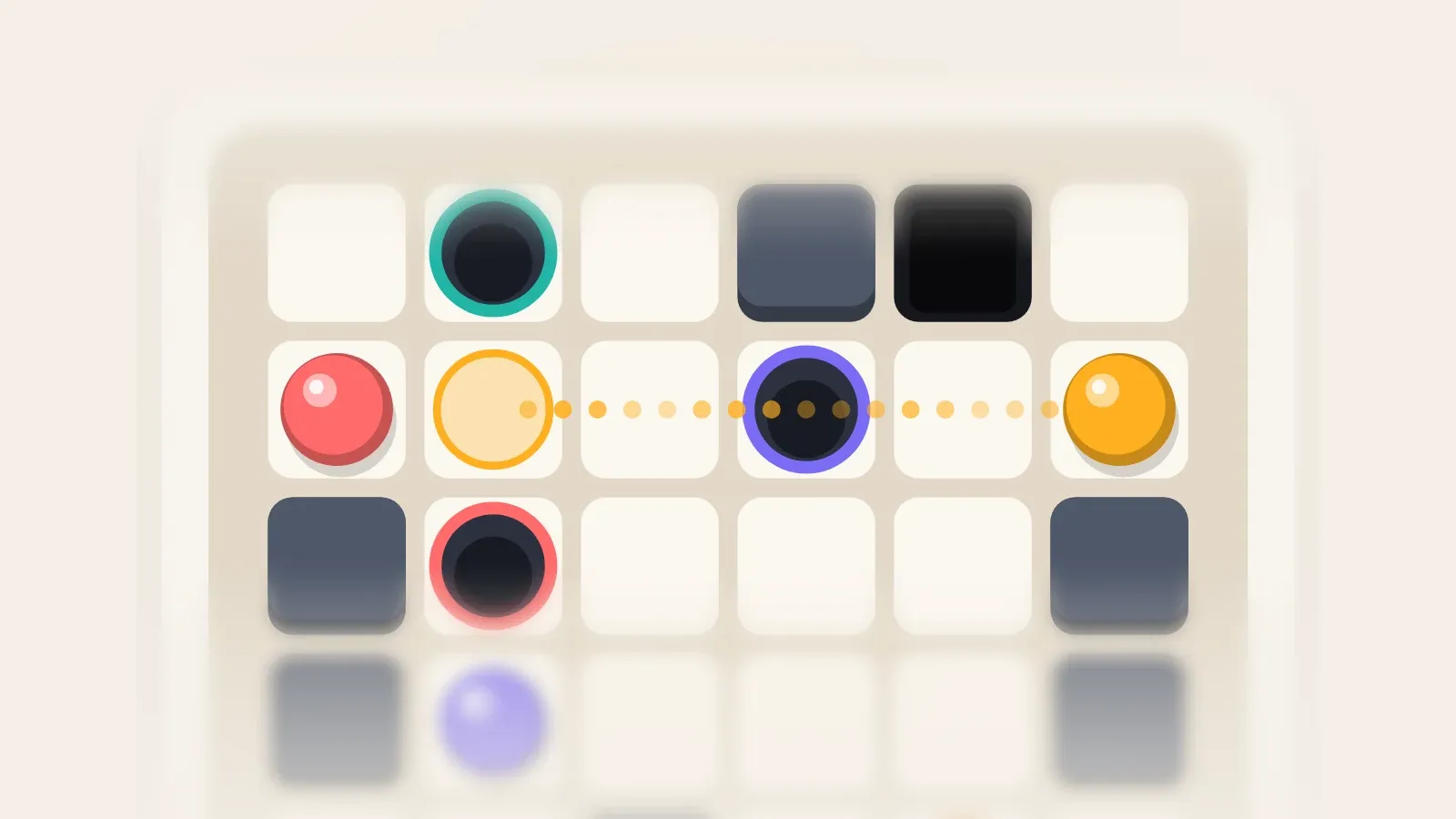
Tap the bulb in the top right corner and Plumb shows you one tilt. Not the whole solution, just the next tilt, drawn onto the board as if it had already happened. This post explains what each mark means, where that tilt comes from, and how to use a hint so that you need fewer of them.
What you see
For every marble that would move on the hinted tilt, the board draws:
- A dotted trail in the marble’s colour, along its path. The dots drift the way the marble would go, so the direction reads even in a still picture.
- A ghost marble, a pale disc ringed in the marble’s colour, on the cell where it would stop.
- A pulsing ring around a hole, in place of a ghost, when the marble would drop into that hole on this tilt.
Marbles that would not move get no marks at all, which is worth noticing in itself. Every so often the tray leans a little the hinted way, so you know which way to swipe at a glance. The marks stay until you tilt, undo or restart.
Two examples
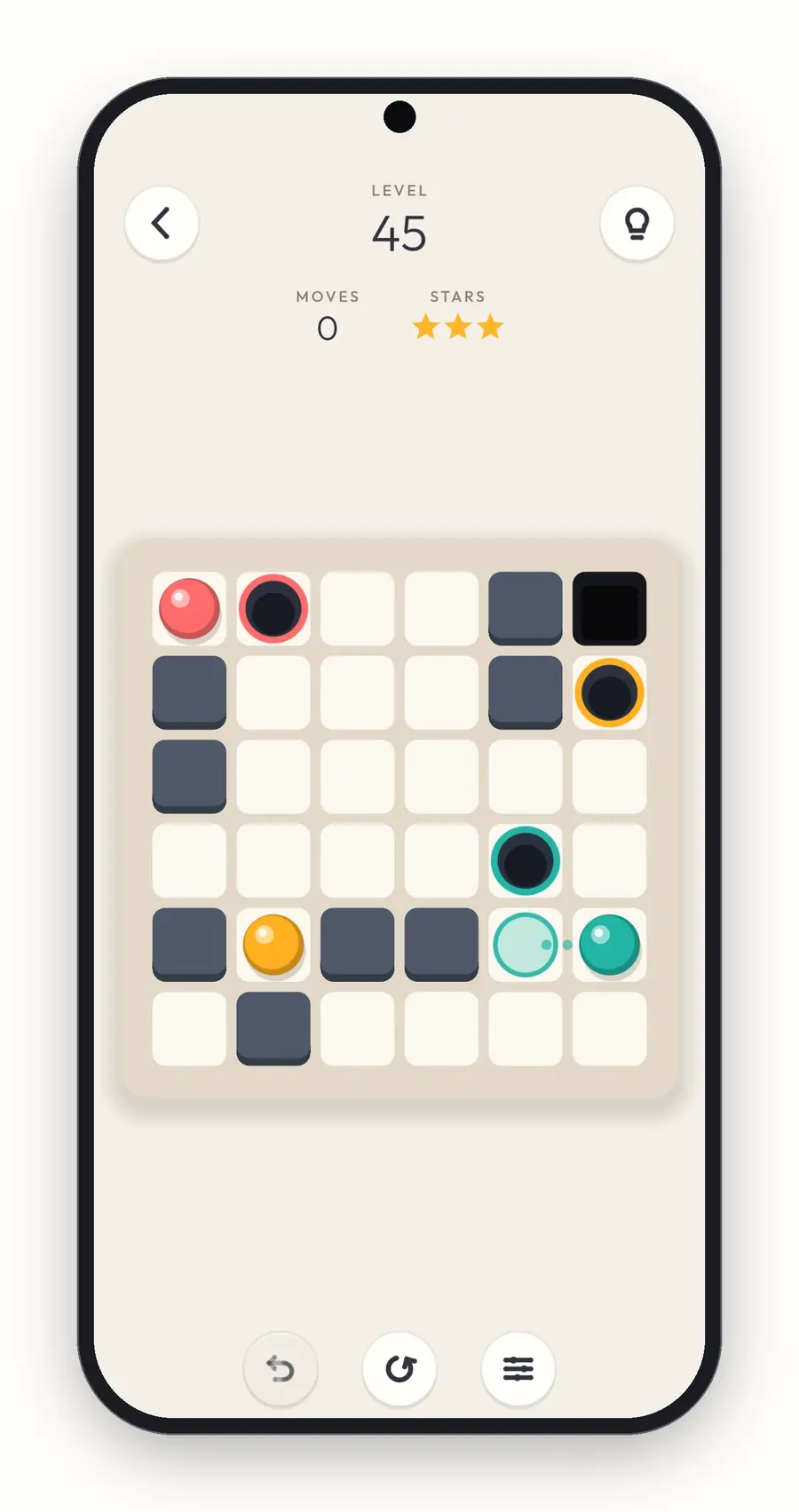
On level 45, at the very start, the hint is about the smallest move there is. The teal marble rolls one cell left and stops against a wall, and nothing else moves. It looks like nothing, but that cell is directly under the teal hole, so the next swipe up drops it in.
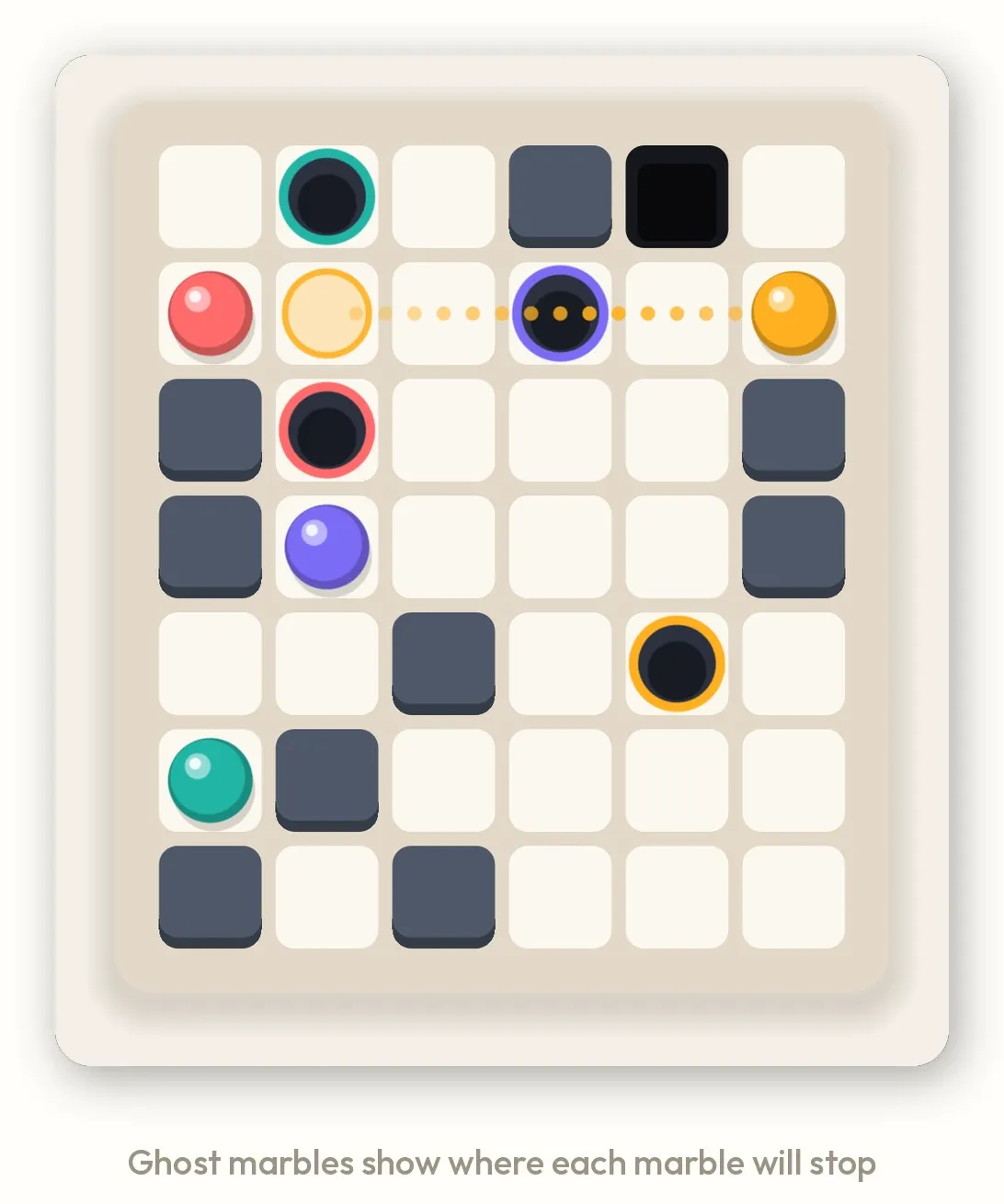
On level 65 the hint sends only the yellow marble, the whole way along its row. It rolls straight over the purple hole, which is not its colour, and stops against the red marble at the far end, so the red marble is doing the job of a wall.
How it chooses
The hint is not a recording of a solution. When you tap the bulb, the game runs its solver on the board exactly as it is now, searching outward one tilt at a time until it reaches a clear board, and shows you the first tilt of that shortest route. Where there is more than one shortest route, you see the start of one of them.
- It fits your board, wherever you are. After a detour, it gives you the best route from where you are now, not from the start.
- It never loses a marble. The search never steps onto a board with a marble down a pit, so a hinted tilt is always safe.
- Followed from the start, it always meets the goal. Each hint is the first step of a shortest route, so taking one at every move clears the level in exactly the goal.
It also always answers, waiting first if the marbles are still rolling. If a marble has gone down a pit, it says “Undo first: a marble fell in”, and if there is no way home from where you are, which can happen in later chapters once cracked floor has given way or a plug has closed, it says “No way home from here. Undo or restart”. A hint it cannot give never costs you anything.
Learning from it
A hint answers “which tilt” and leaves “why” to you, and the why is where the learning is.
- Name the tilt’s job. Most hinted tilts park a marble on a line to its hole, drop a marble in, or move one out of another’s way. Working out which tells you what you missed.
- Take one, then stop. One hint often shows the idea of a level, so try the next tilt yourself before asking again.
- Use it after a solve, not only during one. If you finished over the goal, tap Again, play up to the tilt you were unsure of, and ask there.
Tapping the bulb again on the same board shows the same hint without counting it twice.
How many hints you get
- The first 15 levels: every hint is free, as many as you like.
- After that: 3 free hints a day by your phone’s date, so they come back at midnight, with a small number on the bulb showing how many are left. Then the bulb shows a play mark and asks “Watch a short video for a hint?”, with Watch and Not now. If no video can play, say because you are offline, the hint comes anyway.
- With the Supporter pack: every hint is free and there are no ads.
For the habits that make you need the hint less often, see read the roll before you tilt.