 Seiche
From a glass bowl to a starlit lake: the places in Seiche
Every Seiche pond is somewhere: a glass bowl at dawn, a koi garden in the rain, a frozen lake at dusk. How the places, the fish and the looks you collect came together.
 , 6 min read
Seiche has one rule, and it never changes. Every ring touches one fish, nothing hides inside a ring, find the fish. That is great for a puzzle and a little dangerous for a game.
Because if the rule never changes, what makes level 300 feel different from level 30? The ponds get harder, yes, but harder alone does not make you want to see the next one. So I gave every pond a place.
Every pond is somewhere
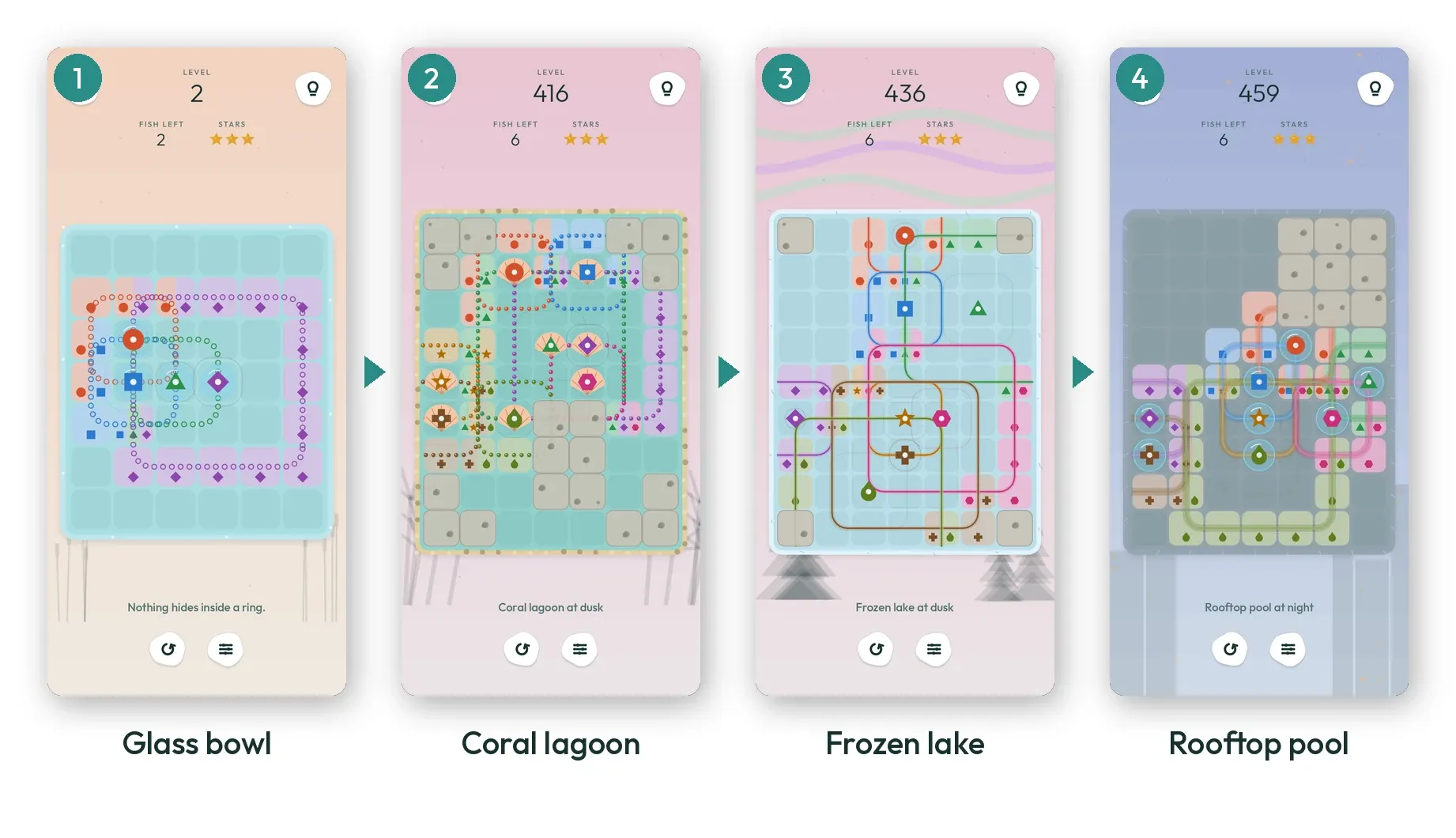
Each pond in Seiche names a place, a time of day and the weather. You see it in the line under the pond, like “Coral lagoon at dusk” or “Rooftop pool at night”, whenever the game has nothing more useful to tell you there.
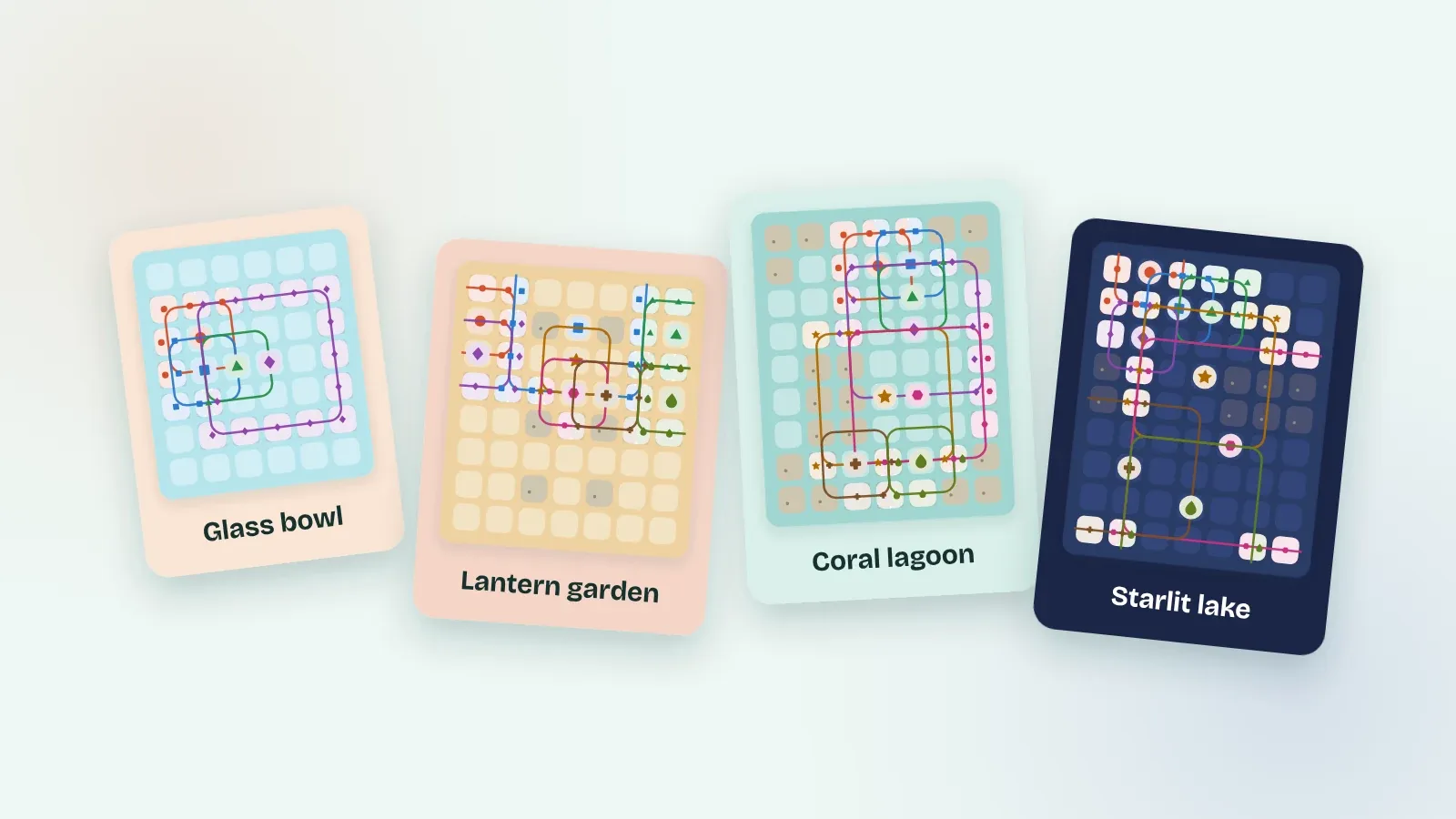
A chapter is a small family of places that belong together. The first chapter is a garden pond, a glass bowl and a village well. Lotus temple is a lotus temple, a shrine pond and a golden pavilion. The last chapter, Starlit lake, is a starlit lake, a mountain tarn and a crater lake.
Inside a chapter the levels take its places in turn, and they walk through one day. The first ponds of a chapter are at dawn, then morning, noon, afternoon, dusk, and the last ones at night. So playing a chapter feels like spending a day somewhere. When you finish it, the next chapter starts again at dawn, somewhere new.
The weather turns too, from the chapter’s own set. Rain garden has rain, drizzle and storms. Frozen lake has snow, frost and the aurora. The rooftop has city lights, rain and fireworks. No two ponds in the whole game share the same place, time and weather.
What a place changes
The rule never reads any of this. A place only changes how the pond looks, never what a tile means. But it changes a lot.
The water. Each place has its own water colour and its own edge round the pond. A moss garden is deep green with a mossy rim. The glass bowl is clear blue glass. The frozen lake is pale ice, the koi garden is amber under bamboo, and the rooftop pool sits in city tiles. At night every pond goes dark blue, which I think is the prettiest the game gets.
The scene around it. Behind the pond’s frame there is a quiet scene for the place: reeds by the water, pine trees on the frozen shore, stone lanterns in the garden, the city below the rooftop. I kept these faint on purpose. They must never be louder than the rings.
The fish that swim there. This one makes me happy every time. Every fish in a pond is made with a rarity, common or uncommon or rare or the one legendary kind. The place keeps that rarity but swaps in its own fish where it has one. So the koi garden holds koi, the mountain tarn holds trout, and the starlit lake holds moonfish, the legendary one. A pond is never rarer or plainer than it was made, it just has the right fish for where it is.
The pieces. Some places dress the pond’s pieces too. In the glass bowl your catch comes up as a goldfish, and the rings are made of bubbles. On the frozen lake the fish come up as little snowmen. In the coral lagoon they are pufferfish, the ripples are shells and the rings are pearls. On the rooftop they are neon tetras on neon rings.
These took longer than they should have, honestly. But a snowman popping out of a frozen pond is the kind of small surprise I want in our games, so I think it was worth it.
Your own looks come first
Those dressed-up pieces are only what a pond wears by default. If you choose a look yourself, yours always wins.
Seiche has dozens of looks to collect, for six parts of the pond:
- Fish: what comes up on a catch. A rubber duck, an origami fish, a plush fish, a narwhal, a cookie fish, a slice of watermelon, sushi, a pixel fish, a robot fish, a ghost fish and more.
- Ripples: the discs the rings come from. A lily pad, a paper lantern, the moon, a lotus, a donut, a bubble.
- Rings: rope, chalk, pearls, a neon tube, fairy lights, stitches, ice, gold leaf, a rainbow.
- Water: the open tiles. Lily pads, stepping stones, mosaic, sea glass, thin ice, starry water.
- Floats: the bobber on your line. A paper boat, an acorn, a cherry, a lantern, a little duck.
- Celebrations: what bursts over a perfect read. Petals, lanterns, fireworks, snow, fireflies, bubbles.
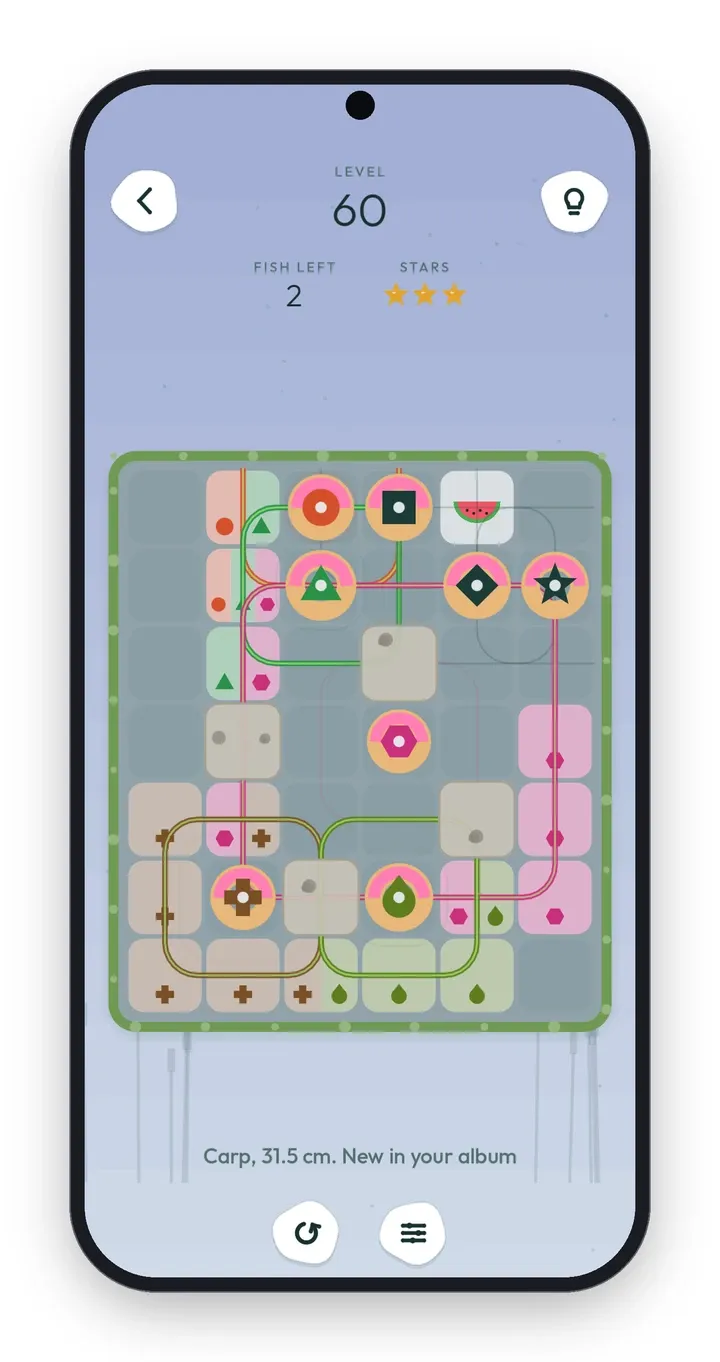
You earn them by playing. Finishing chapters, collecting stars, perfect reads, finding species for your album, keeping a daily streak. The Pond pack in the shop opens some too, but most come from play. The collection screen shows every look, the ones you have and the ones you do not, with how to earn each one, so there is always a next thing to catch.
There is also Shuffle, which wears a different look you own on every pond. If you cannot choose, turn it on and let every pond surprise you.
And one rule I held to for every look: the rings keep their colours and their marks. A neon ring is still the red one with circles on it. A look can change how the pond feels, but it can never make it harder to read.
The perfect read
A perfect read is a pond cleared with three stars and no hint. No misses, no help, just reading.
When you do it, a golden koi swims a lap round the edge of the pond, and the celebration you are wearing bursts over it. Then the result card says what you did, something like “5 fish, no misses”, and you can share it as a card with the pond on it.
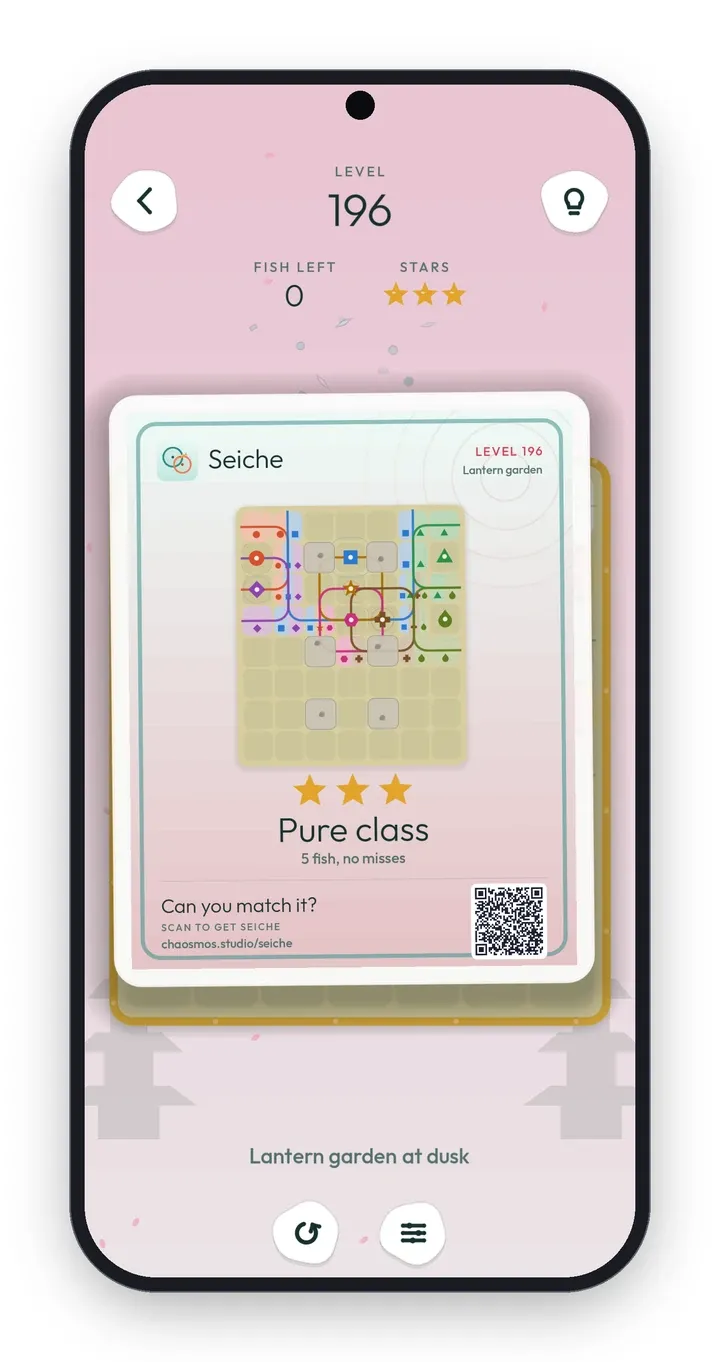
The catches inside a pond have their own small music. Each fish caught in a row rings a note higher, and from the third one in a row a word floats up from the water: “Splash”, then “Clean read”, “Flawless”, “Perfect cast”. A miss lets the streak fall back quietly. No shake, no buzz of shame. A miss is just information.
The album
Every fish you catch also goes into your album, from the title screen. There are eight kinds: minnows, perch and carp, then bluegill and koi, then trout and golden koi, and the moonfish. The album keeps how many of each you have caught and the biggest one, in centimetres, and shows the kinds you have not met yet as dark shapes.
The rarer kinds only swim in ponds with more fish. So the album fills up slowly as you go deeper, and the first moonfish is a real moment.
Why bother with all this
Some people will think this is too much dressing for a logic puzzle. I understand that. The puzzle is the heart of it, and I would never let a place make a pond less fair.
But puzzle games get played on the bus, at night, in the five minutes before dinner. The ones people remember are the ones that feel like going somewhere. So in Seiche, each pond is a small trip. A glass bowl in the morning. A koi garden in the rain. A frozen lake as the light goes. And at the very end, a starlit lake with the whole sky in the water.
If you want to know why the game has this name, I wrote about the word seiche. And if you are just starting, the rules of Seiche will get you casting in a minute.