Every fabric pulls differently: Stitchfall's six worlds
Water, dunes, forest, night quilt, rain meadow and frost woodland: what each of Stitchfall's worlds does to the runner, with the real numbers behind every pull.
 , 4 min read
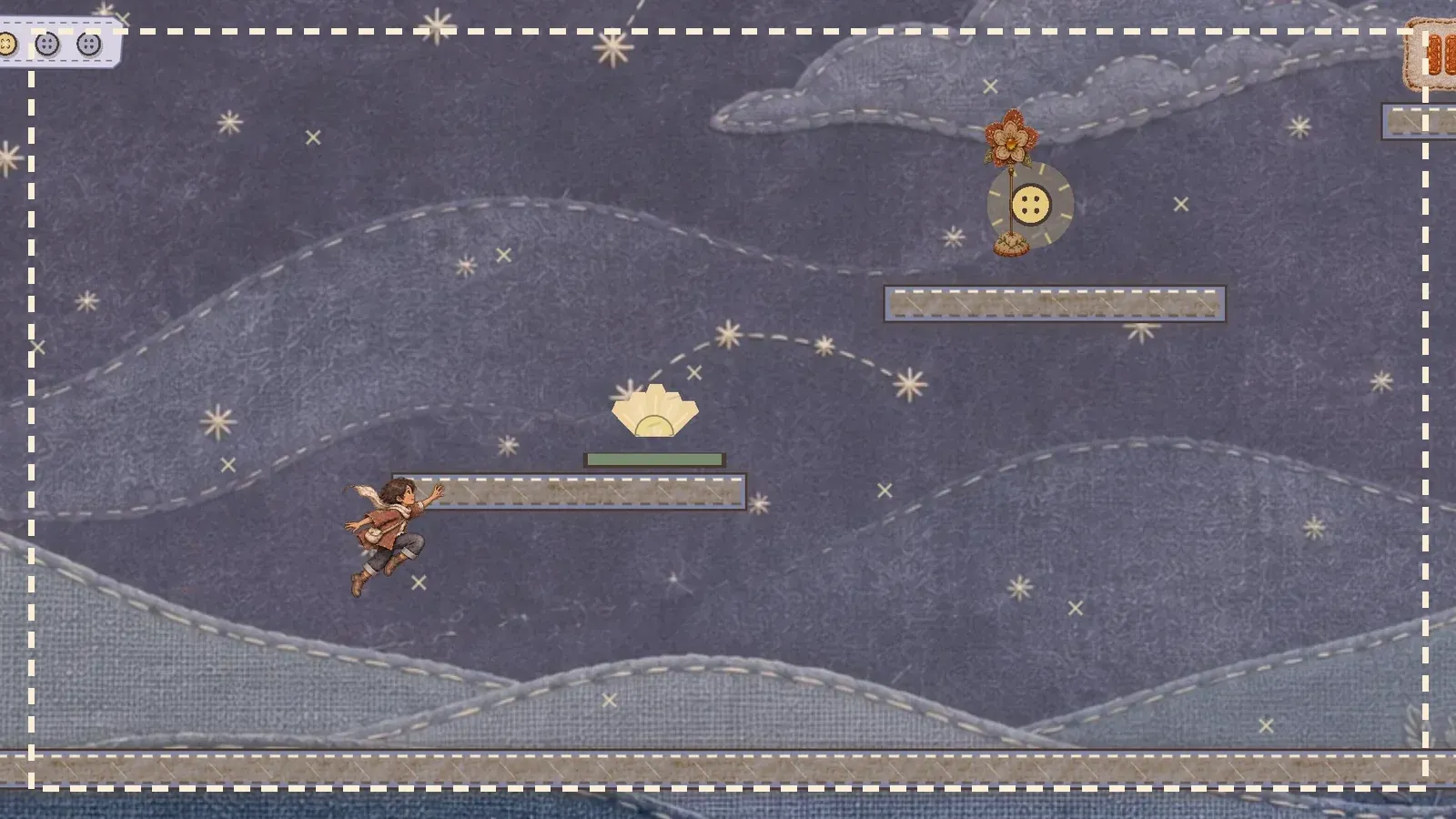
A new backdrop alone does not make a new room. If the floor, the gap and the jump are the same, a forest is just a green desert. So every world in Stitchfall changes how the runner moves, and each one is built so you can see the rule before you feel it.
Each world’s force only works inside its own patch of the room. Step out of the pool or the gust, and the runner moves normally again.
Blue Thread: water softens the fall
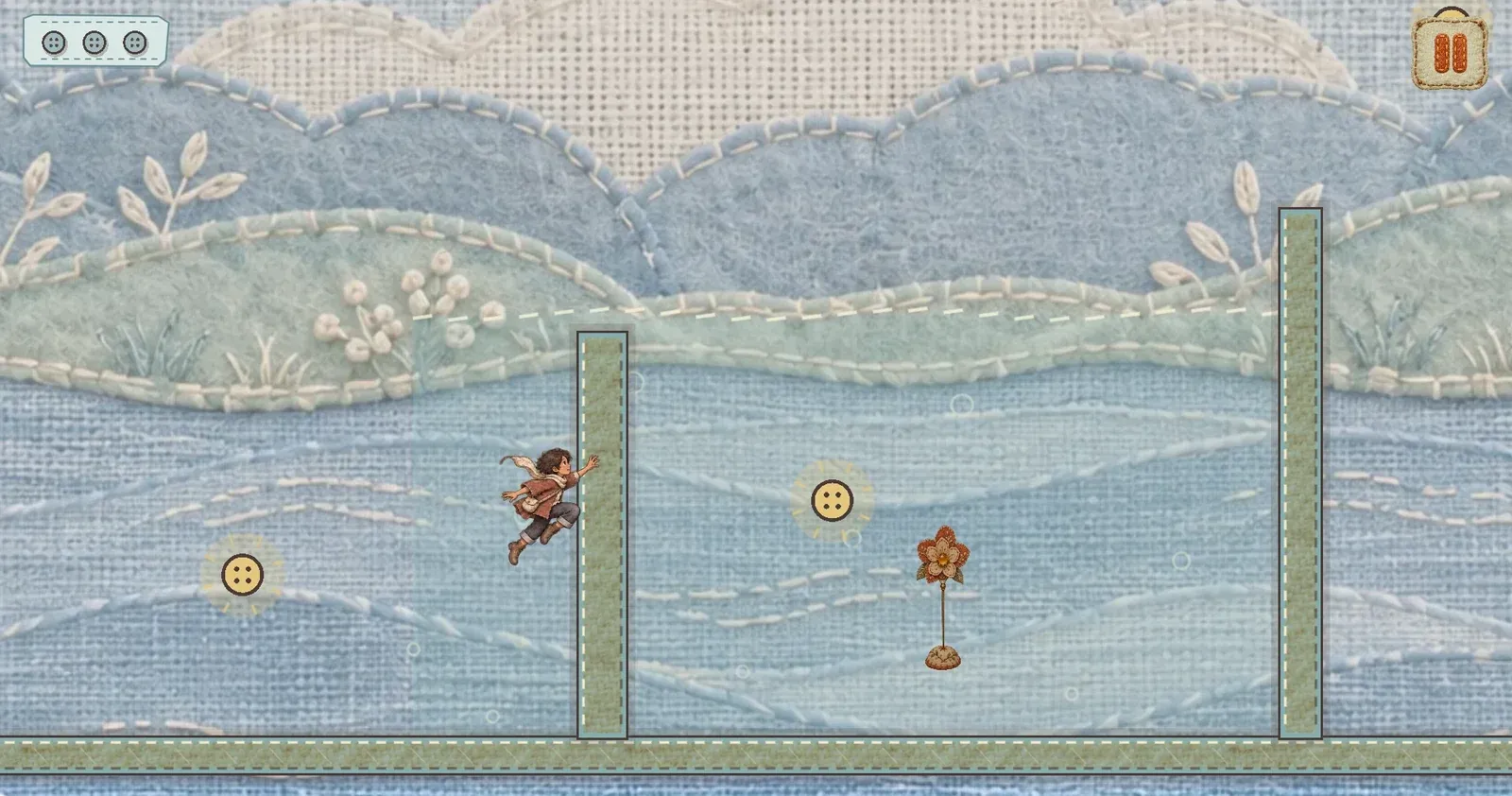
Inside the flooded cloth, gravity drops to a third of its usual pull, and the water drags on the runner every frame. A fall that would hit the floor in a blink drifts down instead, and it can never go faster than 400 pixels a second, less than half the speed of a fall through air. Walking is slower too, but the jump is nearly as strong, so the pool becomes a place to climb. The rooms here ask you to turn gravity inside the water and rise through it.
Sand Drift: the wind keeps pushing
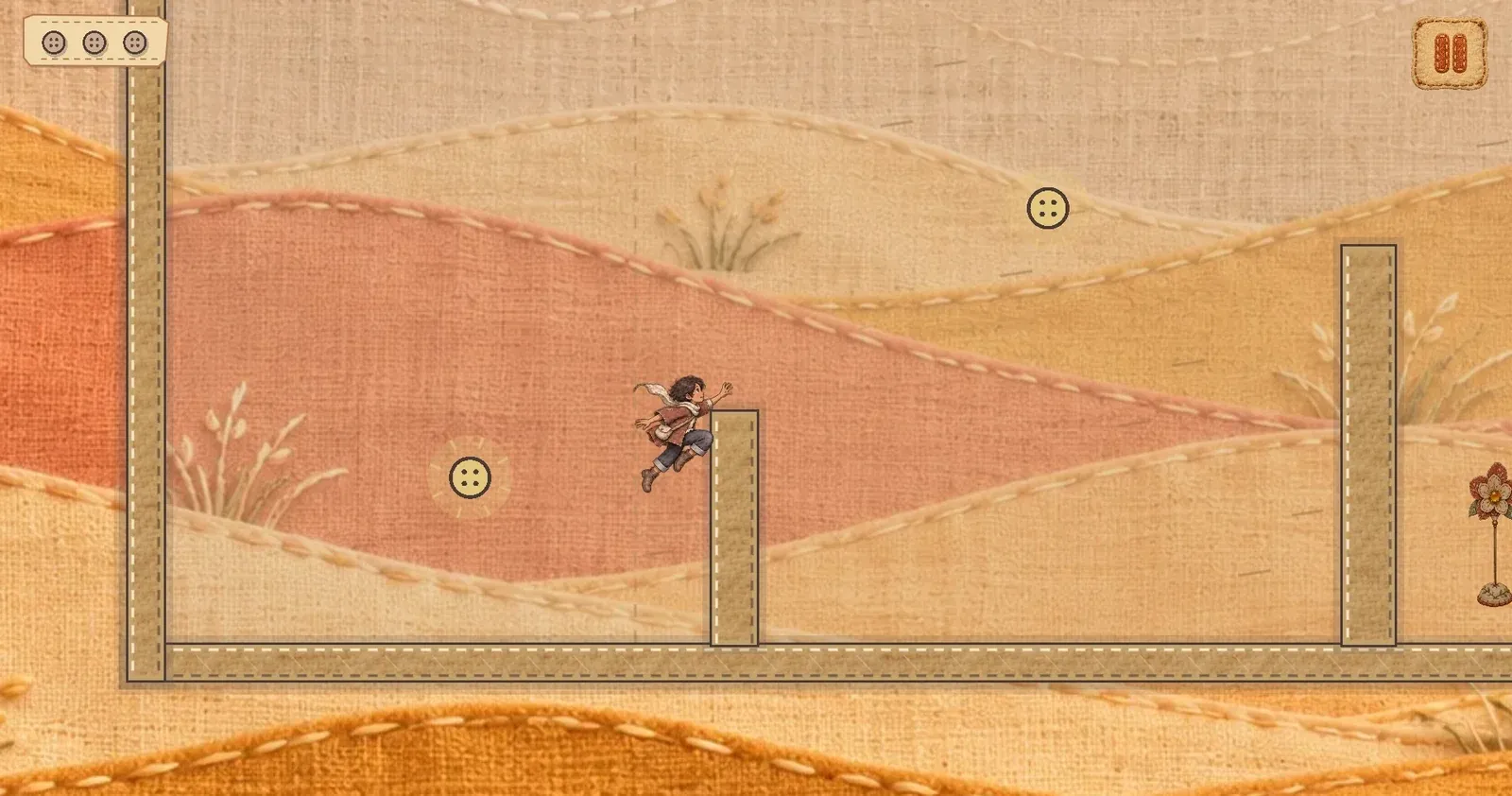
In the dunes a steady wind pushes the runner toward the right side of the room. The wind belongs to the room, not to gravity, so when you turn the pull it keeps blowing the same way on your screen. With gravity pointing left, the wind becomes a push straight up off your floor. That is the fun of the dunes: the same gust is a headwind, a tailwind or a lift, depending on which way you have turned.
Green Canopy: the air lifts
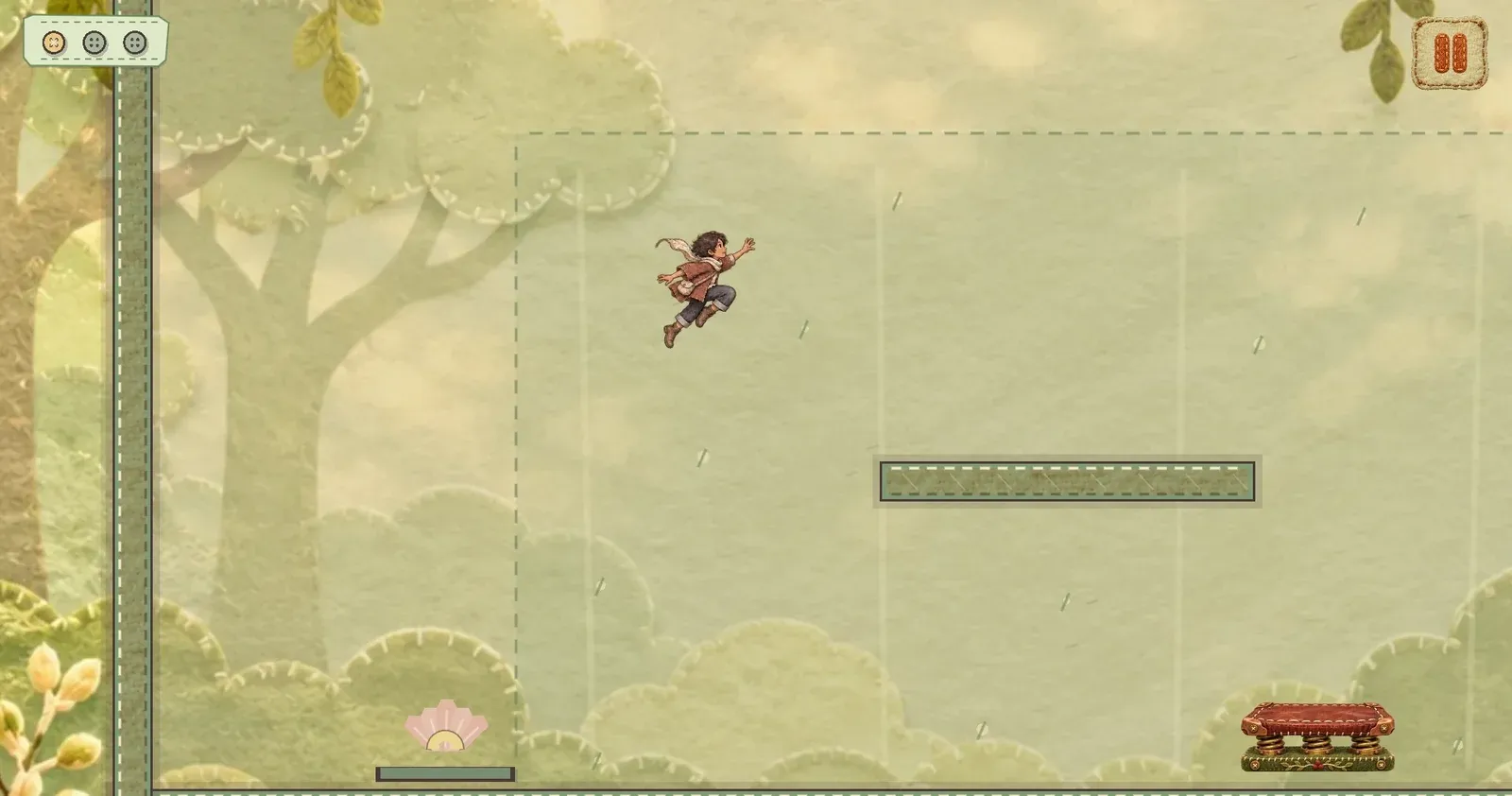
Under the forest canopy, warm air pushes up. It pushes up a little harder than gravity pulls down, so a runner in the canopy slowly floats upward instead of falling. Forest rooms also have the first blooms, sewn flowers that throw the runner away from the floor while keeping its speed across.
Night Quilt: a long, slow arc
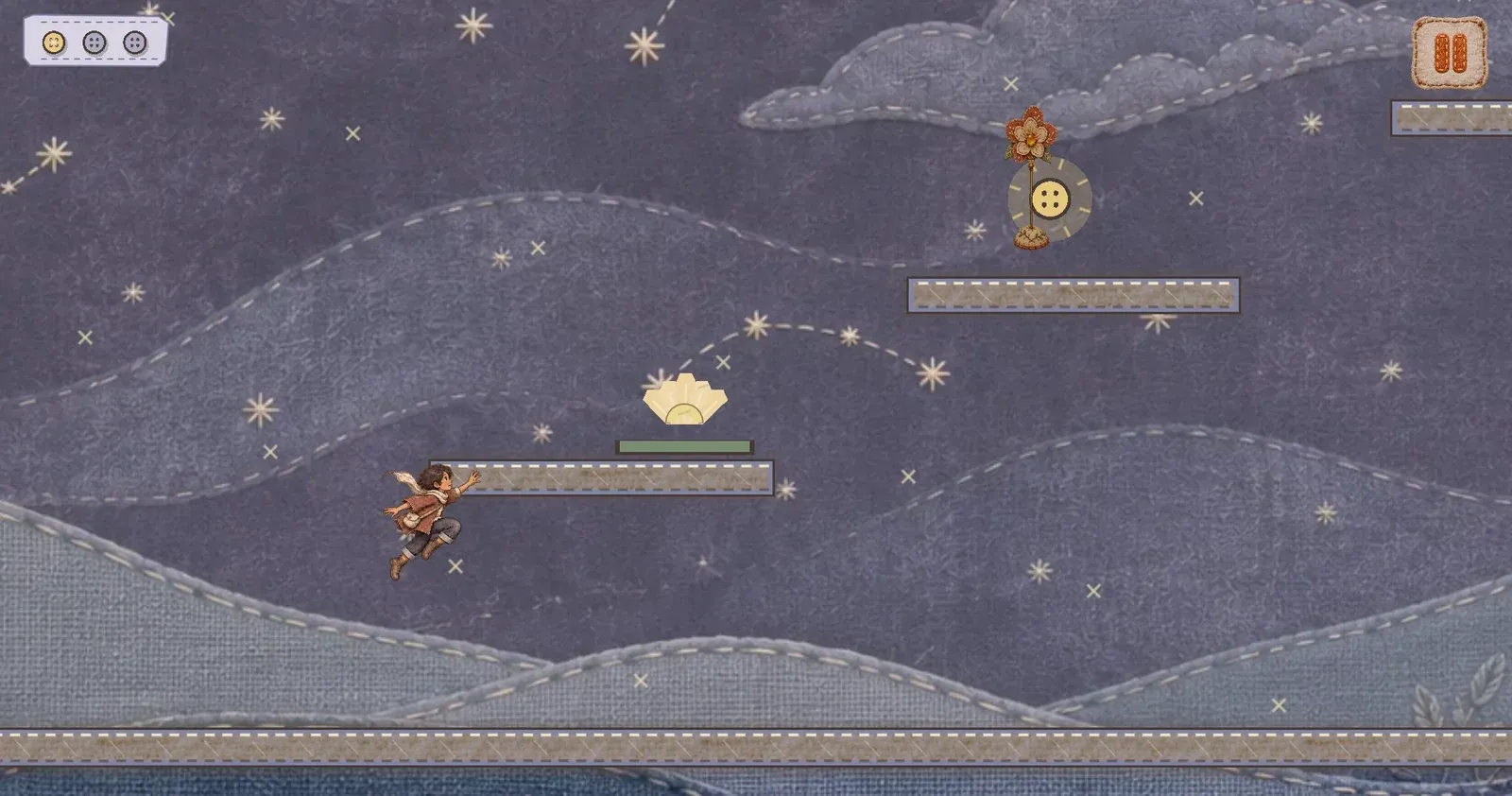
On the night quilt, gravity falls to about a quarter of its usual pull. The jump starts a little gentler, yet it rises twice as high and stays in the air about 2 seconds, against 0.76 on the linen. Steering in the air is weaker too, so you commit to an arc early. The best part is turning gravity twice during one jump, something no other world gives you time for.
Rainline: gusts that swing
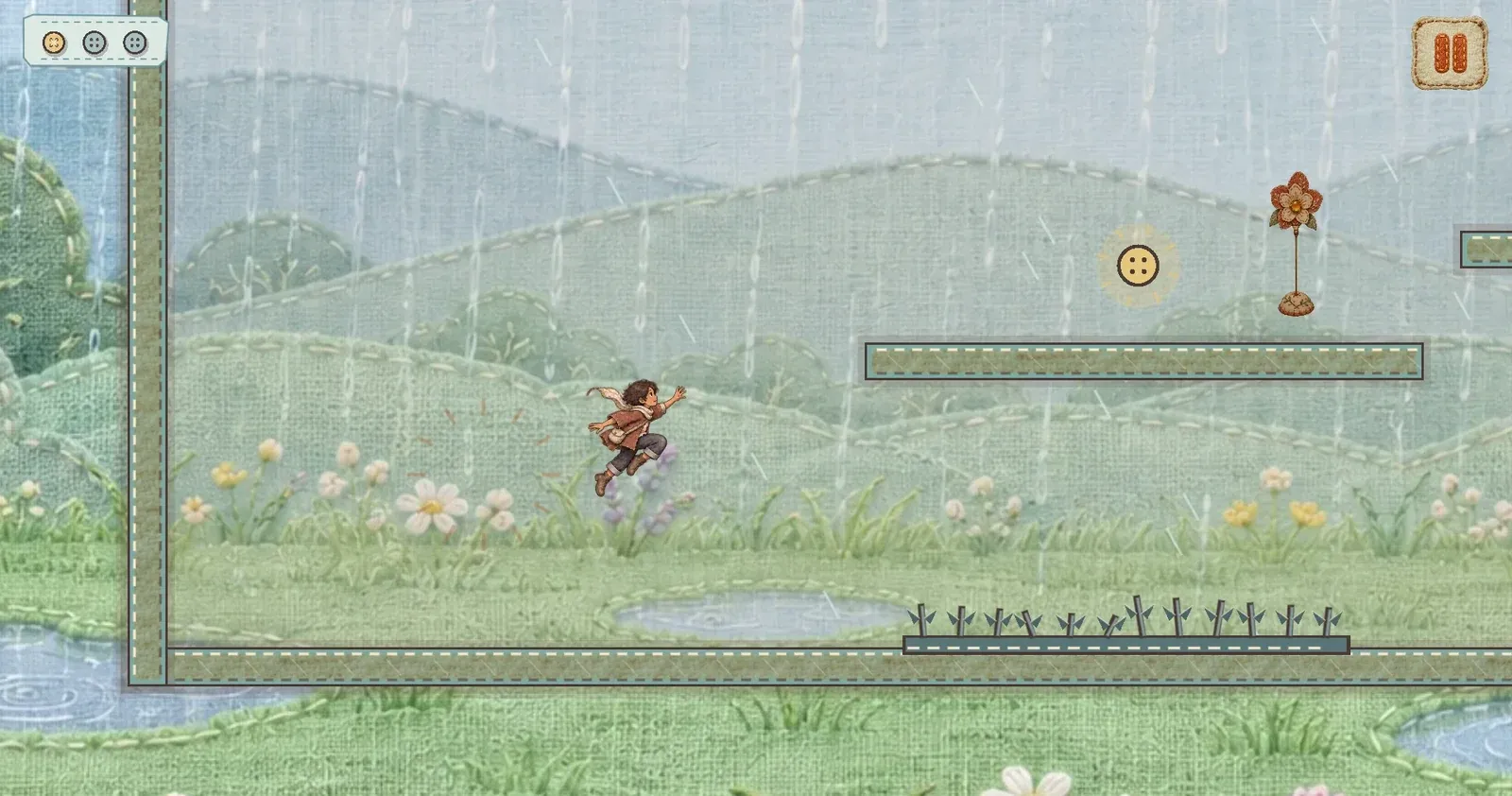
In the rain meadow the wind does not hold still. It swings back and forth on a slow wave, about once every 3.7 seconds, and leans more to the right than the left. So a crossing that is easy at one moment is hard a second later. Rain rooms reward waiting and watching the drops before you jump.
Frostline: hard to stop
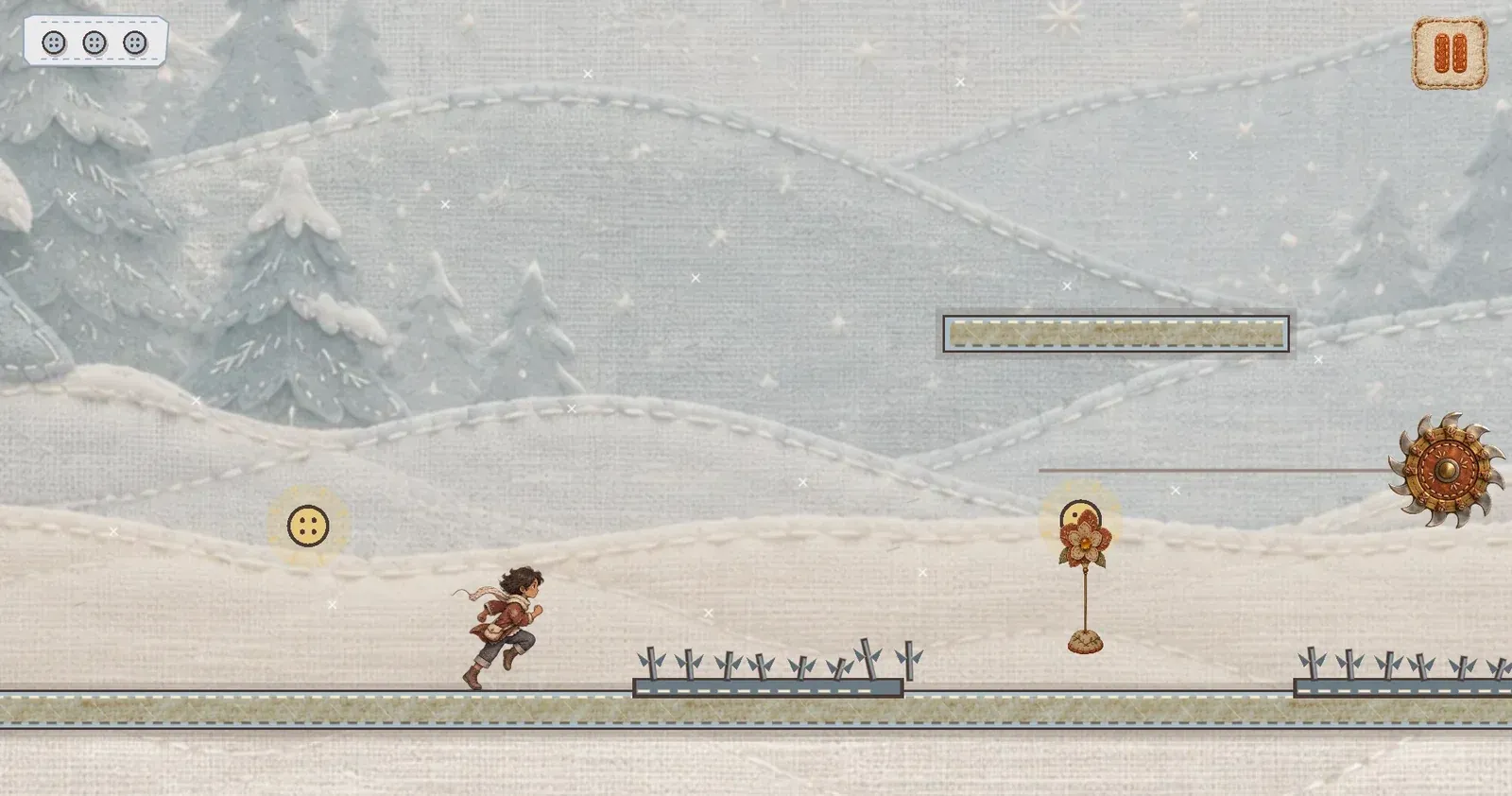
On frost the feet barely grip. On the linen, the runner goes from full speed to a stop in about a fifth of a second. On ice it takes more than a full second, so the runner keeps sliding long after you let go. Frost rooms ask you to brake early, or to turn gravity so a wall catches you.
Why the numbers matter
Each of these is one or two numbers in the runner’s code: a weaker pull, a steady push, a slower grip. That keeps every world easy to tune and easy to read. It also means the rules combine cleanly, so a later room can put a frost floor beside a timed seam, or a gust across a pool, without a single special case.
Every world is open from Levels in Stitchfall, free in your browser.