Traps you can read: cutters, chains and springs in Stitchfall
Stitchfall's traps surprise you without cheating you: each one shows its track first, winds up before it moves, and a hit costs only a few seconds.
 , 3 min read
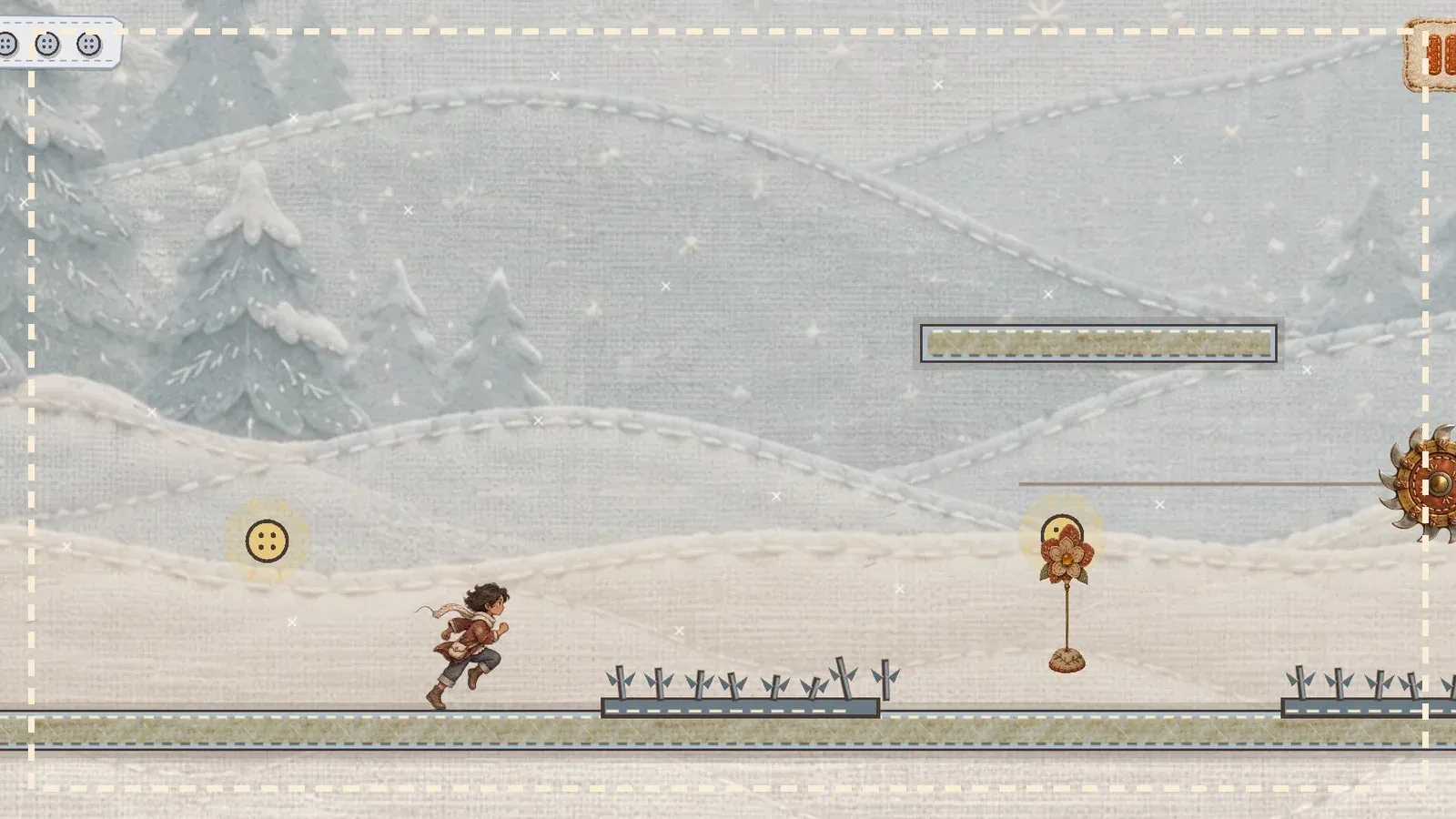
Some of the best platform games are full of traps that spring on you. A floor drops, a block falls, a door slides shut, and you laugh and try again. Stitchfall wanted that surprise, without the feeling that the game cheated. So its traps follow three rules.
Rule one: you can see where it goes
Every moving trap is sewn onto a track you can see before it moves. A spinning cutter runs along a thread drawn between its two ends. A hanging pulley weight shows its rope and its anchor. A chain shows the path it swings through. Nothing comes from off screen, and nothing moves along a path you could not have read.
Rule two: a sleeping trap winds up first
Some traps are already moving when the room opens, so you can stand and watch them. Many others sleep until you turn gravity, and some wake when you come close. When they wake, they do not strike at once. A red arc lights up around the trap for just over half a second, and only then does it start to move. That is enough time to see it and choose: hurry across, or wait for the next pass.
Once moving, a trap eases in and out at each end of its track instead of snapping back and forth. You can learn its rhythm by watching one pass.
Needle moths, the little patrolling sentries, work the other way round. Every turn of gravity freezes them for just over half a second, so a turn is also a way to slip past one.
Rule three: a hit is cheap
When something catches the runner, there is no blood and no long death animation. The runner’s fabric comes apart into patches and loose thread for about two thirds of a second, then is sewn back together at the last flower pin you passed. Every button you collected stays sewn on. So a hit costs a few seconds, which is exactly what makes you want to try the risky line again.
The trap family
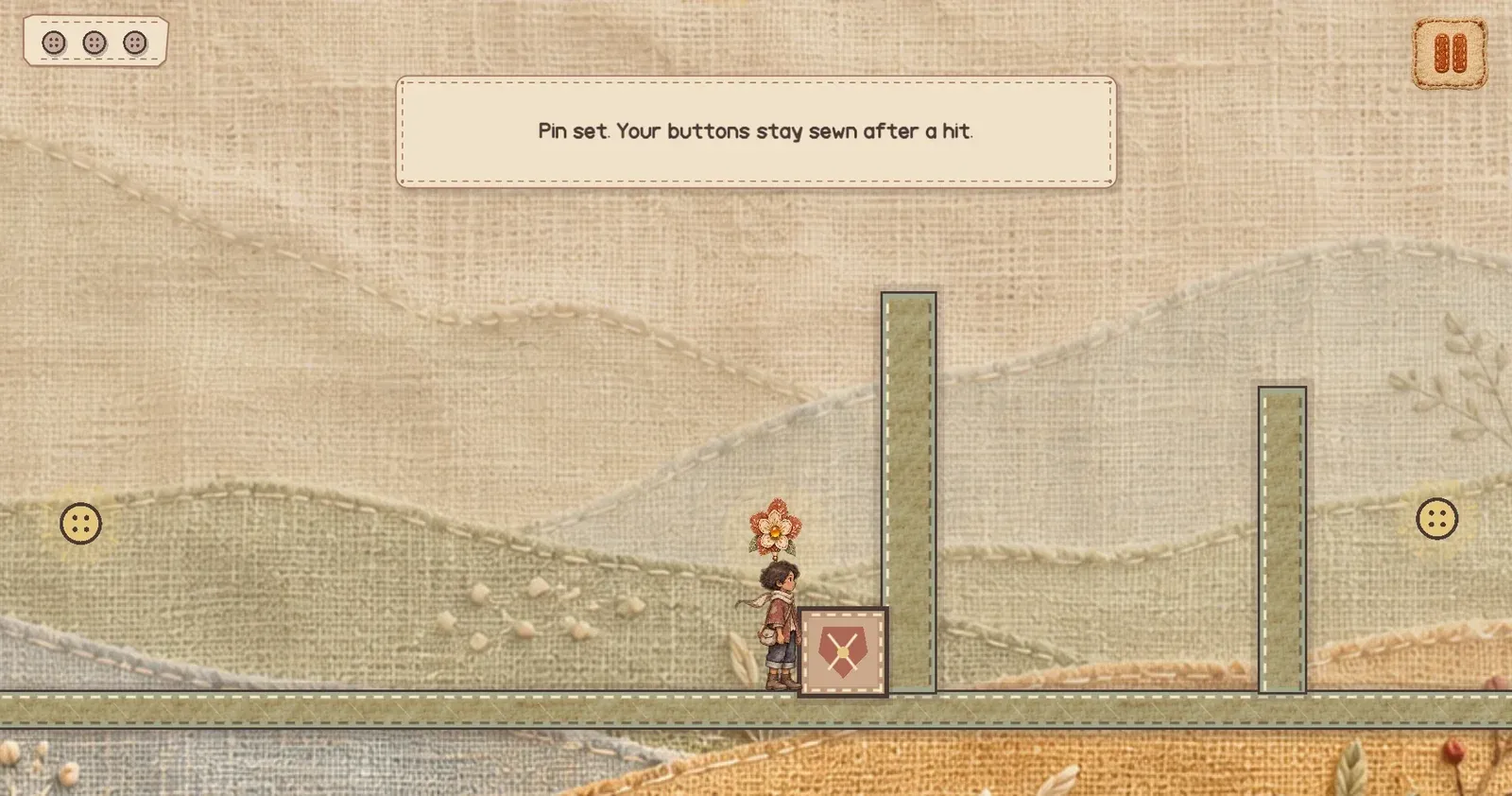
The first four kinds of trap are a spinning cutter, a swinging chain, a hanging pulley weight and a sewn spring that launches you. The spring is the friendly one: it throws the runner, and the room is built so the throw is the way forward.
They sit beside the game’s other moving parts. Weighted patches slide toward the new floor with every turn and can be pushed onto marks. Fraying ledges hold you for a moment after you land, then come apart. Bloom pads throw you away from the floor.
Why a trap has to be readable
A trap you could not have seen teaches nothing. You die, you shrug, and the next try is a guess. A trap that shows its track and winds up teaches something every time it gets you: wait one beat, turn earlier, take the high line. That is the difference between a room that is hard and a room that is unfair, and Stitchfall wants only the first kind.
Try the frost woodland’s cutters yourself in Stitchfall, free in your browser.