Indie game marketing: measure interest beyond views
Connect gameplay posts to store visits and useful actions. Learn Steam UTM limits, compare campaign results and choose what to improve next.
 , 5 min read

A gameplay post with many views gives you one result: people were shown or watched the post according to that platform’s definition. To decide whether it helped the game, connect that result with the next action you wanted someone to take. That might be visiting a store page, joining a playtest, adding a wishlist or installing the game.
My recommendation is to begin with a clear gameplay example, one relevant destination and a small measurement plan. Improve the part where interested people are losing context or failing to find the next step. The examples below use Steam where platform-specific reporting matters. Other stores have their own definitions and attribution rules.
Choose the action before making the post
Write a short campaign note before recording anything:
- Audience: who would enjoy the particular decision or activity shown?
- Message: what should they understand about playing the game?
- Destination: where can they take the next useful action?
- Measure: which report can tell you whether that action happened?
For a hypothetical building game, a short clip could show the player placing a structure and the visible consequence. The store page should make it easy to recognise the same activity. If the clip promises an experience the destination does not explain, changing the posting time will not resolve that mismatch.
Keep the action appropriate to the project’s stage. A playable demo, an upcoming release and an available game give people different next steps. Make the wording clear about what is available now.
Use tracked links where the platform supports them
Steam’s UTM Analytics lets developers distinguish campaigns using tagged store links and reports associated actions such as wishlists, purchases and activations. Its tracked visits are visits from users signed in to Steam. They are a subset of traffic, rather than every person who clicked a link. Steam UTM Analytics
Use a consistent naming convention for source, medium and campaign. For example, your campaign field could distinguish a reflector clip from a movement clip while the other fields describe the same platform and post format. Keep a small record of the exact link, the post, its date and the thing you changed. Avoid putting personal information in campaign names.
Valve documents a 72-hour conversion window after the UTM visit, and says conversion reports are finalised four days after the visit. Interpret those conversions within that reporting window and its tracking limits. Steam’s conversion reporting
For a mobile game, use the app store’s acquisition reporting and supported campaign links instead of applying Steam’s definitions to mobile installs. For a website article, choose a website action you can actually measure, such as a click to the relevant game page. Do not combine reports with different definitions into a single conversion rate without explaining the difference.
Read the denominator
Here is a hypothetical worked example, not an industry benchmark or an actual campaign result:
| Reported measure | Example count | What the arithmetic says |
|---|---|---|
| Post views | 10,000 | The platform reported this many views. |
| Steam tracked visits | 200 | Tracked visits equal 2% of the view count. |
| Attributed wishlists | 20 | Wishlists equal 10% of tracked visits. |
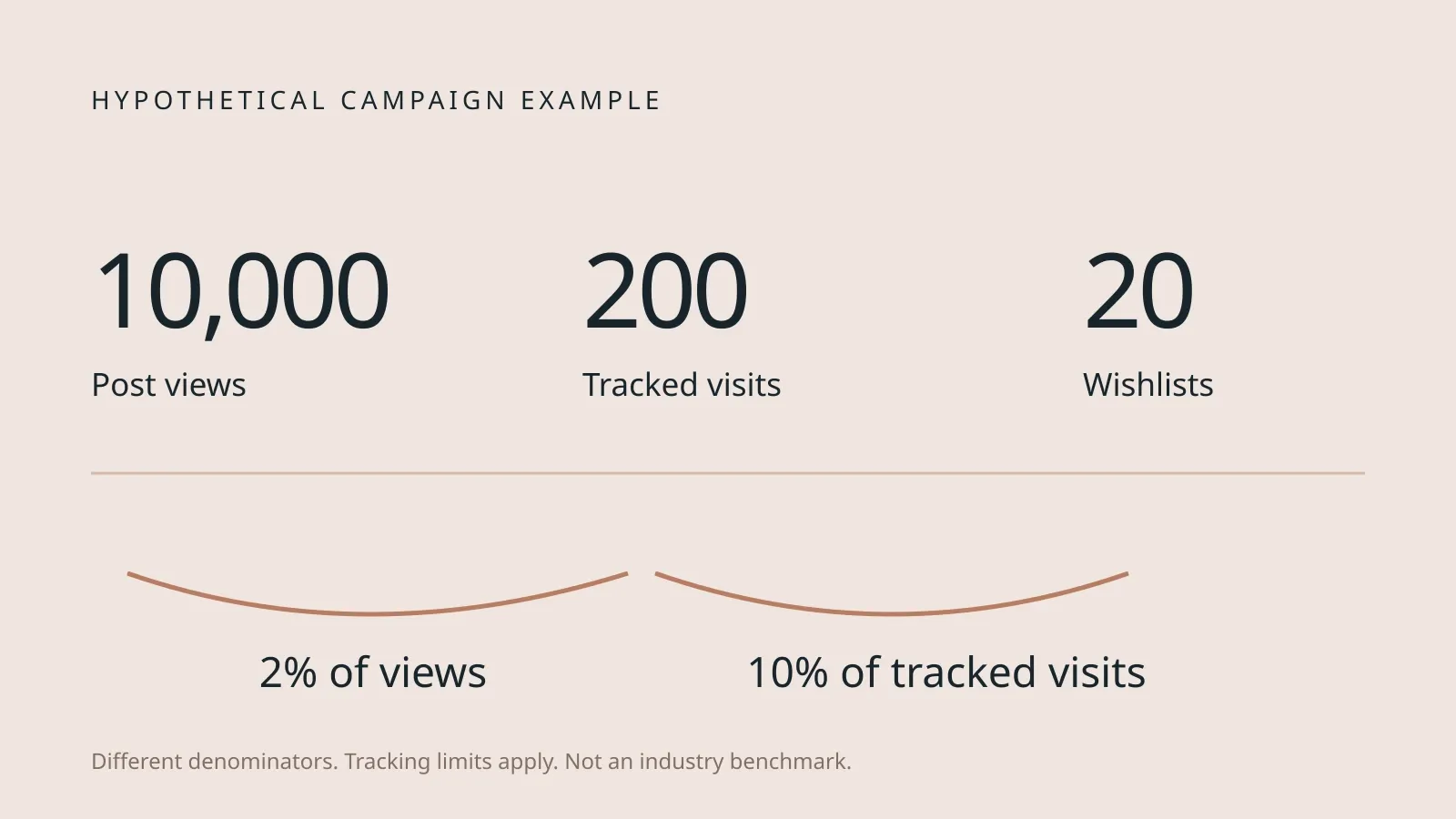
Those two percentages answer different questions. The first compares counts from two reporting systems and is not a complete click-through rate, because Steam tracked visits exclude some traffic. The second uses the tracked-visit count as its denominator and applies within the attribution limits above. Neither number proves that the post caused every action or predicts purchases at release.
If a later campaign reports 40 wishlists from 800 tracked visits, it produced more attributed wishlists but a lower wishlist-per-tracked-visit ratio of 5%. Deciding which result matters requires the campaign’s purpose and the effort or money spent. Keep both the counts and the rates.
Choose what to investigate next
People see the post but few reach the store
Check whether the gameplay is understandable, the next action is clear and the link is usable in that placement. Inspect the reporting limits before assuming that every missing tracked visit is a missing click.
People reach the store but few take the intended action
Compare the post’s promise with the screenshots, trailer, description and availability shown on the page. Ask an unfamiliar player what they expect to do in the game after seeing both.
One post performed much better than another
Record the audience, timing, format and reporting window before attributing the difference to the hook. Repeat a focused comparison when possible. A single successful post is a useful lead to investigate.
Do not build the plan around a magic wishlist threshold
Valve’s wishlist FAQ says there is no minimum number of wishlists required before Steam begins showing a game to users. It describes personalisation as drawing on multiple factors. Steam wishlist FAQ
Wishlists are useful evidence of interest, but a public claim that every game must cross one fixed number to receive visibility does not match that guidance. Build your plan around reaching relevant people and helping them understand the actual game. Use your results to set project-specific goals rather than treating someone else’s launch as a universal threshold.
Run a comparison you can learn from
Choose two clips that communicate different parts of the same game, or two openings for the same clip. Keep the destination and intended action consistent. Record what else differed, since organic posts are not a controlled experiment. Compare after a similar reporting period and after the attribution window has had time to capture later actions.
Then choose the next change from the evidence: a clearer gameplay opening, a more relevant audience or a store page that explains the experience better. A modest campaign with understandable results gives you a more useful next decision than a view count without a destination.