 Plumb
Learn Plumb in one board: tilt, roll, drop
Plumb's rules, taught by its first real boards: swipe to tilt, every marble rolls until something stops it, and each one drops into the hole of its own colour.
 , updated , 4 min read
Plumb gives you one move. You swipe, the board tilts that way, and every marble on it rolls. The first few levels teach everything else without a word of explanation, so the quickest way to learn the game is to walk through them, one board at a time.
Level 1: one swipe, one long roll
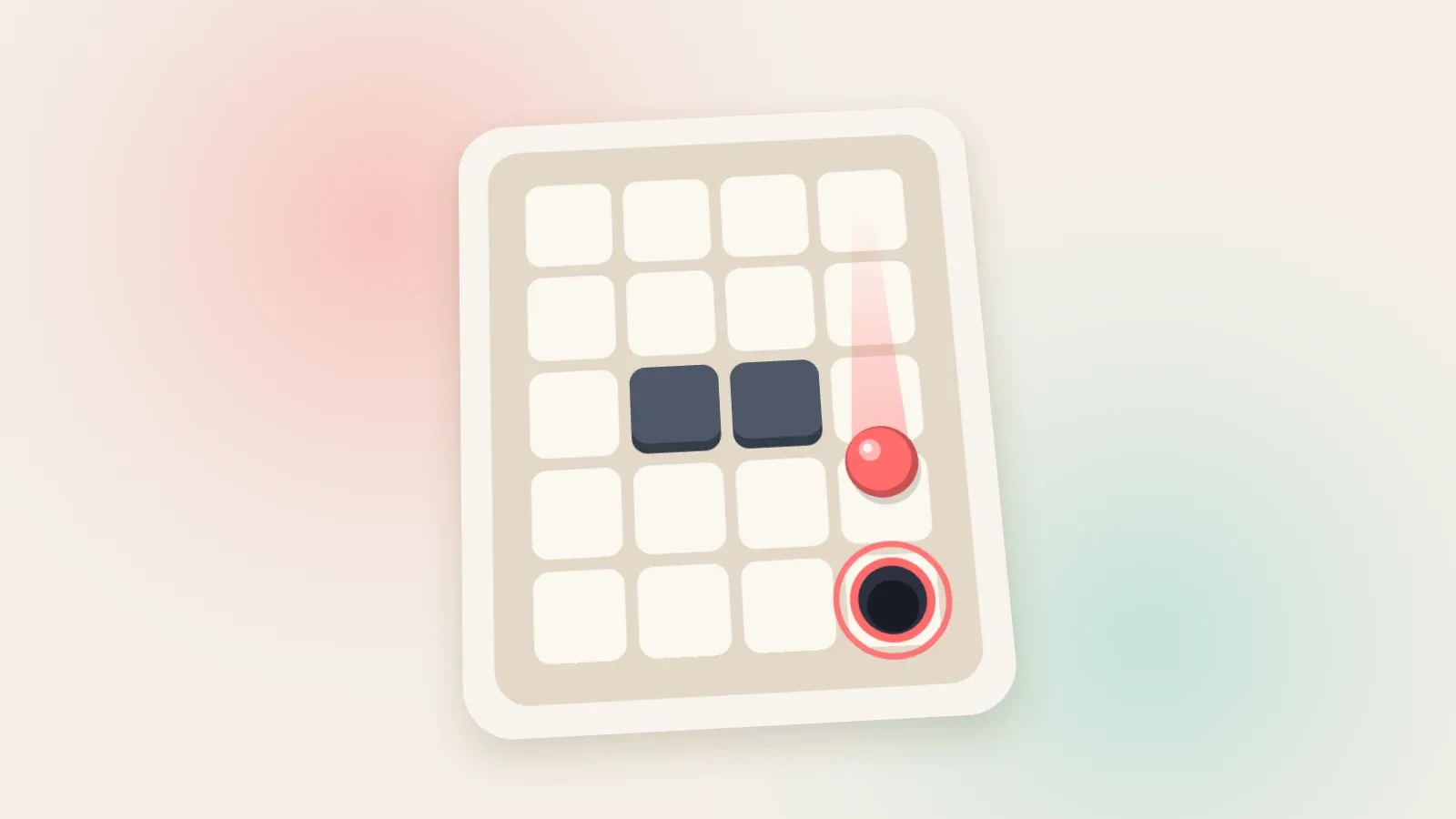
The first board holds a single red marble in its top right corner, a red hole in the bottom right corner, and a short bar of two walls in the middle. Swipe down and the marble rolls the full height of the board and drops into the hole. That is a solve, in one tilt, and three rules are already at work:
- A marble rolls until something stops it. On these early boards that means a wall, the edge or another marble.
- A marble drops into a hole of its own colour the moment it rolls over one, even in the middle of a roll.
- A swipe that would move nothing is not a move. The tray twitches and your count stays as it was.
Now try swiping left instead. The marble runs to the top left corner, and getting it home takes two more swipes, right and then down. Every swipe is allowed, but some are wasted, and that is the whole game in miniature.
Level 2: every marble moves at once
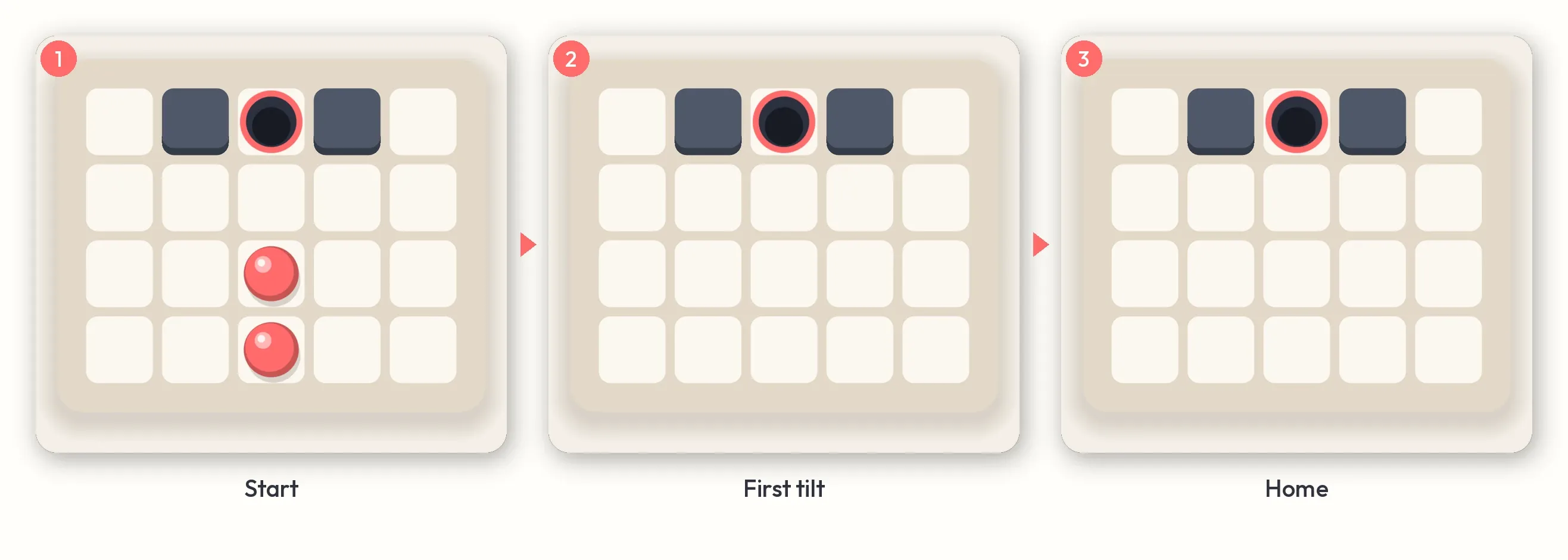
Two red marbles stand in a column below one red hole. Swipe up and they roll together like a little train, and both drop into the same hole, because a hole takes every marble of its colour. You never move a marble on its own in Plumb: every swipe acts on all of them at once.
Level 3: the wall does the work
Two marbles sit on the left edge, the hole is in the middle, and a wall closes off the right end of the top row. Swipe right. The lower marble rolls straight into the hole, and the upper one runs along the top row until the wall stops it, in the same column as the hole. Swipe down and it drops in. Most of reading a board is asking that one question about each marble: where will it stop?
Level 4: the tempting swipe
The hole is in the top left corner. One marble sits straight below it at the bottom of the left edge, and the other sits in the middle, boxed in above and below by short bars of wall. Swiping up looks obvious, since it sends the edge marble straight home. But the boxed-in marble cannot move up at all, so the level then needs two more swipes, left and up. Swipe left first instead, and the middle marble rolls into line with the other one, so a single swipe up drops them both.
The caption on this level reads “Three stars take the fewest moves possible”, and this is why. The marble that can go home first is not always the one to send first.
Level 5: line them up
A swipe up brings both marbles to the top row, side by side, and one swipe left rolls them into the corner hole together. Lining marbles up so one swipe finishes them all is a shape you will use for the rest of the game.
Colours, from level 9
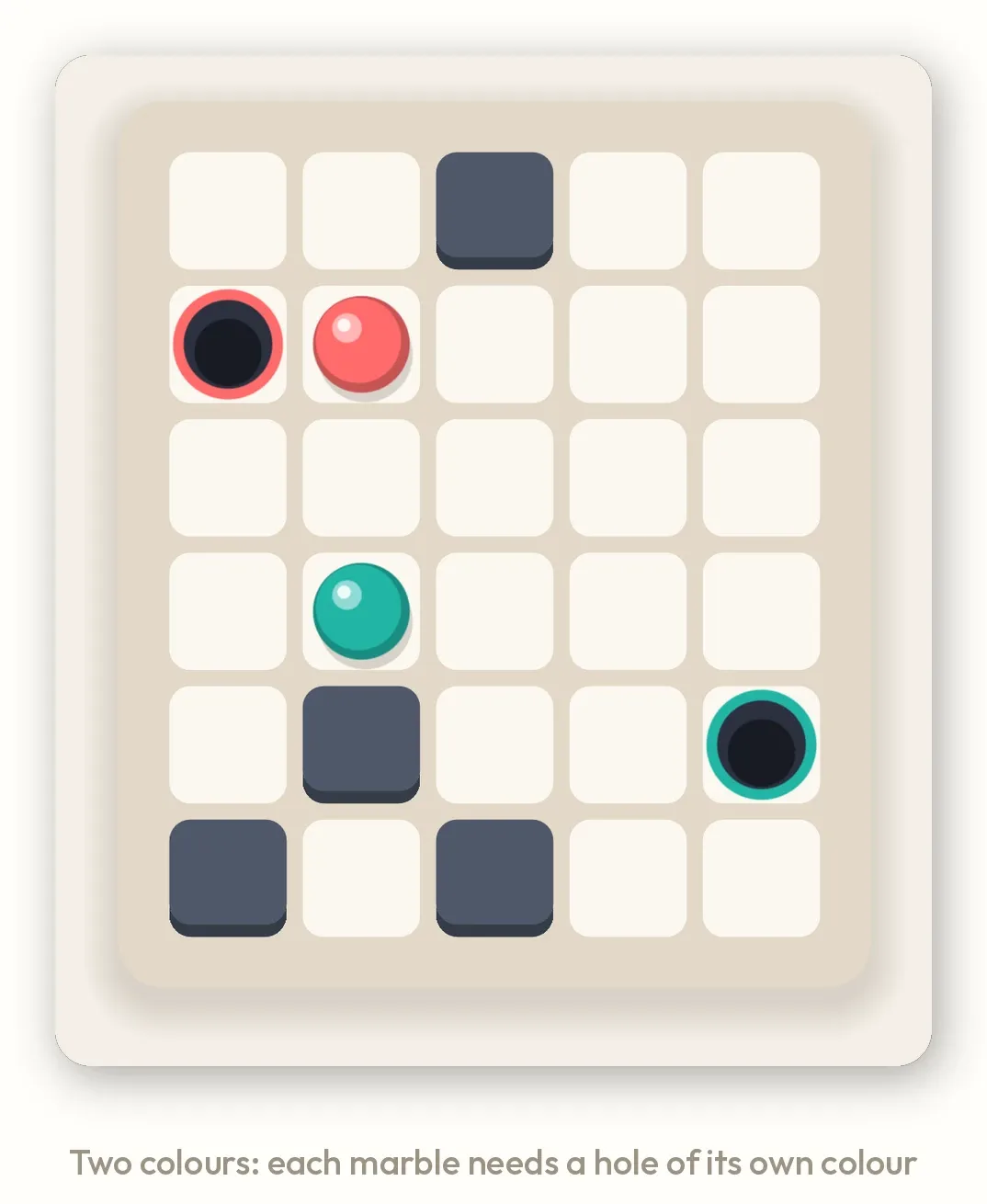
From level 9 there are two colours. A marble only drops into a hole ringed in its own colour, and rolls straight over any other hole as if it were plain floor.
A new idea every chapter
Levels come in chapters of twenty, each with its own page on the Levels screen and a card on its first level that names its new idea. Chapter 2 brings a third colour, chapter 3 brings square pits that swallow a marble of any colour, and chapter 4 brings a fourth colour and bigger boards. From chapter 5, each chapter adds a tile, such as stop pads, one-way gates, plugs that close after one marble, paint or cracked floor, and every level in it needs that tile.
Reading the screen
At the top are a back arrow to the Levels screen, the level number, and a bulb for a hint. Under them, Moves counts your tilts, and Stars shows the most this attempt can still earn. Along the bottom are Undo, which takes back a tilt and the move with it, Restart, and the settings button.
Every level has a goal: the fewest tilts that clear it, found by a solver that tried every possibility. Meet it for three stars, and the third star on the meter goes out the moment you no longer can. Any solve earns at least one star and opens the next level, and there are no lives and no timer. Where the goal comes from explains the scoring, and ghost marbles explains the hint.
Your first few minutes
Level 1 opens with a short guide: what you are aiming for, where help lives, and a ghost finger that shows you the swipe. You can skip it, and How to play in Settings brings it back. After that, two habits carry you a long way: picture where every marble will stop before you swipe, and when a swipe goes wrong, undo it and look again. Read the roll before you tilt has more on how to look at a board.