How I made 9 games in 40 days
From 29 September to 8 November I made nine small games for Android. The exact timeline, the nights, what broke, and the part I did not do myself.
 , 8 min read
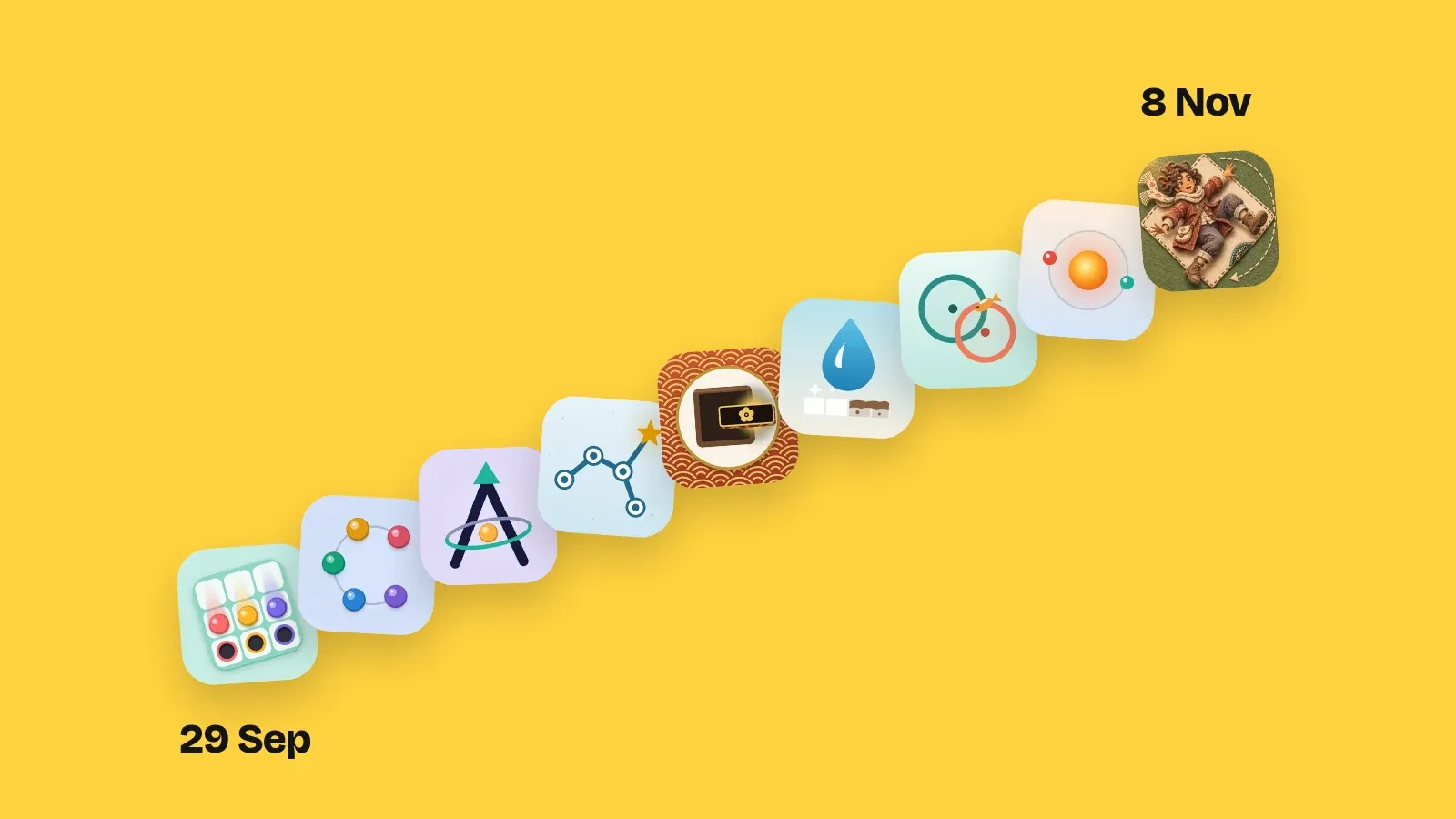
On 29 September, at 3:01 in the afternoon, I started a small marble puzzle called Tilt. On 8 November, at 2:31 at night, the first version of my ninth game was ready.
That is 39 days, 11 hours and 30 minutes. Nine games, all for Android, all on Google Play now. Four are out for everyone, and five are still in testing.
People keep asking me how. So here is all of it: the timeline, the nights, the parts that broke, and the part I did not do myself.
The timeline
| Games | Started | First version | Time taken |
|---|---|---|---|
| Plumb, Carillon, Apsis | 29 September | 1 October | 2 days, all three together |
| Pyxis | 14 October | 16 October | 31 hours |
| Hako, Rinse, Seiche, Sunwise | 24 October | 30 October | 6 days, all four together |
| Stitchfall | 2 November | 8 November | 5 days |
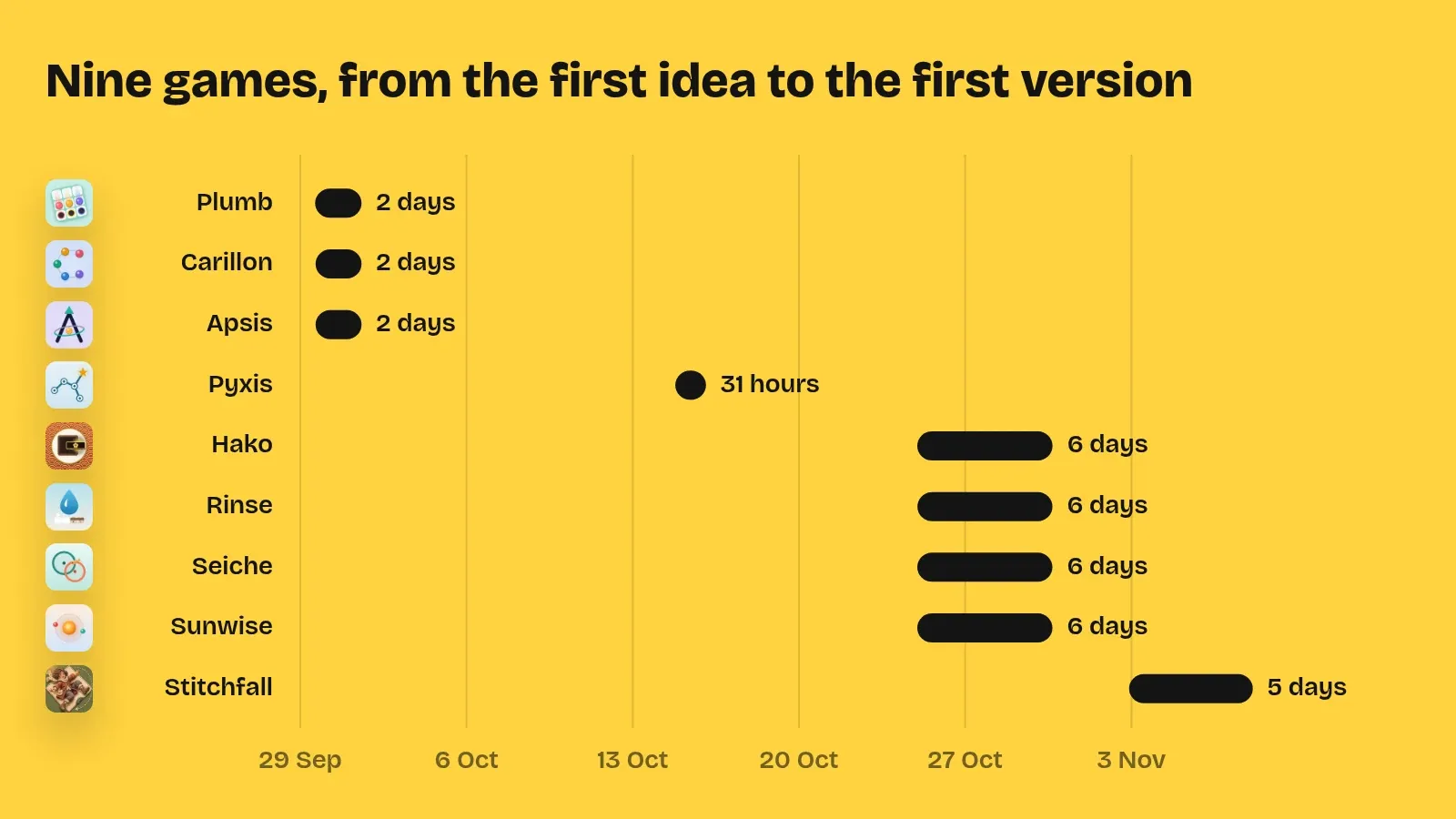
Plumb, Carillon and Apsis started on the same afternoon, within half an hour of each other. Pyxis started on a Wednesday evening as a small experiment, and had its first version 31 hours later. Hako, Seiche and Sunwise started in the same minute, at 11:31 at night, and Rinse eleven minutes later. Stitchfall, made on its own, took five days.
Look at the gaps between the bars, too. They are not holidays. That is where the games I had already made went out to testers, got fixed, and got their store pages.
Most of them changed their name
Seven of the nine did not keep their first name. Tilt became Plumb, Chain Song became Carillon and Orbit Out became Apsis, all on the first night. Filament became Pyxis, Ripple became Seiche and Corona became Sunwise. Stitchfall was Compassfall, then Palewheel, then Stitchfall, all in its first week.
Every rename has a reason, and a couple of them surprised me. I wrote them all down in 7 of my 9 games changed their name.
What one day looks like
The two busiest days of the whole forty were the first two. Here is Plumb’s start, hour by hour, straight from its history.
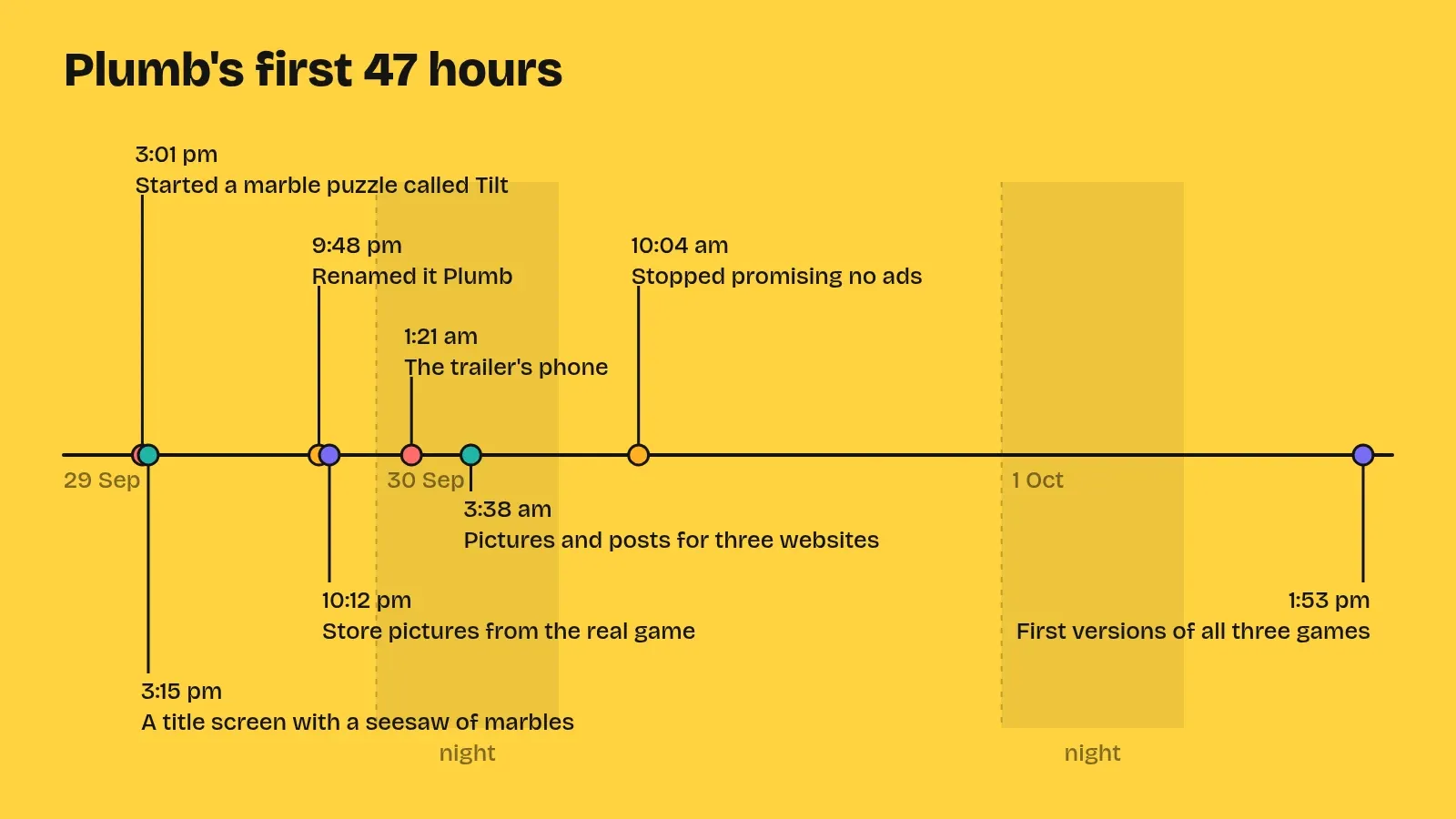
At 3:01 pm I started Tilt. Fourteen minutes later it had a title screen, with a little seesaw of marbles rocking on it. By 3:29 it had its own music, soft chords and a few bells.
At 9:48 pm it got its real name, Plumb. At 10:12 pm I was already taking store pictures, from the real game, not mockups. At 1:21 am I was making the phone that the trailer plays in, a modern one with a punch-hole camera. At 3:38 am I was still going, on the pictures and the first posts for three websites, one for each game.
Then nothing for three and a half hours. At 7:16 am I was back, testing every colour theme and every setting.
At 10:04 am I caught something embarrassing. The game’s own website promised “no ads”. The game had ads. I changed the website to say exactly where the ads are.
And all of that was only Plumb. Carillon and Apsis were being made in the same hours, next to it. At 1:53 pm on 1 October, the first versions of all three were ready, together.
That is not a normal day. But it is what the first two days really looked like.
When the work happened
Every change I keep in a game is saved with its time. So I can show you exactly when the work happened, over all forty days.
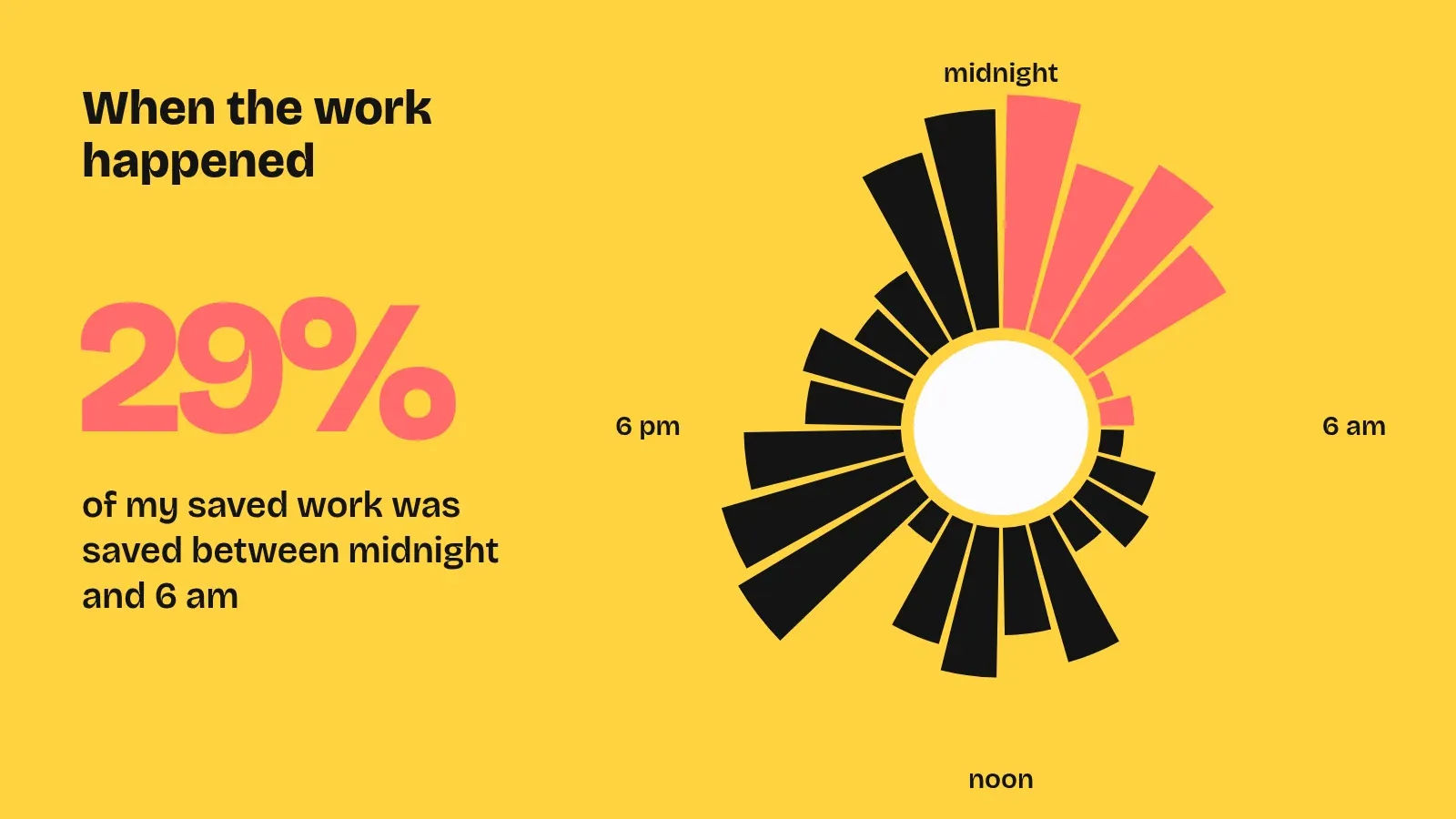
29% of it was saved between midnight and 6 in the morning. Almost nothing happened between 4 and 7 am. The other busy stretch was the afternoon, from 3 to 6.
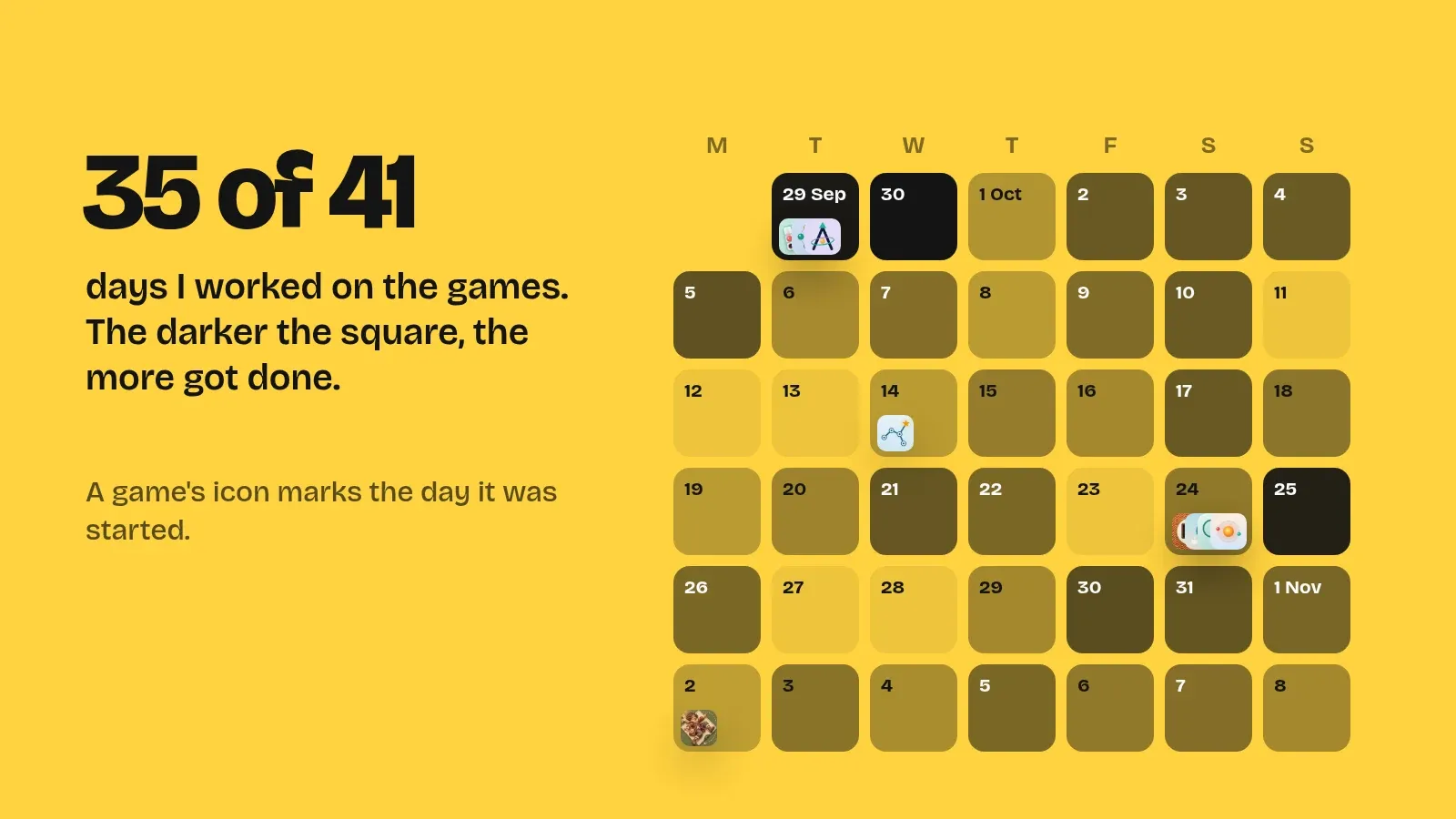
I worked on the games on 35 of the 41 days. The busiest were the first two, and 25 October, the day after four games started in one night.
So when someone says “nine games in forty days”, this is what it looks like on a clock. It is not a trick. It is a lot of nights.
The part I did not do myself
I did not type most of these games. I make them with the help of AI tools, and I wrote how that works in How I build games with AI assistance. The ideas, the rules, the names and the look of each game are mine. So is the final call on what ships. Every version gets played on my phone before it goes anywhere.
That is the honest reason one person can start four games in one night. The making comes fast now. The deciding does not.
What actually took the time
Making Plumb took 2 days. Getting it to everyone on Google Play took 20.
My Google Play account has to test every new app with at least 12 testers for 14 days before it can go out to everyone. Then come the store pictures, the privacy policy, the content rating, the data safety form and the review. None of it is hard. It just takes days, and there is no skipping it. The whole story, with every date, is in My game took 2 days to make and 20 days to reach Google Play.
The rest of the time went into playing. Playing a level, feeling it is wrong, saying no, trying again. A game that works is not the same as a game that feels good, and only playing tells you which one you have.
What broke
Plenty. Three things stand out.
I could not understand my own game. On 24 October I started a pond game called Ripple. The next day I played it, and I had no idea what was going on. Numbers on the water, pebbles, lines, rings that moved after a catch, and a counting rule that nothing explained. My note after playing it was simple: very weird game, make it simple. So I threw the rules out and kept one: a fish sits on every ring, never inside one. That game is Seiche now, and its rule fits in one sentence.
I threw away Stitchfall’s first look in three and a half hours. It started on 2 November at 9:33 pm as Compassfall, a clockwork station you bring light back to. By 1:12 am I had thrown out its look, its menus and its art, and it was a different game called Palewheel. The same morning its rooms were sewn from cloth, and three days later it got its real name.
Google’s ad network said no, four times. Through October, AdMob turned my account down four times, with the same short email and no reason. That is a big part of why nine games have earned nothing so far, and I wrote about it in How I earned $0 from 9 games.
What I would not do again
Start four games in one night. Making Hako, Rinse, Seiche and Sunwise took six days. But four games also means four store pages, four sets of pictures, four tests and four things to tell people about. All four are still in testing today.
Launch everything at once. Plumb, Carillon and Apsis went out to everyone on the same day. They had to share what little attention there was. Now I am doing the opposite: one game, Plumb, for a whole month, with every number written down.
What made nine possible
- One rule per game. Plumb’s rule is “tilt the board and every marble rolls until something stops it”. If I cannot say a game’s rule in one sentence, it is not ready. Ripple taught me that the hard way.
- One shared base. Eight of the nine games share the same menus, settings and shop. A new game needs only its own rule and its own look.
- Small ideas. Before these nine, I spent the summer on five games I never finished. Each of these nine is one small idea. The five are in I gave up on 5 games before I made one people play.
- Playing on a real phone, every time. Not a preview on a computer. The phone in my hand, the way a player holds it.
So, was it worth it?
Nine games in 40 days sounds like a lot. Here is the other number: together they have earned exactly $0. I wrote about that in How I earned $0 from 9 games.
And if you are wondering how many people actually played them, the answer surprised me too: Google said 1,000 people played my games. It was 83.
If you want to see what came out of these 40 days, start with Plumb. It is the one people play the longest.